
OPTICALITY: SEEING IN THE WAY OF THINGS
READING GROUP PORTFOLIO
READING THE PORTFOLIO
SCHEDULE
I. THE SENTIENT IMAGE
Sentient Image | Sentient Flesh | Leaving the Body to Be in Flesh | Being With the They
II. COLLECTING | PREPARING | GATHERING
Studying the Prop | Prop Value | Purpose | Gatherings | Seeing Through
III. BLUES ECOLOGY: THE SOUNDS AND POLITICS OF PLACE
Blues Ecology | Juke Joint Intimacies | Abolition Geographies
IV. THE DANCEHALL: SONIC FLOWS, VIBRATIONAL RELATIONS
Rub-A-Dub | The Crew | Sound qua Sound | Vibrational Relations
Portfolio and Syllabus by Daren Fowler
In Conversation with Alessandra Raengo, Corey Couch, djones, Anna Winter, Calvin Bell, Lizette London, and Alper Gobel
Studying for Opticality: a liquid blackness virtual teach-in - September 10, 2026
READING THE PORTFOLIO
In preparing for our event, Opticality: Seeing in the Way of Things, liquid blackness produced a four-week reading group and screening series built around the invited artists and their filmic practice. The reading lists are inspired by the artist’s own words, the aesthetic practices of the films, and the conceptual fields we found most vital to confronting and studying that practice within our framework of opticality.
This portfolio, which is crucial to our practice of study and care, comes from three impulses. The first is to offer a record of how liquid blackness studies and prepares. Each event and research project entails months of conversations, readings, screenings, and writings that build out a field of study unique to our project and the artists. To invite an artist, for liquid blackness, is to invite a field of inquiry. Each artist and their work is a provocation. Their practice, while not a sacred text, becomes an impetus to imagine new forms of study—of black study. Their aesthetics become a method; their method becomes an aesthetics. This portfolio, thus, records how we prepared, how we came to see opticality in diverse, intimate, and expansive ways through the aesthetic practices of artists and the theoretical imaginaries of scholars.
Second, liquid blackness is more than the dedicated researchers who make up its current staff, and despite being based in Atlanta, we stretch far further. Our community, those who labor and care with and for us, cannot always participate in the day-to-day study of our projects, but nevertheless, they deserve and want to keep up with us—out of investment in the work and to be prepared when they do find ways to join us. This portfolio, at its origins, is a way to give them an insight into the work when they may not be able to study with us.
And finally, the portfolio is a pedagogical practice. In writing, we have tried to avoid simple literature reviews or summaries of the works in favor of narrating how we are thinking. Each of these weeks of readings is inspired by a specific artist and film, but it is also a way to think through our guiding conceptual term: opticality (see Opticality Research Project). And so, while there are meaningful similarities in how each page will narrate that week’s materials, we have charted what provokes us with each work, and what guides our way in. For some of these artists, it is the aesthetic practice itself; for others, it is their way of studying and preparing, or the conceptual language they mobilize to describe their practice.
In what follows, you will find four longform reflections that combine an engagement with the readings and films along with an expression of the thinking and conversation had between the liquid blackness research group (Alessandra Raengo, Daren Fowler, djones, Corey Couch, and Anna Winter) and our friends and colleagues (Calvin Bell, Lizette London, and Alper Gobel). These writings are not exhaustive of our imaginaries for these artists, but instead, a set of lenses we applied to study them. They are meant to be pathways into our frameworks and practices of study.
SCHEDULE
January 5: The Sentient Image
Artist/Work
● Jomo Fray, cinematographer, Nickel Boys (2024), dir. RaMell Ross
Readings
● Judy, R.A. Sentient Flesh: Thinking in Disorder, Poiesis in Black. Duke University Press, 2020.
○ “Introduction: Body and Flesh”
○ “Sentient Flesh”
● Quashie, Kevin. Sovereignty of Quiet: Beyond Resistance in Black Culture. Rutgers University Press, 2012.
○ “Quiet, Vulnerability, and Nationalism.”
● Quashie, Kevin. Black Aliveness, or a Poetics of Being. Duke University Press, 2021.
○ “Introduction: Aliveness”
○ “Aliveness and Relation”
● Jackson, James E. “The Touch of the ‘First’ Black Cinematographer in North American: James E. Hinton, Ganja & Hess, and the NEA Films at the Harvard Film Archive.” Black Camera 10.1 (Fall 2018): 67-95.
January 12: Collecting | Preparing | Gathering
Artists/Work
● Akin McKenzie, production design, The Woman King (2022), dir. Gina Prince-Bythewood
● Mati Diop, director, Dahomey (2024)
Readings
● Wilkinson, Alissa. “Dahomey: A Daring Meditation of the Painful Legacy of Looted Artifacts.” New York Times, October 25, 2024.
● Docalovich, Katrina. “Mati Diop in NYC.” Film Quarterly 78.3 (March 1, 2025): 85-89
● Biah, Calixte and Bénédicite Savoy. “In Conversation: Museum Work and Experiences of Restitution.” Museum Worlds: Advances in Research 13 (2025): 145-153.
● Cervenak, Sarah J. “Black Gathering: ‘The weight of being’ in Leonardo Drew’s Sculpture.” Women & Performance: a journal of feminist theory 26.1 (2016): 1-16.
● Folland, Thomas. “Readymade Primitivism: Marcel Duchamp, Dada, and African Art.” Art History 43.4 (2020): 802-826.
● Gorfinkel, Elena and John David Rhodes, The Prop. Fordham University Press, 2025.
○ “Reading for the Prop”
○ “Prop Value”
February 19: Blues Ecology: The Sounds and Politics of Place
Artist/Work
● Autumn Durald Arkapaw, cinematographer, Sinners (2025), dir. Ryan Coogler
Readings
● Gilmore, Ruth Wilson. Abolition Geography: Essays Towards Liberation. Verso Books, 2023.
○ “Abolition Geography and the Problem of Innocence.”
● McKittrick, Kathrine and Clyde Woods, eds. Black Geographies and the Politics of Place. South End Press, 2007.
○ McKittrick, Kathrine and Clyde Woods. “No One Knows the Mysteries at the Bottom of the Ocean.”
○ Woods, Clyde. “‘Sittin’ on Top of the World’: The Challenges of Blues and Hip Hop Geography.”
● Ivry, Henry. “How to Listen Otherwise: Black Sounds, Black Ecologies.” English Language Notes 62.1 (2024): 13-29
● Tsing, Ann Lowenhaupt. The Mushroom at the End of the World: On the Possibility of Life in Capitalist Ruins. Princeton University Press, 2021.
○ “Arts of Noticing”
○ “Contamination as Collaboration”
February 1: The Dancehall: Sonic Flows, Vibrational Relations
Artist/Work
● Shabier Kirchner, cinematographer, Lovers Rock (2020), dir. Steve McQueen
Readings
● Veal, Michael E. Dub: Soundscapes and Shattered Songs in Jamaican Reggae. Wesleyan University Press, 2007.
○ “‘Every Spoil is a Style’: The Evolution of Dub Music in the 1970s”
● Henriques, Julian. Sonic Bodies: Reggae, Soundsystems, Performance Techniques, and Ways of Knowing. Bloomsbury Publishing, 2011.
○ “Preamble: Thinking Through Sound.”
○ “Introduction: Practising and Theorising Sounding.”
● Semaj-Hall, Isis. “re-membering our Caribbean through a dub aesthetic.” Small Axe (February 2016). https://smallaxe.net/sxsalon/discussions/re-membering-our-caribbean-through-dub-aesthetic
● Eisdsheim, Nina Sun. Sensing Sound: Singing and Listening as Vibrational Practice. Duke University Press, 2015.
○ “Music as a Vibrational Practice: Singing and Listening as Everything and Nothing”
● Boon, Marcus. The Politics of Vibration: Music as a Cosmopolitical Practice. Duke University Press, 2020.
○ “Introduction: Music as a Cosmopolitical Practice”
I: THE SENTIENT IMAGE
Artist/Work
● Jomo Fray, cinematographer, Nickel Boys (2024), dir. RaMell Ross
Readings
● Judy, R.A. Sentient Flesh: Thinking in Disorder, Poiesis in Black. Duke University Press, 2020.
○ “Introduction: Body and Flesh”
○ “Sentient Flesh”
● Quashie, Kevin. Sovereignty of Quiet: Beyond Resistance in Black Culture. Rutgers University Press, 2012.
○ “Quiet, Vulnerability, and Nationalism.”
● Quashie, Kevin. Black Aliveness, or a Poetics of Being. Duke University Press, 2021.
○ “Introduction: Aliveness”
○ “Aliveness and Relation”
● Jackson, James E. “The Touch of the ‘First’ Black Cinematographer in North American: James E. Hinton, Ganja & Hess, and the NEA Films at the Harvard Film Archive.” Black Camera 10.1 (Fall 2018): 67-95.
RaMell Ross’s Nickel Boys (2024) tells a story about two young black boys who are sent to the “Nickel Academy,” a juvenile detention center set in 1960s Florida, based on the Dozier School for Boys. The film’s camera appears to sit within the bodies of the main characters—Elwood and Turner. The camera, which at times was attached to the bodies of the actors, sees through a vantage point that we have been trained to name a “point of view shot.” We see as them, film studies tells us, for we see their arms stretch out from where the lens sees, the lens looks up when Elwood’s name is called, or as Turner awakens, the camera moves up and looks out. To name it a “point of view” film feels obvious, apparent, and even necessary to properly capture the political, emotional, and aesthetic work of the film [Figure 1].
And yet, the camera is not bound to their bodies. It cuts between Elwood and Turner, not defined by one character; the film also cuts away to media footage—montages of archival images of the civil rights movements, the Dozier School for Boys, Stanley Kramer’s The Defiant Ones (1958), the moon landing and space race, and the deep space photography—; and when cutting to the story’s future, it moves out, lingering above and behind Turner, who has now taken Elwood’s identity, the spectral weight of Elwood (and much more) lingering with him as the camera. So while the camera is with Elwood and Turner, it is not bound to them, or rather, it is not them. It is something other than a point of view.
Cinematographer Jomo Fray challenges the straightforward assumption of the POV shot. In an interview with Film Independent, Fray, speaking of the cinematographic choice, says:
“one of the very first things RaMell told me is that he wanted to shoot this movie Point of View.
And quickly into our conversations, we actually stopped using that term. We would use it so that crew members could understand what we were talking about. But really, when he and I were alone and we were talking, how we described the image is that it wasn’t a POV as much as it was what we call the ‘sentient image’.”
To name it a sentient image, Fray and RaMell mark its distinction from the boys—it is not them, and thus nor is it in them. This upending of the language of cinema—of taking a known formal practice—and rejecting, to a degree, how it is imagined to work and what it is imagined to convey is what pushed liquid blackness to study Nickel Boys more fully [Figure 2].
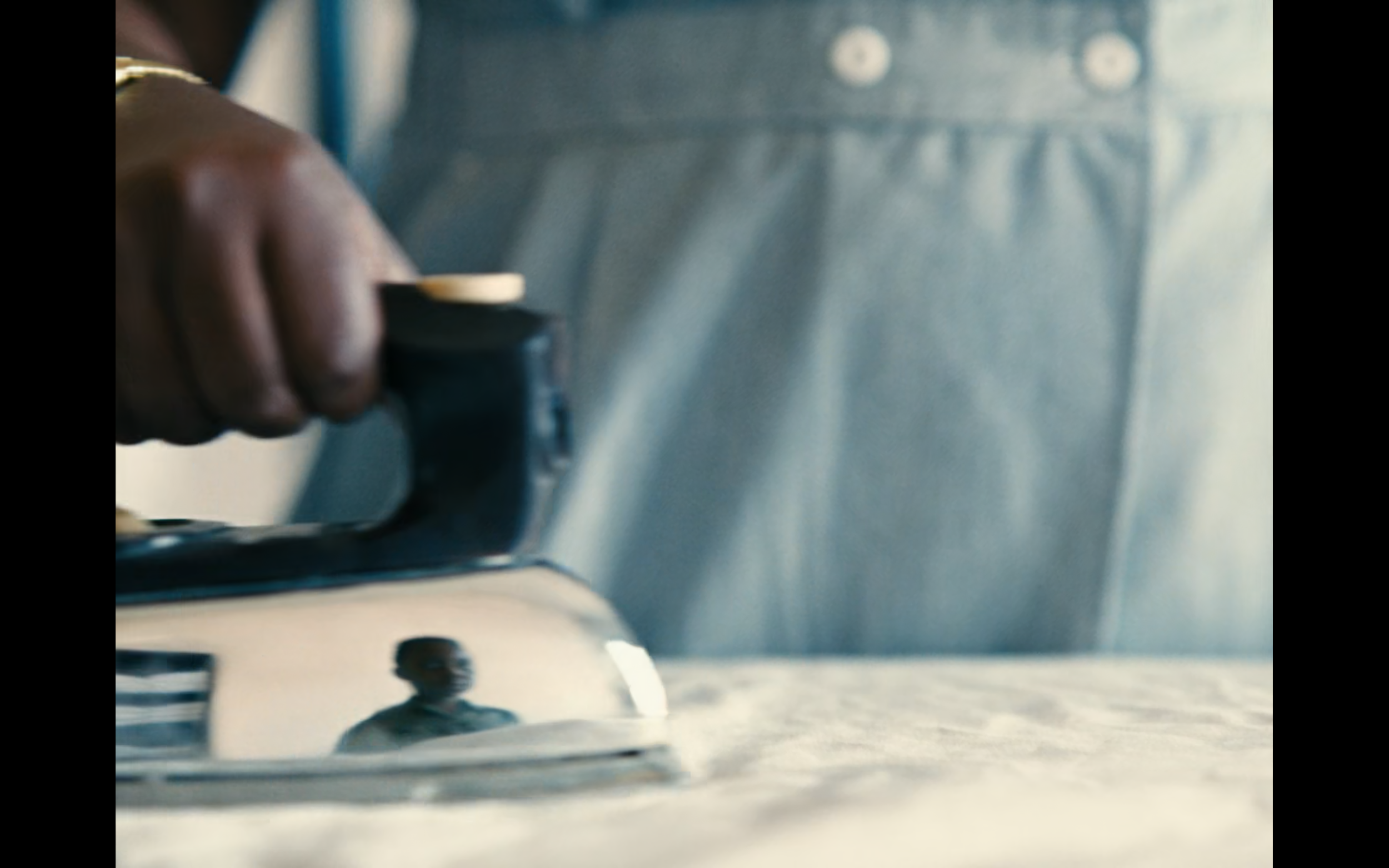
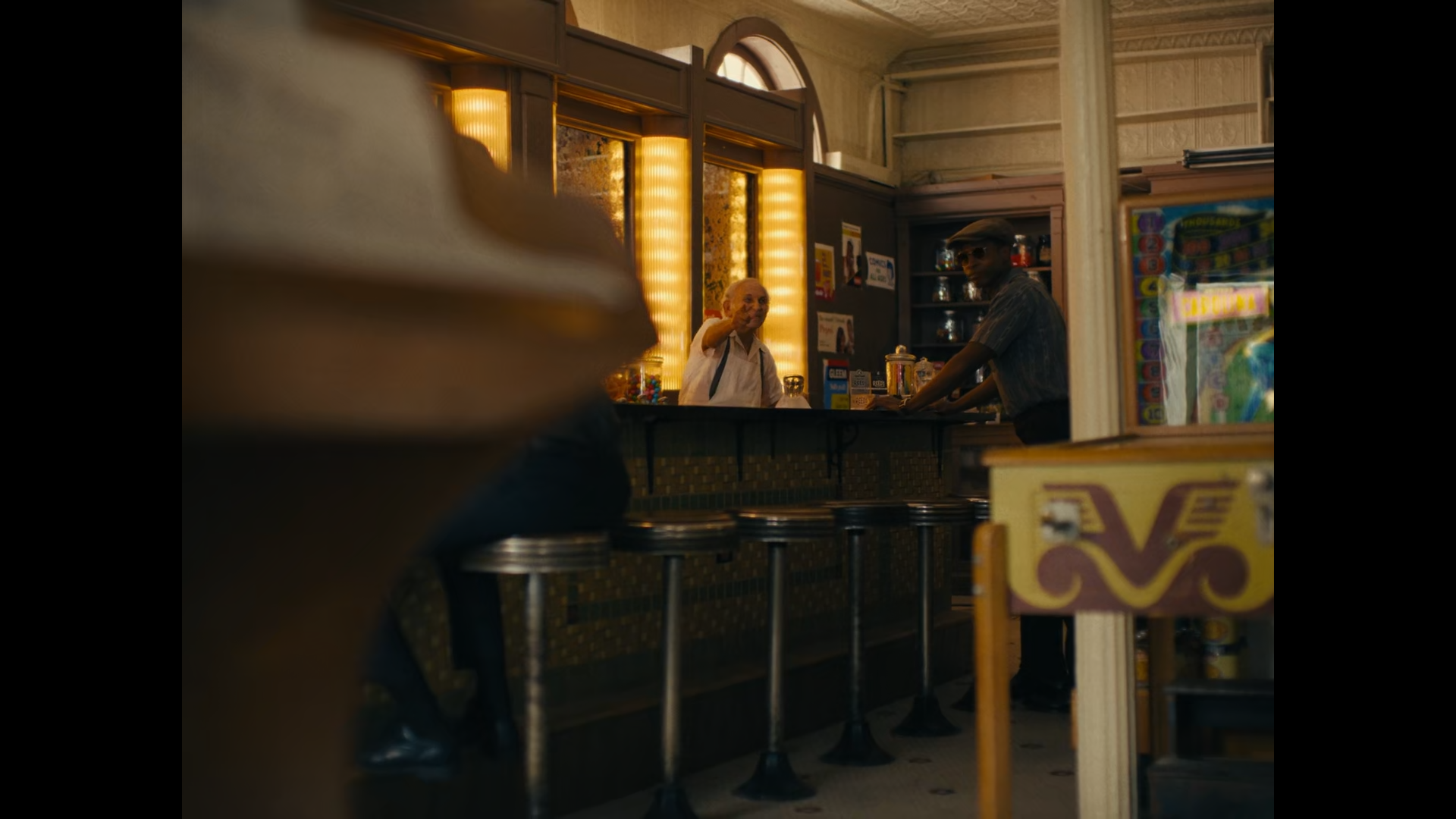
Figure 2: Elwood’s “point of view”. RaMell Ross, Nickel Boys (2024). Series of images.
This one reforming of cinematic language then spiraled out and fractured the whole semiotic model. As Fray says:
“Towards that, it was really having questions, almost at a subatomic level, like a subatomic conversation about filmmaking, because it really became a question of, okay, if we’re shooting a sentient perspective, what’s an establishing shot? What’s a cut? What’s a transition? How do you move through space? How do you move through time? Is this a memory? Or is this real life that’s happening to a character and we’re just going between the moments that are most important to them?”
If the camera is seeing through the vision and experience of another, and the camera stays there, then how do the normative formal practices and assumptions of film production and construction function? Can you do an establishing shot when the camera’s eye is in the body? Or what does a cut tell us now when the camera is so intimate with a character? It opens, as Fray describes, the question of whether the cut is a memory giving way to another memory, a character giving way to another character. When the film transitions, it is not just leaving a scene or a moment, but leaving the body—or rather, it is a leaving of the visceral materiality of a specific body in a specific time. Once more from Fray:
“It was an image that felt connected to a real body, a real body that had real stakes, and a body who was navigating a community in a system that was naturally hostile to their existence. We wanted the image to be immersive, to be inside of the scene and to even try to get rid of even the layer of dissociation that the audience is traditionally allowed to have with more traditional third-person cinema. We wanted to invite the audience into the body of a young black boy navigating the Jim Crow South.”
The image, then, is not just Elwood and Turner; it is not just experiential or phenomenological, but a specific historical livedness. Elwood and Turner are the film’s vessels, but they are also part of a world—a world we, the audience, are invited into, however precariously [Figure 3].
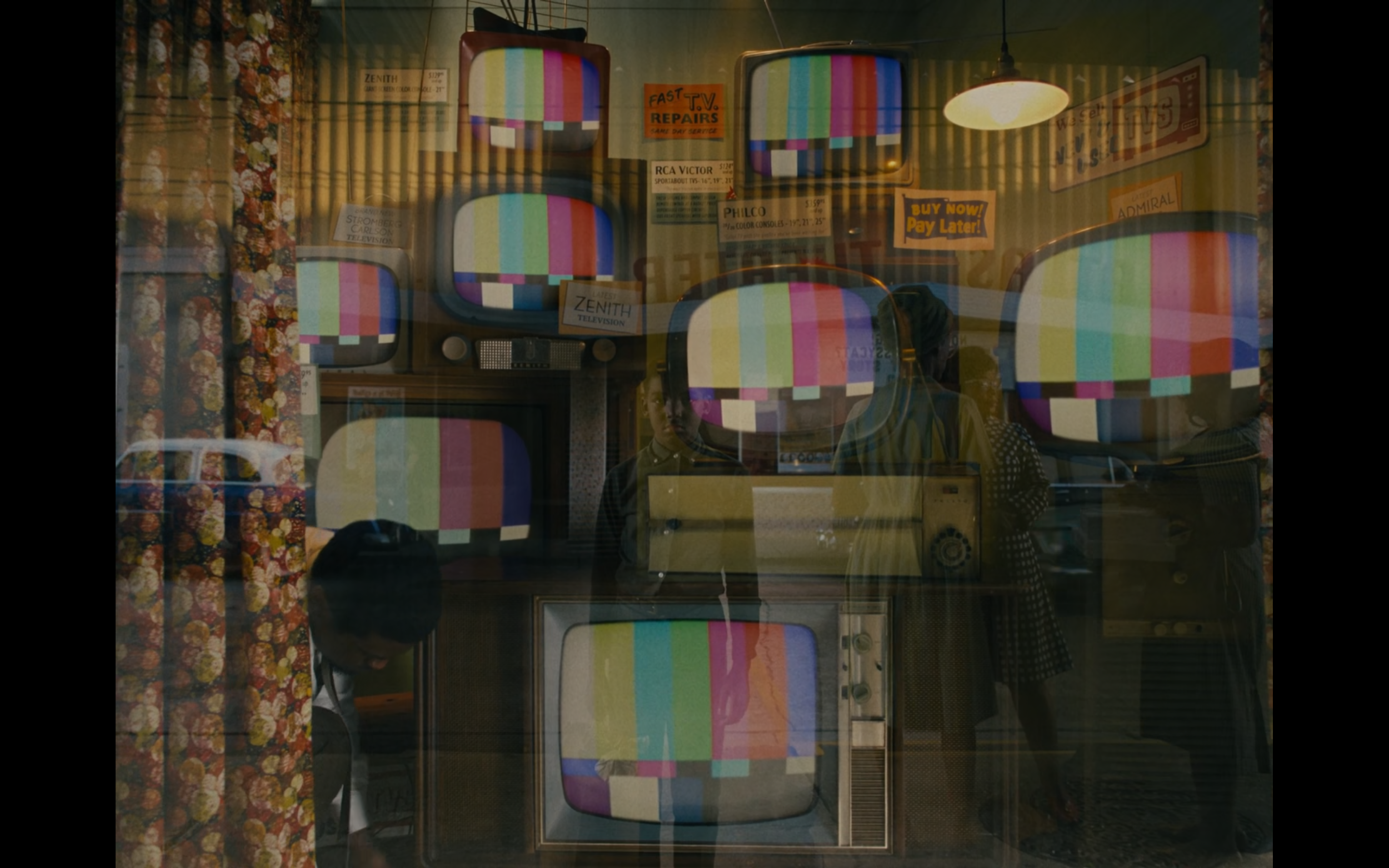
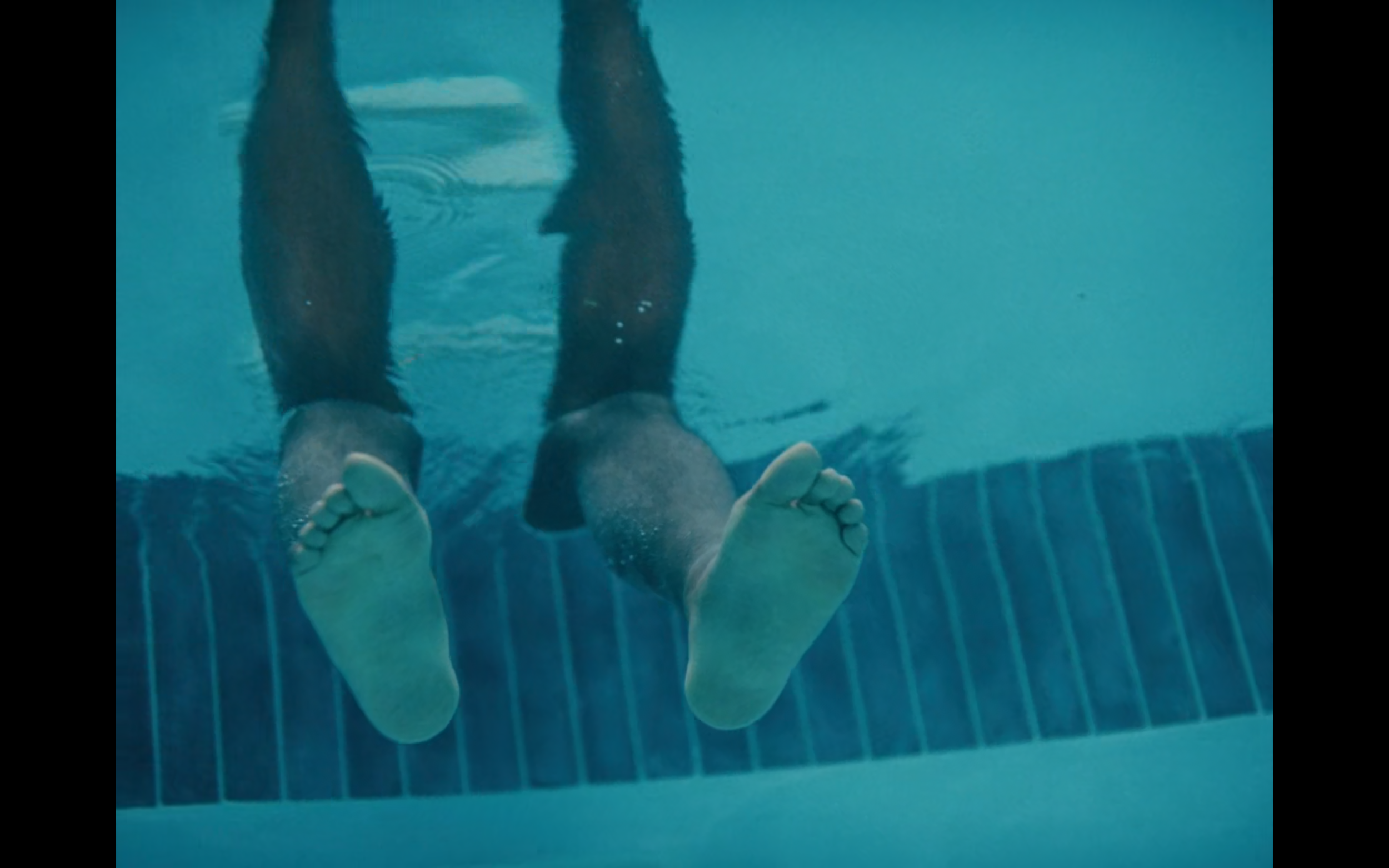
Figure 3: The worldliness of Nickel Boys. RaMell Ross, Nickel Boys (2024). Series of images.
We perform this aesthetic reading of the film and Fray to mark the specific way in for liquid blackness. The film’s style is enough to demand attention and study, but it is Fray’s and Ross’s conceptual practice that propels an interrogation not just of Nickel Boys but of how we come to see and how we assume the image and its form to work. This week of the reading group labored to take Fray’s language and cinematographic practice seriously, but to also push it, challenge it, complicate it, to see what happens under that pressure. With opticality, we are studying how to step to the side to see otherwise, and in Nickel Boys, we are studying how the film’s translucency places the viewer in the boys’ world but also asks them whether they belong there, reminding them that their arrival is not owed, promised, or even welcomed.[1] Nickel Boys, we propose, challenges the appropriative gaze of the POV and rejects the alienating objectification of 3rd person, offering instead a practice of being with—not before, not ahead, but alongside.
[1] Our use of “translucency” comes for forthcoming work by Fred Moten.
Sentient Image
Figure 1: a day in the life of Elwood, the camera seeing with him. RaMell Ross, Nickel Boys (2024). Clip.
To dig deeper into Fray’s provocation of the “sentient,” we turned to R.A. Judy’s Sentient Flesh: Thinking in Disorder, Poiesis in Black. Judy’s study of the sentient begins with Thomas Windham, a 92-year-old freedman interviewed in 1937 by the Works Progress Administration Federal Writers’ Project. In that interview, Windham names black people's claim to liberty, saying: “I think we should have our liberty cause us ain’t hogs or horses—us is human flesh.” For Judy, “us is human flesh,” and its division from animality confronts and narrates a taxonomy of access to liberty, but also of property. As Judy writes, Windham’s “asserting ‘us is human flesh’ acknowledges the vital biological commonality—the form of life—while rejecting evaluation as chattel” (2).
Sentient Flesh
“Rather than giving temporal primacy to flesh as the stolen sign, his statement presumes that meaning and form are expressed spontaneously: the flesh is with and not before the body and person, and the body and person are with and not before or even after the flesh.”
“It is about being flesh,” writes Judy (250). To be placed with, as opposed to a distinct temporal (or taxonomic) ordering, is a claiming of flesh, an orientation through flesh. To be with, as this project on opticality adamantly holds onto, names a radically different form of intimacy and relationality. “Windham’s person is in relation to his generally perceived fleshly thingness,” writes Judy (210). For Fred Moten, in his review of Sentient Flesh, this disorientation of “the order of things,” as Cedric Robinson said, becomes “the irruptive, disruptive turning and overturning of the ontological, metaphysical, and epistemological foundations of modernity” (2).
Flesh is sentient “in semiosis” (9). Language, not as abstract conceptual thought, but how things come to stand in for another—the game of moving bodies by moving words. A signification opposed to representation (250). Not before flesh or after flesh, but is flesh. That is, sentient flesh as a poesis, a practice-of-living, a thinking-in-disorder, or a “fleshlily thinking,” not in embodiment—or even in the body—but in a way of viewing, seeing, and being with the world. Or what Judy writes, “human creating in semiosis, in saying possibility” (13). It is a thinking in the flesh. Sentience as a dissonance in perception, as Fanon might say, that collapses the individuation of capital, and worlds a new horizon outside the I and towards a different plurality (Judy 13).
[1] This summary of Spillers is taken from my colleague and friend, Corey Couch.
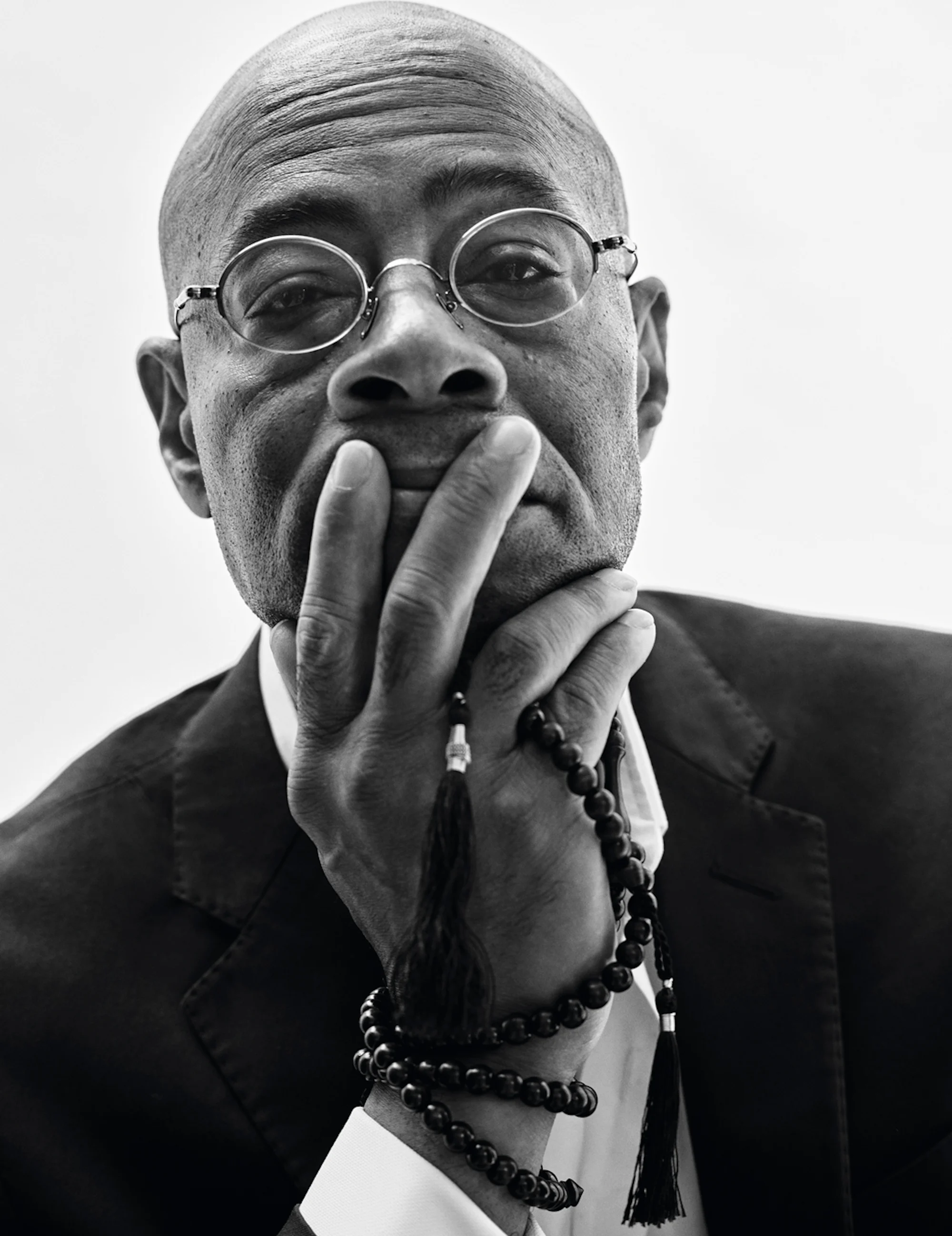
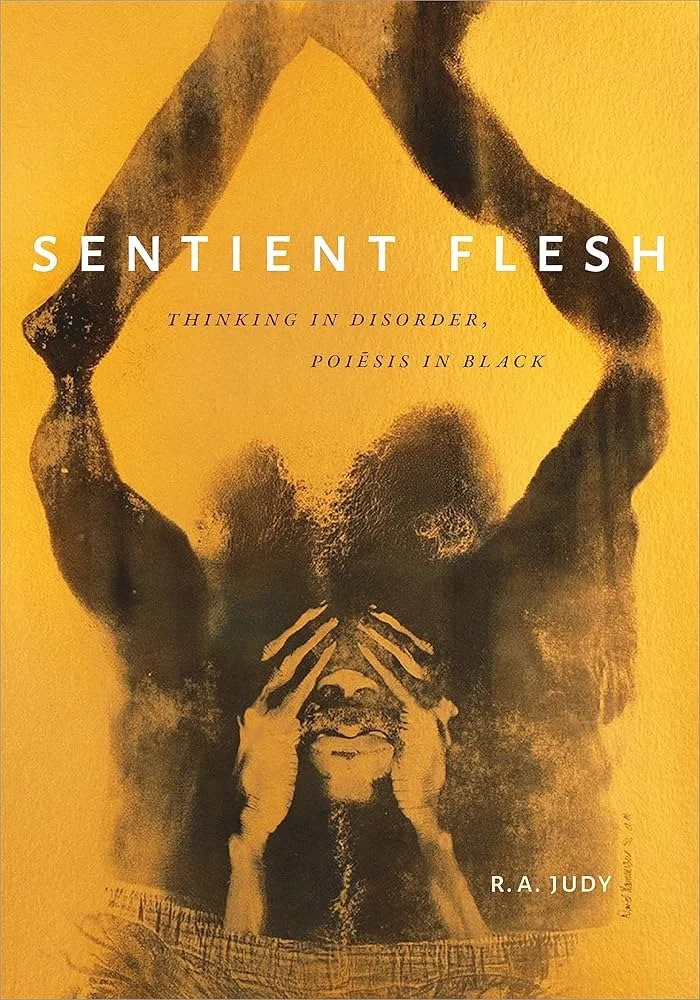
Figure 4: R.A Judy and the cover of Sentient Flesh.
There is much to say and write about Judy’s work and the density of historical, philosophical, and material thinking he performs—and that his work then demands of us. To parse it all is beyond the task of a portfolio; instead, what is critical for our study of Fray, the sentient image and opticality, is Judy’s interrogation of “the language game” of flesh, the maneuvers of signification that build and hold the stuff of flesh and the practices-in-living of black life. This language game is clearest in Judy’s parsing of Hortense Spillers’s seminal work on flesh.
As Spillers writes, “In that sense, before the ‘body’ there is the ‘flesh,’ that zero degree of social conceptualization that does not escape concealment under the brush of discourse, or the reflexes of iconography” (qtd. In Judy, 5). For Spillers, flesh being “before the body” is to be before the cut of symbolic individuation—of being made a body. If flesh is what she calls a “primary narrative” that exists prior to European hegemonies and codifications that mark the captive body, then flesh reconceptualized into distinct and separate “bodies” refers to the individual’s seared, divided, and ripped apart-ness from both the world and a sense of a shared responsibility for one another that continues to exist as a physical truth, even as narratives of individuation desperately try to pry “things” apart in order to reinscribe how it is that they go together.[1]
However, for Judy, Windham’s phrasing “us is human flesh” offers a different temporal and spatial ordering:
Leaving the Body to Be In Flesh
This turn towards Judy is a critical opening of opticality and of Fray’s claim of a “sentient image.” For what makes the image sentient? If we follow Judy, how does it come to signify but not represent? How does it come to be material but not embodied? For as Judy writes:
“The point being that Windham’s person is inextricably of the flesh, lives life as flesh. The flesh Windham speaks of is material, but it is not embodied, in the sense of corpuscles that combine to form a discrete entity. This flesh is not a fact or sum of facts. ”
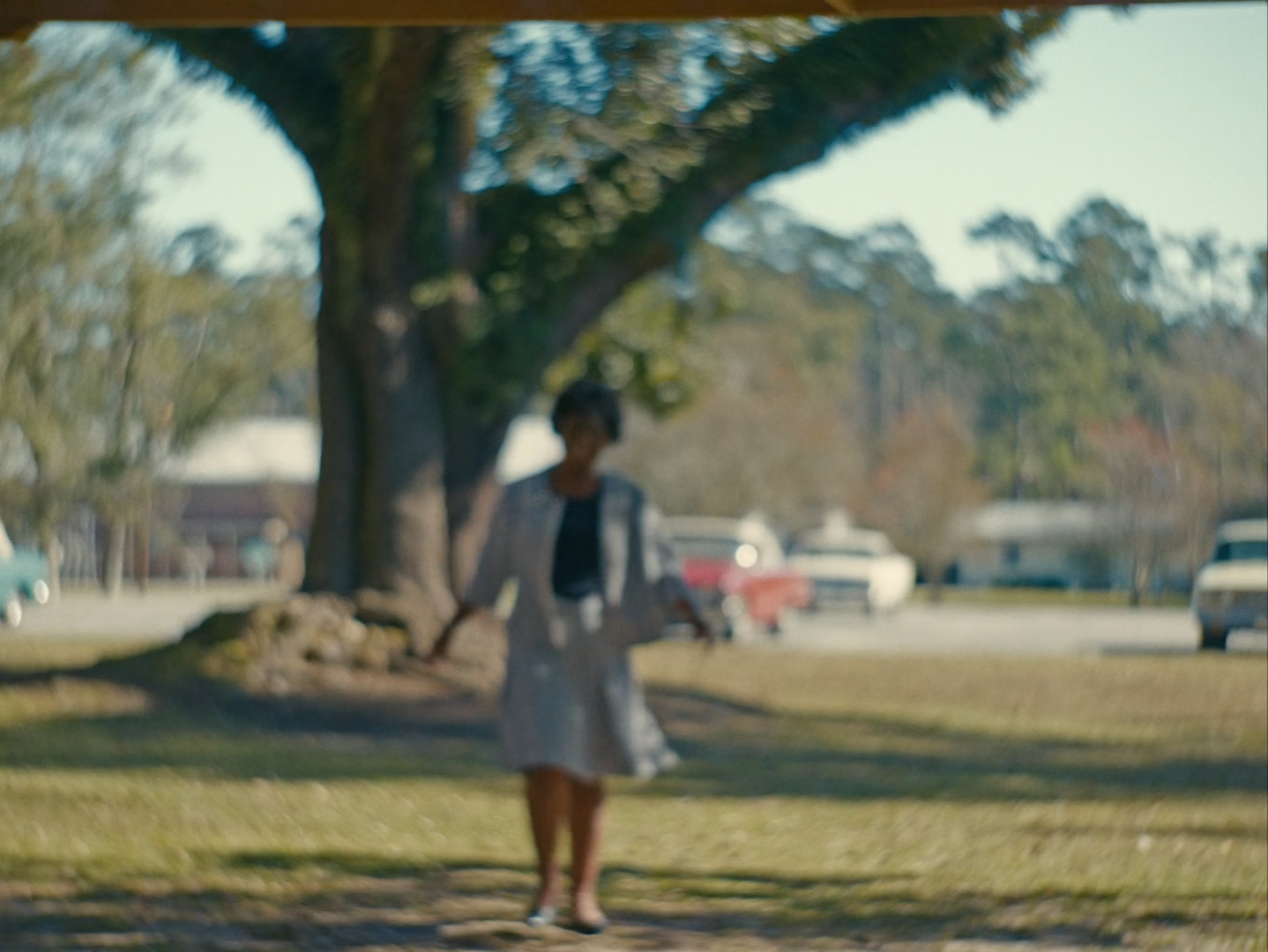
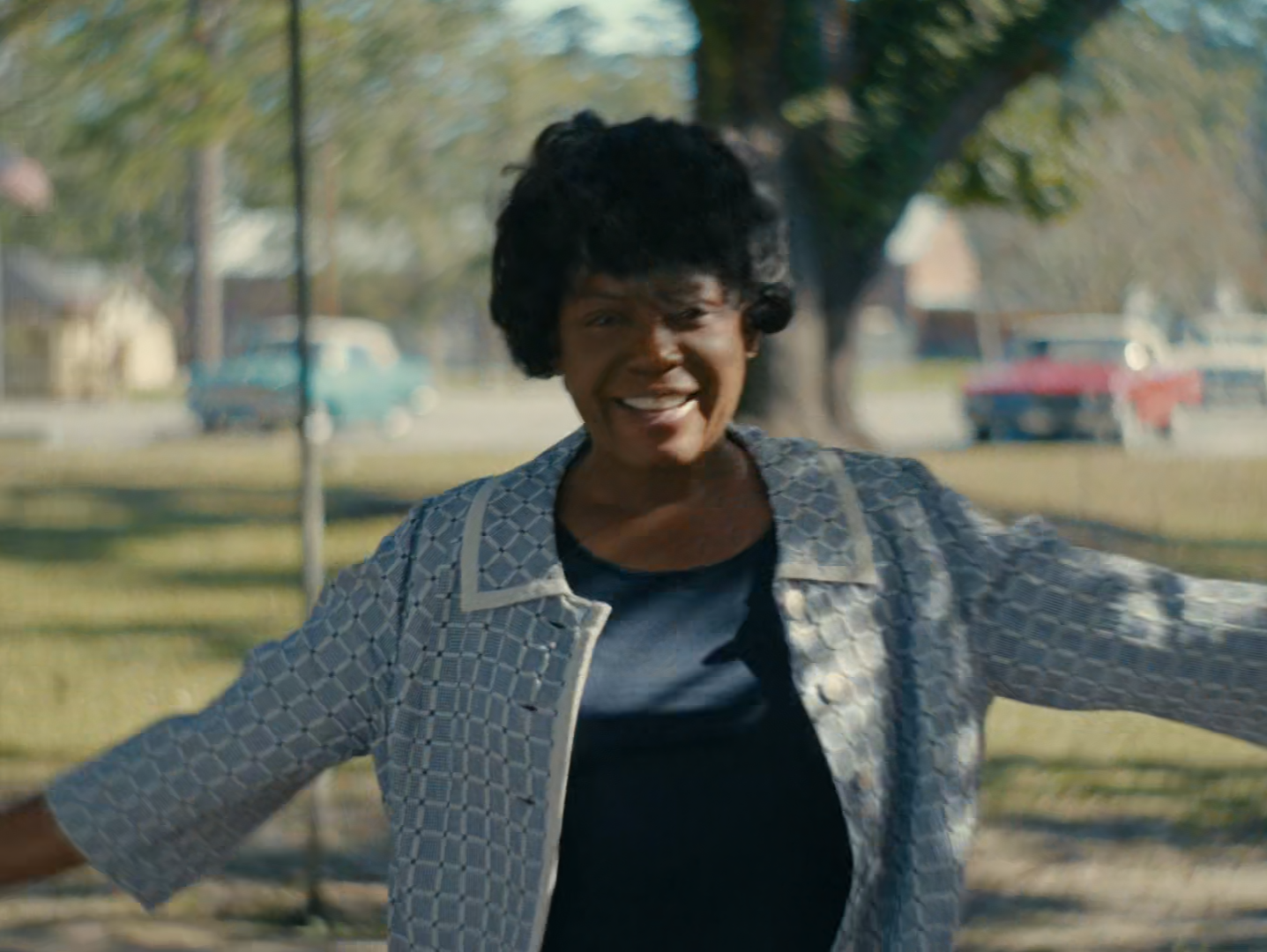
Figure 5: Hattie’s second visit to the Nickel Academy. RaMell Ross, Nickel Boys (2024). Series of images.
And yet, it appears in Nickel Boys, that the camera is in the body, that the camera is Elwood and Turner. It sits with their perspective, their point of view. In straightforward and direct terms, the film represents their lives with discomforting intensity. So how can we, liquid blackness, argue that the film signifies but does not represent? How can we reject the point of view film as the best descriptor? How can we say the film is not embodied when the camera is so obviously in the body? Fray and Judy are not an easy exit ramp to escape the burdensome, phenomenological individuation of the POV film, but instead, they enable a reckoning with how the camera’s intimacy with Elwood and Turner is not a placing in the body, but in the language of Judy, in the flesh that Elwood and Turner are in. To parse this nuanced and delicate distinction, we turn to a scene late in the film when Elwood’s grandmother comes to visit for a second time and is finally able to see Elwood.
As Hattie walks towards Elwood (thus towards the camera), she reaches out and hugs him (the camera) [Figure 5]. The camera is pulled into her embrace, its focus blurred by her body and by being closer than a camera’s lens can handle. As she sits at the picnic table, calling over other boys that are nearby, the camera remains, as it does, in Elwood’s vision. It follows his eyes down to Hattie’s hands, holding him, before following her directive to look up, and return to her face. But then, the film’s form ruptures and leaves the body. The camera cuts to the side, it cuts away from his body, but without transitioning to Turner’s. It enters a perspective that Elwood cannot hold. The camera is perpendicular to the clasped hands of Elwood and Hattie, a position not held by a body, but instead, merely in the world [Figure 6].
Figure 6: The sentient image in “the flesh”. RaMell Ross, Nickel Boys (2024). Clip.]
When Judy writes “this flesh is not a fact or sum of facts,” not a “discrete entity,” it marks a looseness, an openness. The flesh is not the body; it is not individuated and contained; it is porous, flowing, contaminating. Flesh is a plurality, an ensemble, an informality, an us, whereby “us is fully cosmological, ascribing being in the world while simultaneously being elemental to the world. The world need not become flesh; it was already flesh” (Judy 250). When the camera leaves Elwood’s seeming embodiment, it makes clear that it was never truly in his body, but with his flesh. Or to borrow from Moten:
“What is interiority? What is the relation between territory and interiority? What if the problem is this interplay of identity, interiority, and individuation? What if it’s deeper than what’s supposed to be inside, indicating the semiotic paradox of the displaced and disrespected and disembodied experiences of Black persons?”
To read through phenomenology is to be stuck in an individuating distraction, a solipsistic spiral. “The phenomenological attitude addresses the question: What are ‘we/I’? The semiotic attitude ponders: How is ‘us’? What we are is clear: flesh and blood animals. The question is: How are we human flesh?” (251) The camera is “fleshlily thinking”—“to think with world and earth both in view, and not situate thinking somewhere outside the flesh” (19).
In that rupturing, rapturous cut, the image—like flesh—is sentient not by becoming an I but by becoming with.
Being With the They
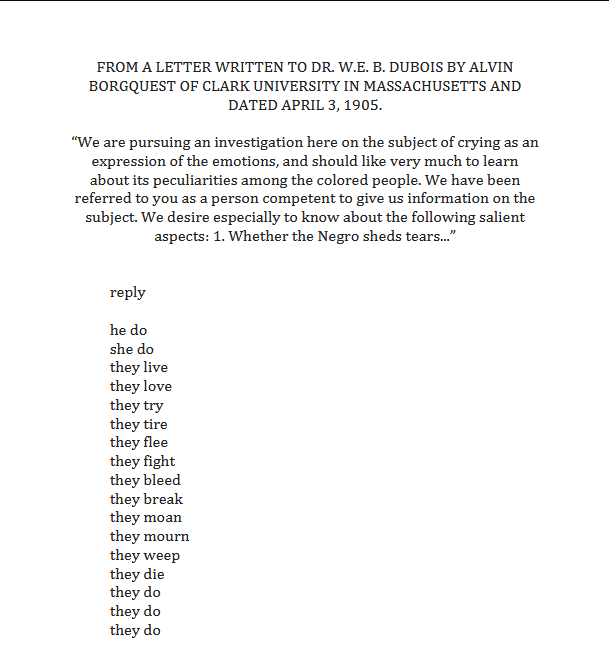
Figure 7: Lucille Clifton, “reply” (1991).
Clifton’s use of “they” for the pronoun produces a jarring distance. Not an I or We or Us—pronouns that create a collective experience with the reader—but a they, a syntax that, writes Quashie, “invites the reader to behold the other” (3). This specular call to look is a directive—declaring where and how the reader should direct their gaze. But also, most shockingly, this directive also marks the speaker as being outside too: “the poem negotiates the politics of looking via its pronouns, by casting the speaker awry from and as observant of black collectivity” (3). Despite, or rather, because of this distanciation, they is not an act of alienation but an act of profound care for what is gazed upon. “Clifton uses the distance of ‘they’ to encase the scene in its own world; doing such amplifies the potential to behold the humanity of the poem’s black ones” (4). They makes a black world of what is held in its plural, distinguishing pronoun, and in so doing, elides any simplistic desire to lay claim to an ownership of that world, and “amplifies the potential to behold the humanity of the poem’s black ones” (4).
Considering Quashie’s conceptual theyness, we can reconsider what being with Elwood in Nickel Boys means. Like Clifton’s poem, Nickel Boys’s camera positions the viewer as needing to still use the they—despite the camera’s intimacy with Elwood and Turner—not an us, not a we. The camera is not them, for the film still demands describing them as a them. The camera beholds their world. In the film’s cuts, the camera, like Clifton’s speaker, must bear witness (4). Quashie further deepens the rich and precarious work of the sentient image.
“At stake…is a claim about the second person not as an encasement of the other where the authority resides with the speaker, but as an occasion to consider the tender becoming of the speaking one, the one who calls the scene into being, the one who yields to the risk and possibility of venturing to say “you.” Again, relation’s movement, its directionality, is an opening toward. ”
While the second person does not have an equivalent in cinema, Quashie’s ethical demand of the second person—its caring but always distinguishing relationality—articulates the delicate precarity of Nickel Boys’s camera. Sentience challenges the easy presumption of the point of view gaze, but it also holds the ethical tension of what it means to be with another. Being-with is not a passive state, but an active labor and politics. To be with their trauma, certainly, but also to be with their joy, their labors, their horizons, their home, their world, their flesh.
Both Judy and Quashie are after a black poiesis— “the activity in which a person brings something into being that did not exist before” (Donald E. Polkinghorne, qtd. in Quashie, 29). In Fray’s semiotic and cutting rupture, we are provoked to be-with a black worldmaking that guides us away from a consuming phenomenological ownership and towards an aliveness of sharedness, towards “capaciousness, yearning, possibility” (Quashie, 7).
We, along with most writing about the film, have blurred the line between ourselves and Elwood, and between Elwood and the camera. It is easy to fall into an “us,” and that is, in part, the point. The film wants to cultivate a sense of connectedness, to bring blackness into a commonality—a remembrance for those who lived what Elwood lives, in his time and after, and an experiential reckoning for those who have not. But as Judy’s disruption to the ordering of things and the taxonomies of the human make clear, we must be suspicious of such a phenomenological attachment to being Elwood, no matter one’s relationship to the realities of his life.
Kevin Quashie’s Black Aliveness, or a Poetics of Being, helps us further specify and articulate the form and work of a sentient fleshy image. Like Judy, Quashie is interested in a black making of worlds—a poesis—but with a focus on the relationality black art enables without a passive descendent into uninterrogated sameness. Quashie opens his book with a poem by Lucille Clifton, “reply,” published in her 1991 book, Quilting [Figure 7].
READING THE PORTFOLIO
SCHEDULE
I. THE SENTIENT IMAGE
Sentient Image | Sentient Flesh | Leaving the Body to Be in Flesh | Being With the They
II. COLLECTING | PREPARING | GATHERING
Studying the Prop | Prop Value | Purpose | Gatherings | Seeing Through
III. BLUES ECOLOGY: THE SOUNDS AND POLITICS OF PLACE
Blues Ecology | Juke Joint Intimacies | Abolition Geographies
IV. THE DANCEHALL: SONIC FLOWS, VIBRATIONAL RELATIONS
Rub-A-Dub | The Crew | Sound qua Sound | Vibrational Relations
II. COLLECTING | PREPARING | GATHERING
Artists/Work
● Akin McKenzie, production design, The Woman King (2022), dir. Gina Prince-Bythewood
● Mati Diop, director, Dahomey (2024)
Readings
● Wilkinson, Alissa. “Dahomey: A Daring Meditation of the Painful Legacy of Looted Artifacts.” New York Times, October 25, 2024.
● Docalovich, Katrina. “Mati Diop in NYC.” Film Quarterly 78.3 (March 1, 2025): 85-89
● Biah, Calixte and Bénédicite Savoy. “In Conversation: Museum Work and Experiences of Restitution.” Museum Worlds: Advances in Research 13 (2025): 145-153.
● Cervenak, Sarah J. “Black Gathering: ‘The weight of being’ in Leonardo Drew’s Sculpture.” Women & Performance: a journal of feminist theory 26.1 (2016): 1-16.
● Folland, Thomas. “Readymade Primitivism: Marcel Duchamp, Dada, and African Art.” Art History 43.4 (2020): 802-826.
● Gorfinkel, Elena and John David Rhodes, The Prop. Fordham University Press, 2025.
○ “Reading for the Prop”
○ “Prop Value”
Studying the Prop
The cinematographer has often been at the center of liquid blackness’s practice. Beginning in our study of how darker skin tones have been rendered on film (sensitometry), the cinematographer’s labor, investments, and cinematographic invention has been vital. For example, Larry Clark’s Passing Through (1997) required studying Clark’s search for and use of Fuji reversible film to capture the nuances of black skin against dark and even black backdrops. Additionally, as we have investigated those trained by Haile Gerima at Howard University—what we term the “Howard Pedagogy Lab”— the camera became the tool—or weapon, as Bradford Young names it—for rendering the complex histories and practices of black expressive culture. And it is from this lineage and research history that we began conceptualizing how artists “prepare,” how they come to see and thus how they come to imagine and create by turning to Bradford Young’s study of Charles “Teenie” Harris’s lens and its dense, historical and vitalizing metadata. Because of these rich and complex aesthetic political projects, the camera has often been our guide.
And yet, how then do we bring those lessons, those practices of study, to bear on that which is placed prior to the camera? That which is made before the image yet makes the image possible? How do we study the objects the image holds, that the image asks us to see and feel, but also, at times, to ignore? As Elena Gorfinkel and John David Rhodes write in their 2025 book, The Prop:
“The prop…is invisible visibility: the stuff that populates the fictional world and makes it seem like the world. But…the prop also functions to declare its visibility, as well as its sensual concreteness. ‘Do (not) look at me!’ is the line delivered mutely by every prop, over and over ”
With production designer, or director of design, as he names it, Akin McKenzie required us to imagine our study differently, to arrive and see anew. We quickly recognized that it cannot just be a study of the objects on set, a cinema studies approach to the prop as prop. Such a practice requires too much reification of the object, a faith that we “know” its value from just seeing it in its place, or worse, its value accorded by narrative. Nor did we want to simply prioritize how the camera sees the object. Instead, we had to be less concerned with the object qua object than with the labor of finding and making, the labor and study of how and what to gather.
With this set of readings, we wanted to consider how to study the object, to see with its gaze, to feel out what gathering with the object can help us see and know.
Prop Value
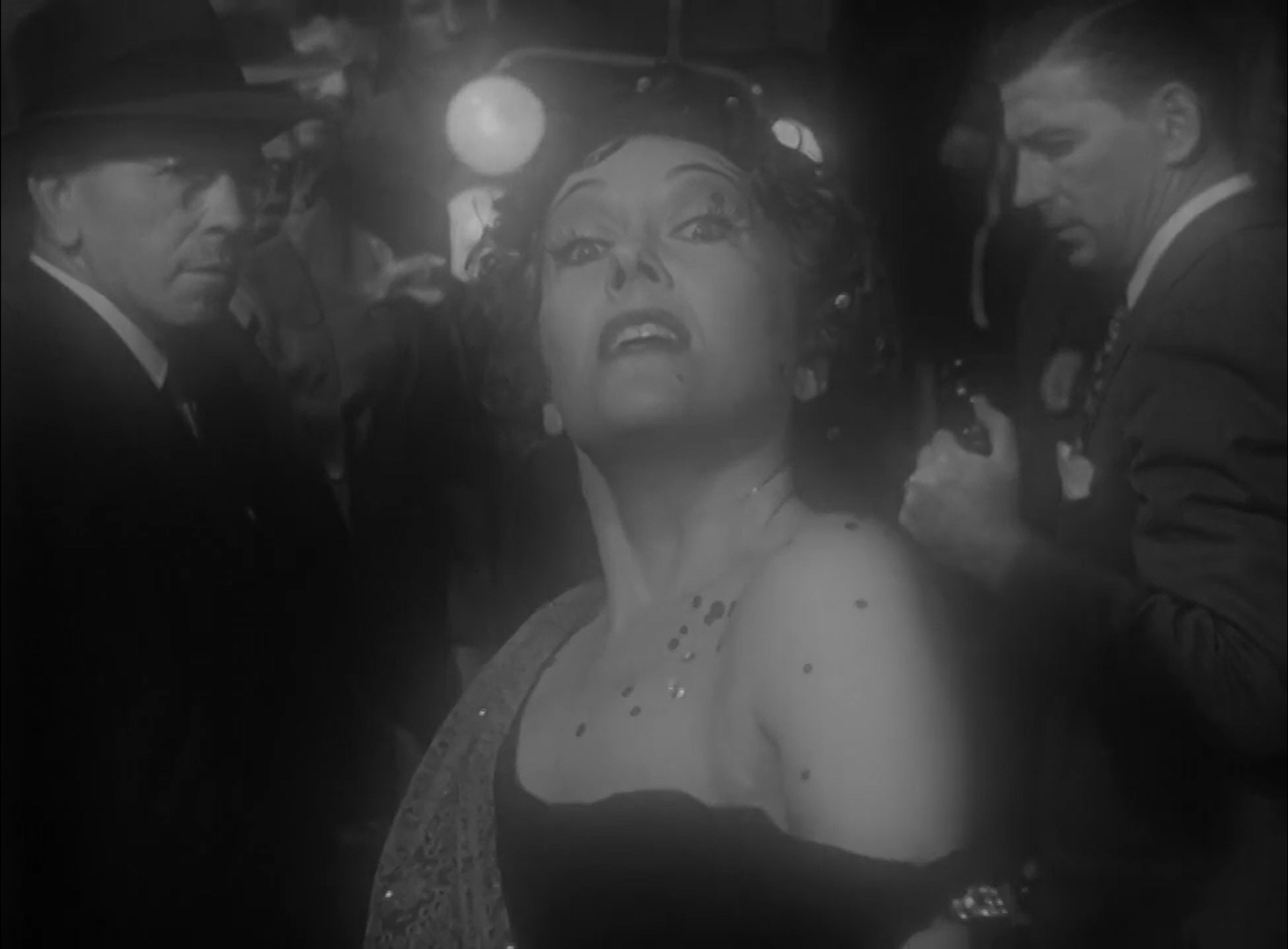
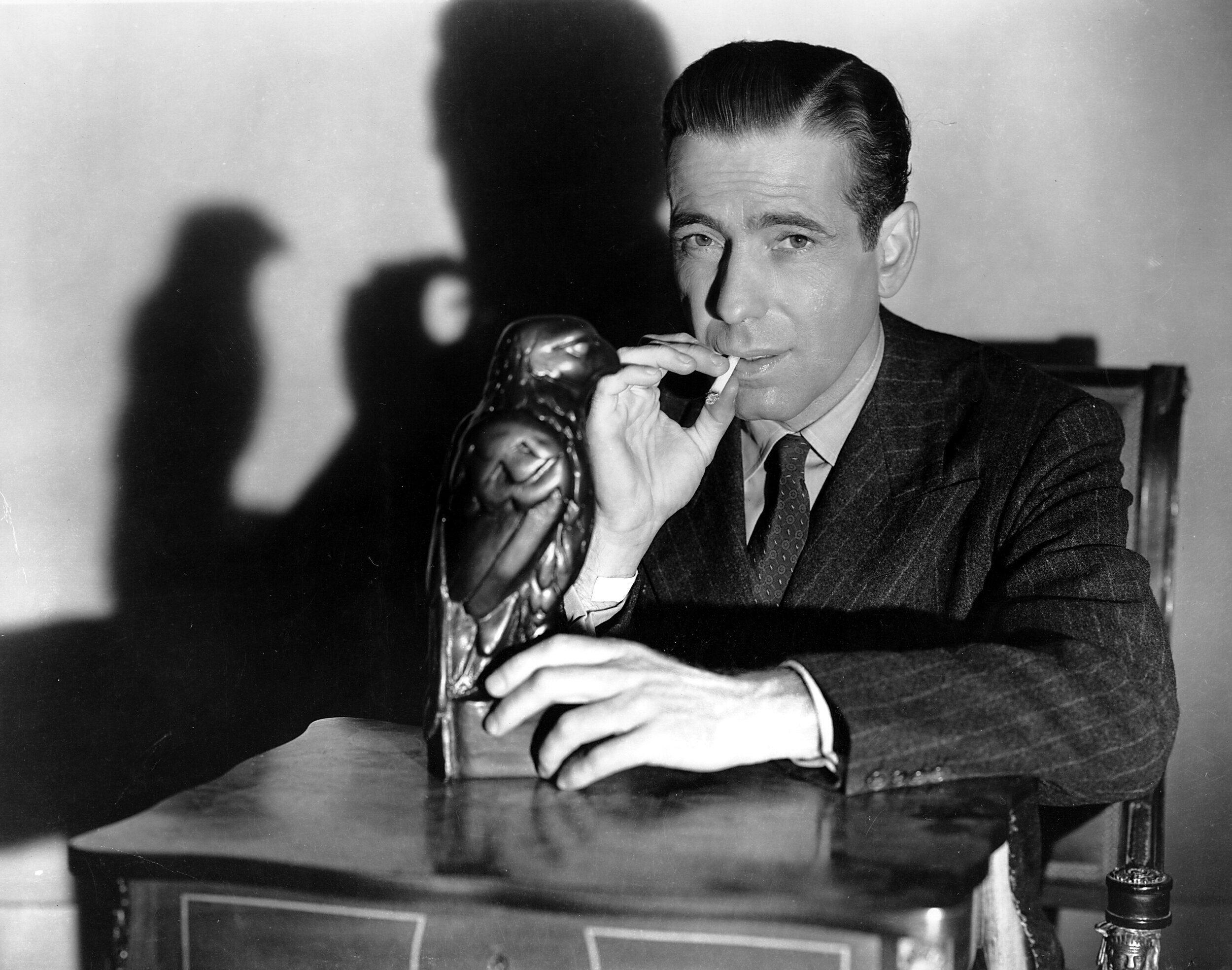
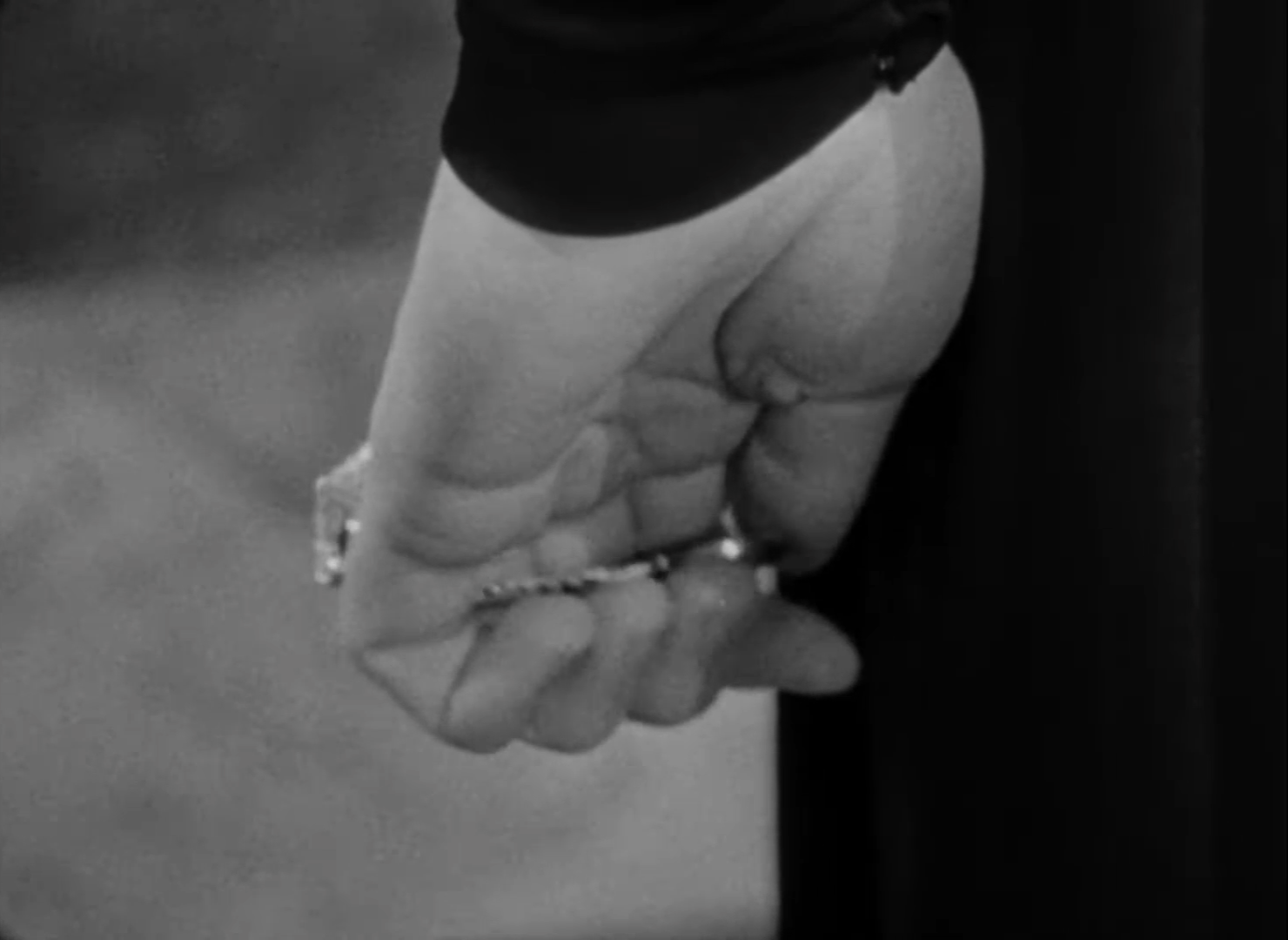
Figure 1: Examples of “the prop” in Classical Hollywood Cinema. Billy Wilder, Sunset Boulevard (1950), Alfred Hitchcock, Notorious (1946), and John Huston, The Maltese Falcon (1941). Series of images.
With The Prop, Gorfinkel and Rhodes set out to imagine a film studies through the prop—”the smallest unit of cinematic representation and signification” (4). The prop, as they purposefully overextend it, comes to be the marker of what cinema can consume, can transfigure into useful and valuable for itself, a “radical instrumentality” (15) that “attest[s] to cinema’s singularity as a medium of capitalist modernity” (17). The prop may be the smallest unit of cinema, but it is also the process that can make anything in front of the camera a part of its propulsive narrative linearity. “[Cinema] must turn the world into its prop, or, in other, less innocuously abbreviated terms, its property” (28). What marks the difference between Gloria Swanson’s face and Norma Desmond’s pool? Can we separate out the gun-as-prop and Joan Crawford’s eyebrows-as-prop [Figure 1]? In distinction to Heidegger’s “thing,” with its “‘frantic abolition of distances’ that ‘brings no nearness,’” the prop “disappear(s) into itself” (17). Its promise is not an apprehending nearness, but “to secure, to clasp the representation into place; its threat is to shove itself too far into view, to draw too near, to assert, if not its Heideggerian thingness, then its objective, autonomous objecthood” (18). Cinema makes characters out of things. That is, a narrative usefulness, a narrative usability, or more explicitly still, as Gorfinkel and Rhodes name it, a prop value.
“Prop value,” they write, “name[s] a mode of perverse redirection in which the elements of a film’s reality and its fictionality become sites for a dispersal and remapping of spectatorial intensities, for the production of new pleasures or the intensification of old ones” (51). The prop, in these terms, cannot escape Adorno’s “absolute commodity.” It “dances maniacally” between the materiality of being a real object for the unreality of film, and being a fictionalized unreality that allows the film to hold its own reality (52). That is, the prop is both a real and fake thing, a thing that calls out the fiction of film and also the thing that makes that fiction real. Thus, it is always producing value—in and out of the film. It is always in use and always usable again—in being reused across fictions or called back to reuse its past value. Contingent, fungible, fetish: the prop’s value, for the modernist machine of cinema, is its ability to be continually exchanged for whatever is needed, wanted, desired, next. And the provocation from Gorfinkel and Rhodes is how the prop moves beyond the simple set piece to all that the camera holds. For the prop makes property out of all the camera images.
Purpose
In this frame of the prop and its value, Akin McKenzie offers a necessary intrusion and antagonism with the Hollywood, capital-driven logics that are central to Gorfinkel and Rhodes, and the colonialist appropriations of African art. While not escaping the ultimate outcomes of Hollywood, for McKenzie still works within that industrial machine, he does offer a model for how artists study and, he hopes, how film might provoke the viewer to see and feel out the world and its histories. What we want to offer, via McKenzie, is a model of opticality that pushes the prop beyond and away from property, or rather, in the language that will guide McKenzie’s work on The Woman King (2022), push the prop back and towards models of care and continuity.
In conversation with Arthur Jafa and Shawn Peters, McKenzie discusses his vision of “purpose” and its role in shaping his design practice:
Figure 3: McKenzie on “purpose.” Film Roundtable. “Arthur Jafa and Akin McKenzie, moderated by Shawn Peters.” Youtube, July 28, 2023. Clip.]
McKenzie is orienting us towards the object not as a tool or as a use or exchange value, but as purposeful for a person, a people (historical and contemporary). The story of the object—the story of its making, of its finding, of its role in a life—are what propels its heft and meaning. This is not Jean Epstein’s “animism” where the prop becomes alive with narrative purpose like a character (see Epstein, “The Cinema Seen from Etna,” and Gorfinkel and Rhodes 19). Instead, in McKenzie’s framing, the value the prop holds its use by people for their lives. Immanent rather extrinsic, purpose sees the object as holding meaning; meaning that lives beyond the individual moment of its making, use, or filmic capture. Crucially for film, McKenzie’s practice of purpose provokes such questions as: how can that meaning—that purpose—come to not only shape the image but be felt through the image? And can an object come to hold a life unbound from the story within which it is imagined?
In preparing for When They See Us, McKenzie turned to the stories and memories of the Exonerated 5 and their family. The way they remember their homes, their street, and the carceral institutions they were taken through. As McKenzie says, “we are separate from them, but wanted to capture our understanding of them” (Edelbaum). Opticality, here, becomes that labor of shrinking the distance but never actually losing the fact of the distance. As McKenzie said in an interview with Susannah Edelbaum:
“I feel that the most respect that I can offer comes from the details and intricacies that we embed into worlds, and an understanding of how you affect your own space,’ McKenzie said. ‘So if we’re painting a bedroom blue, we want to understand that that was a choice that came from love and compassion. Parents went into that room and painted the room to liven up the energy and atmosphere that their child is in.”
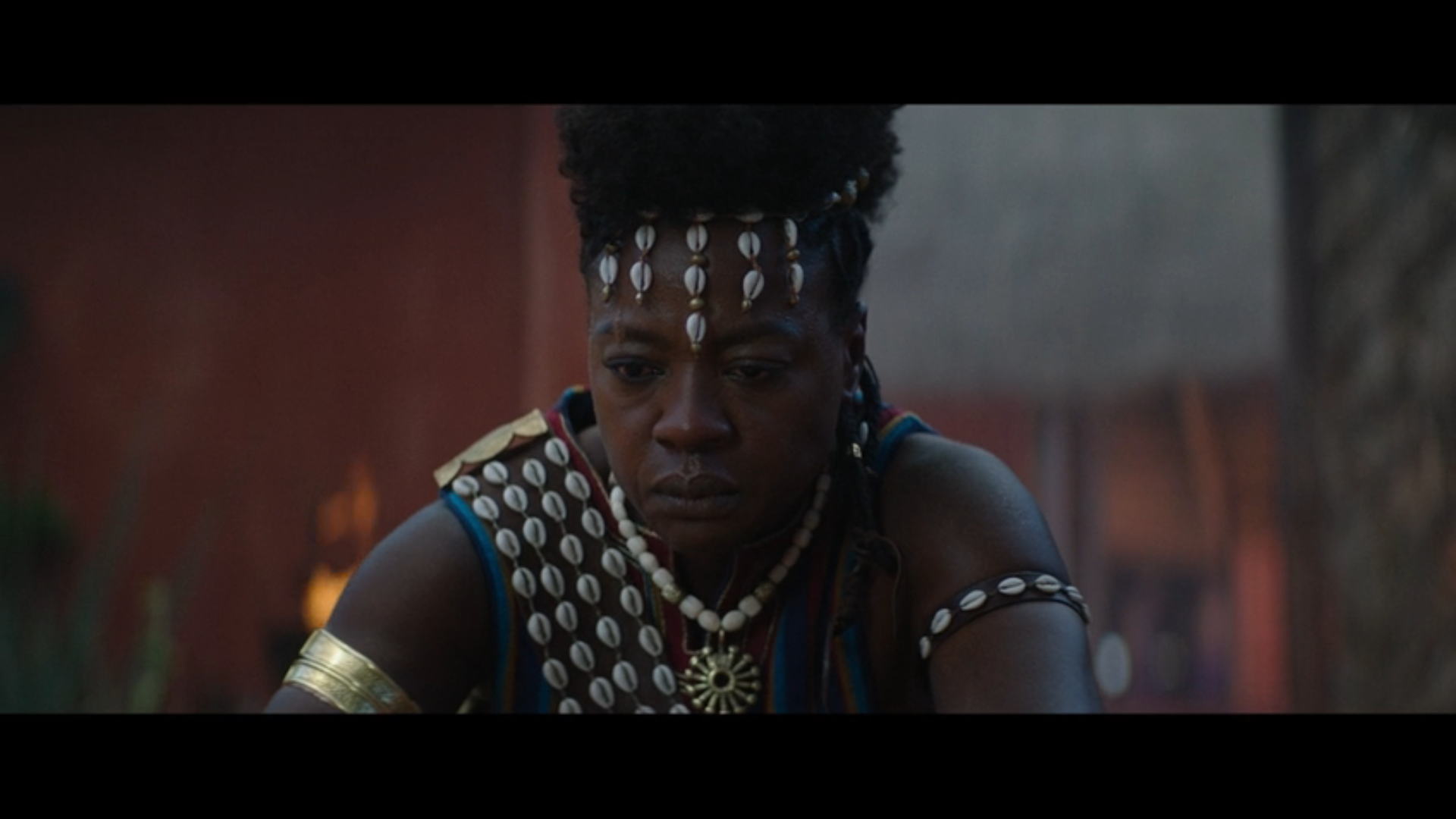
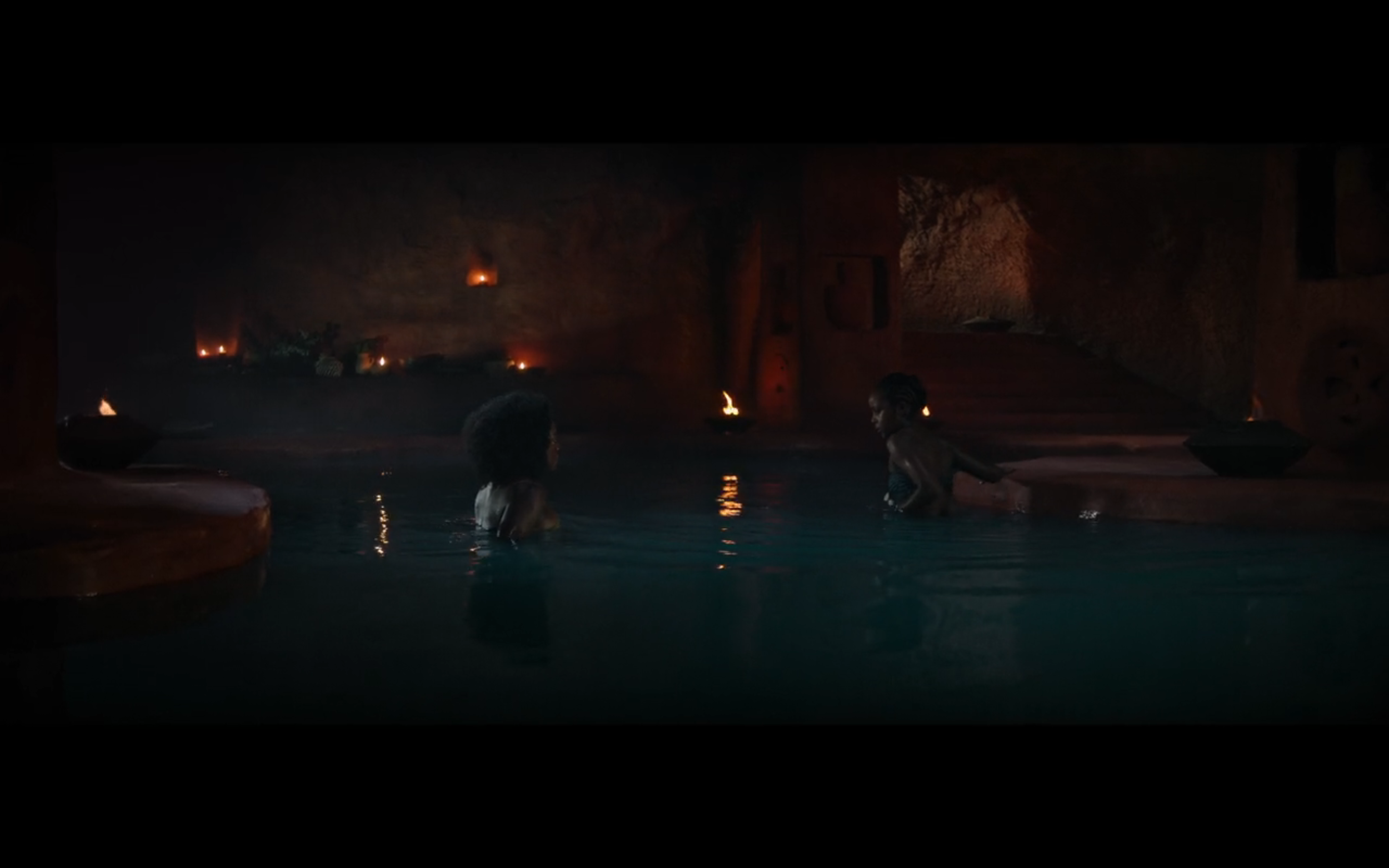
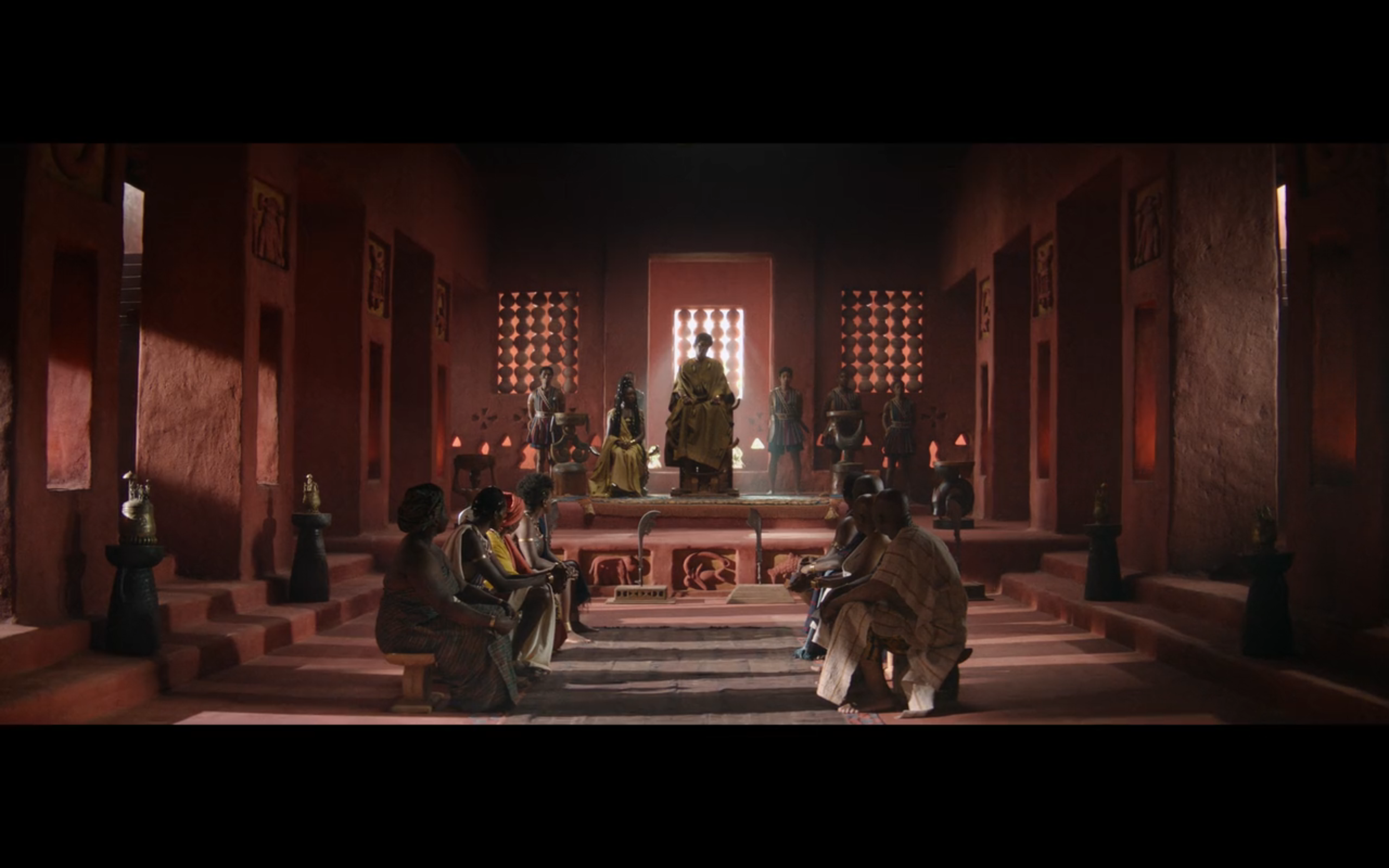
Figure 2: Filling out the world of Dahomey. Gina Prince-Bythewood, The Woman King (2022). Series of images.
We see this as what Alexandra Vazquez calls “listening in detail”:
“Details are things that we learn to live on, imagine off, and use to find other kinds of relationships,’ she writes. ‘To listen in detail is a different project than remembering. It is not archeological work done to reconstruct the past. It is to listen closely to and assemble that inherited lived matter that is both foreign and somehow familiar into something new.”
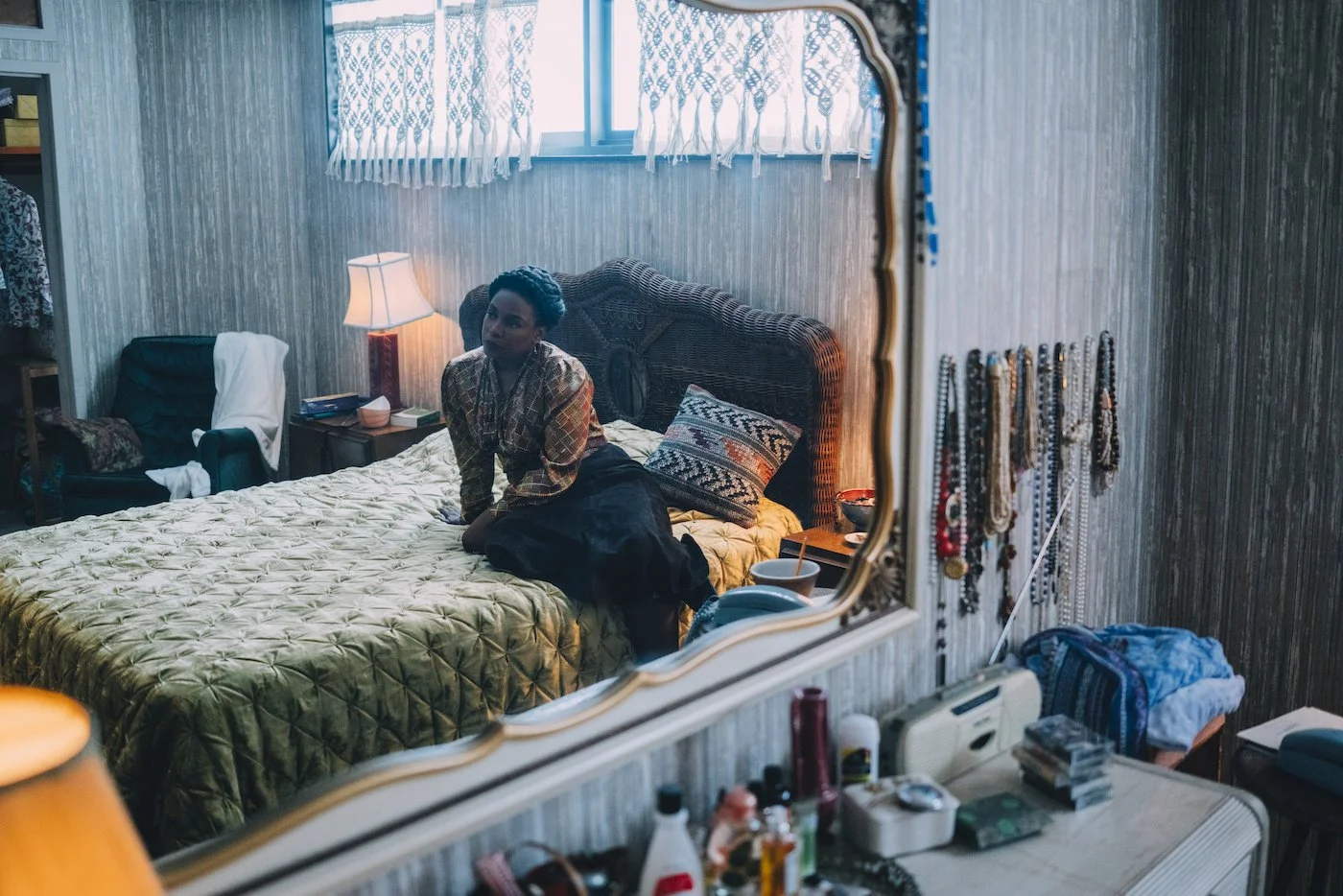
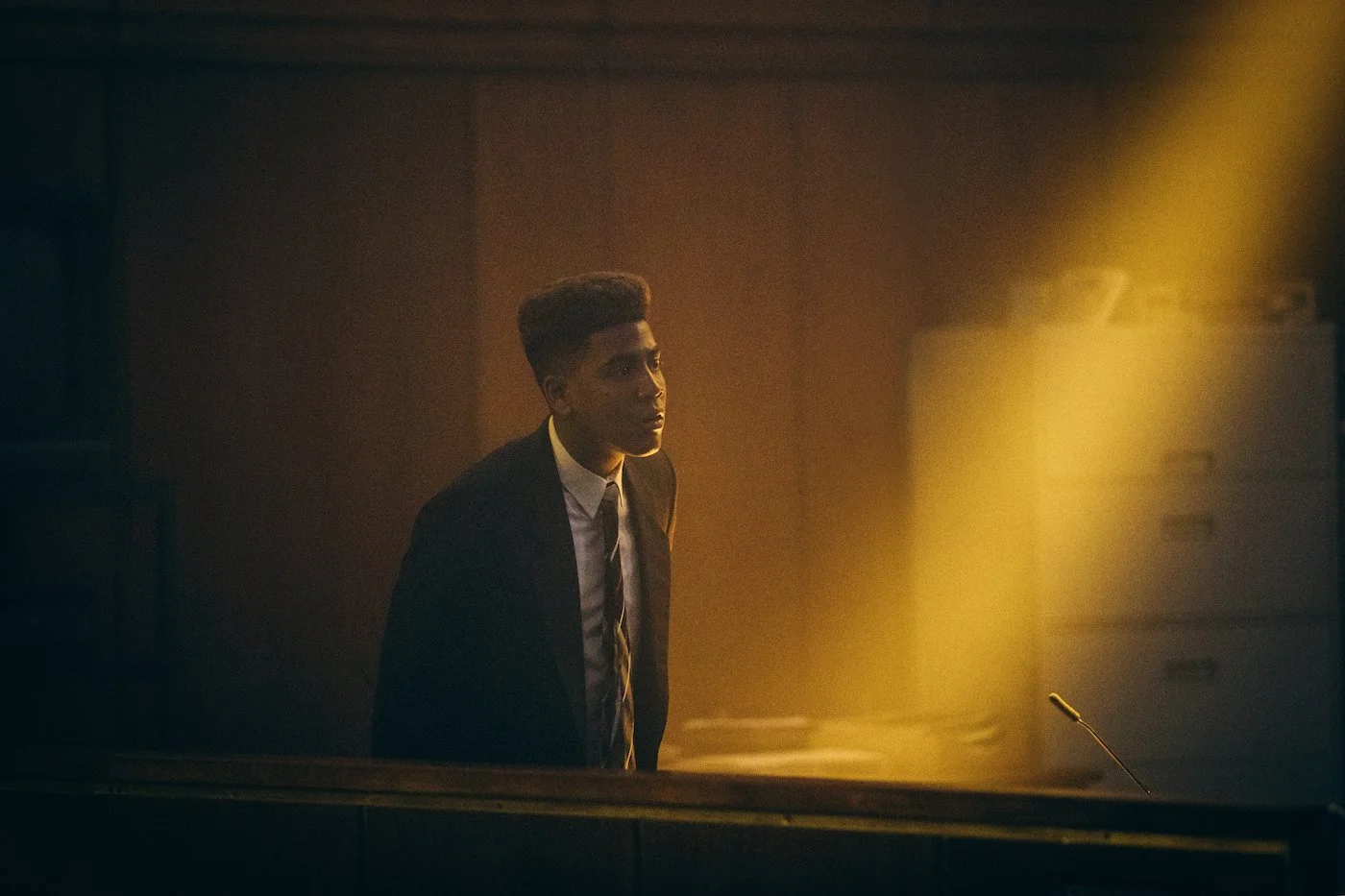
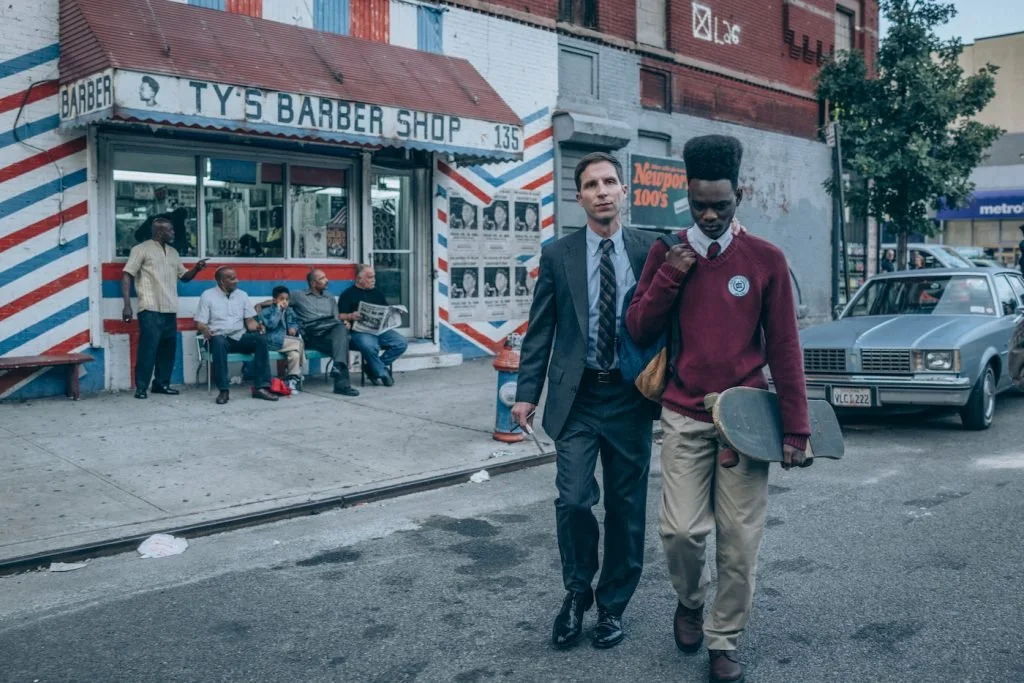
Figure 4: Filling out the life and memory of The Exonerated Five. Ava Duvernay, We They See Us (2019). Series of images.
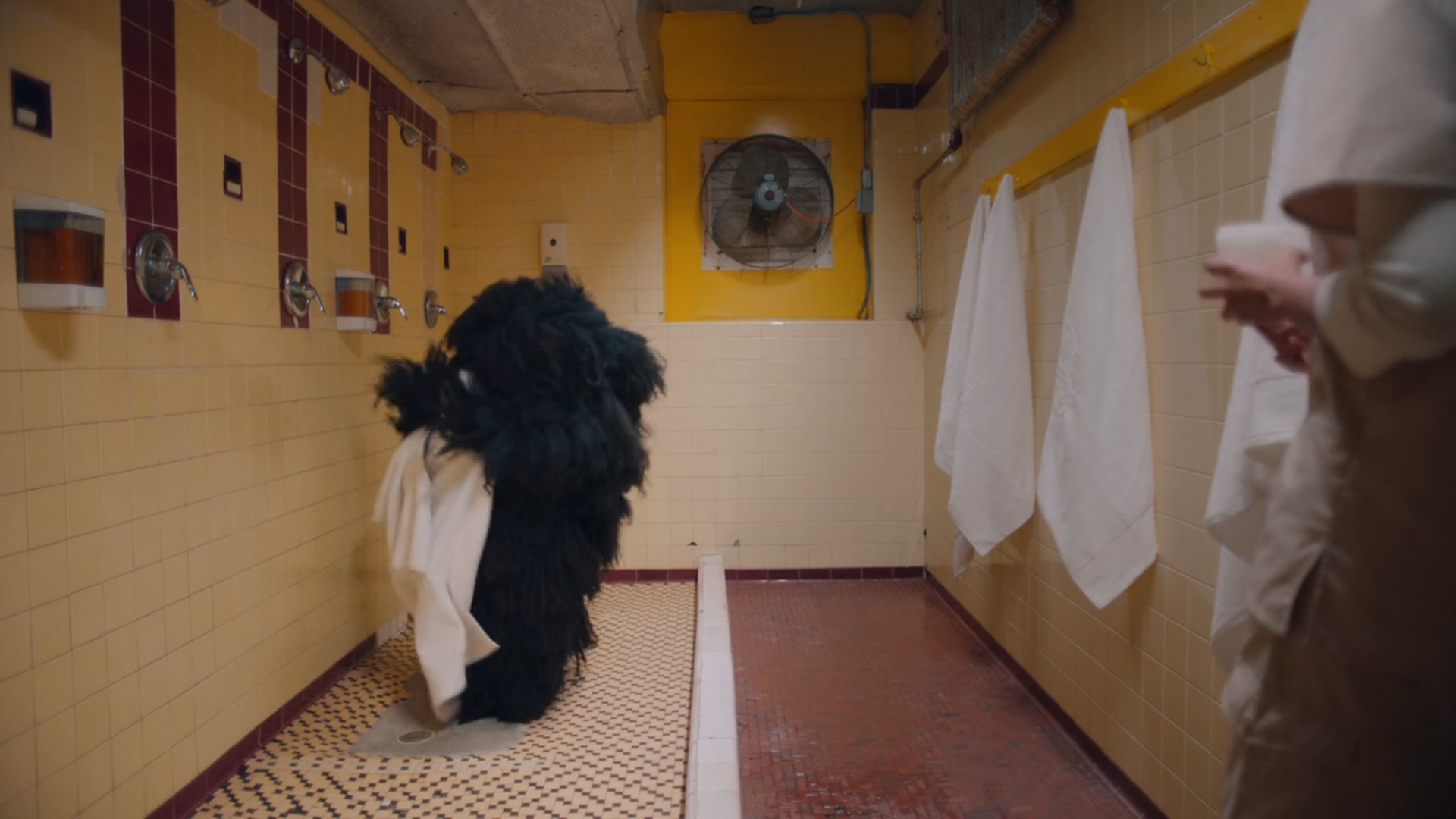
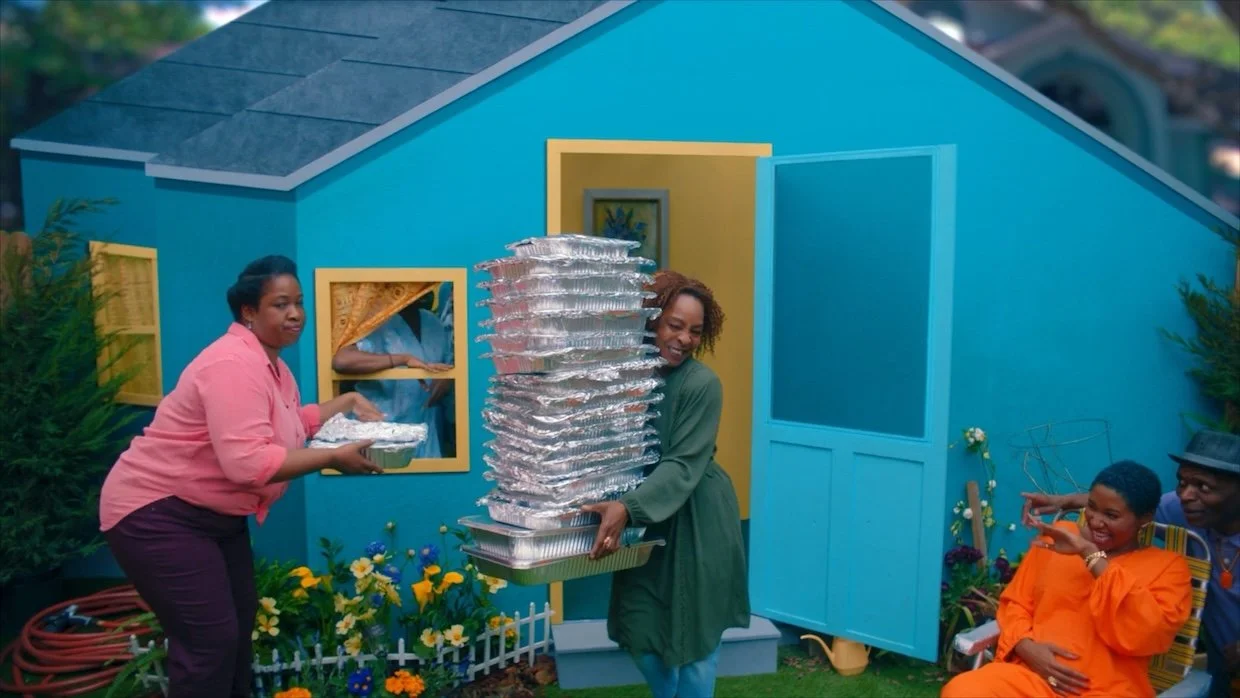
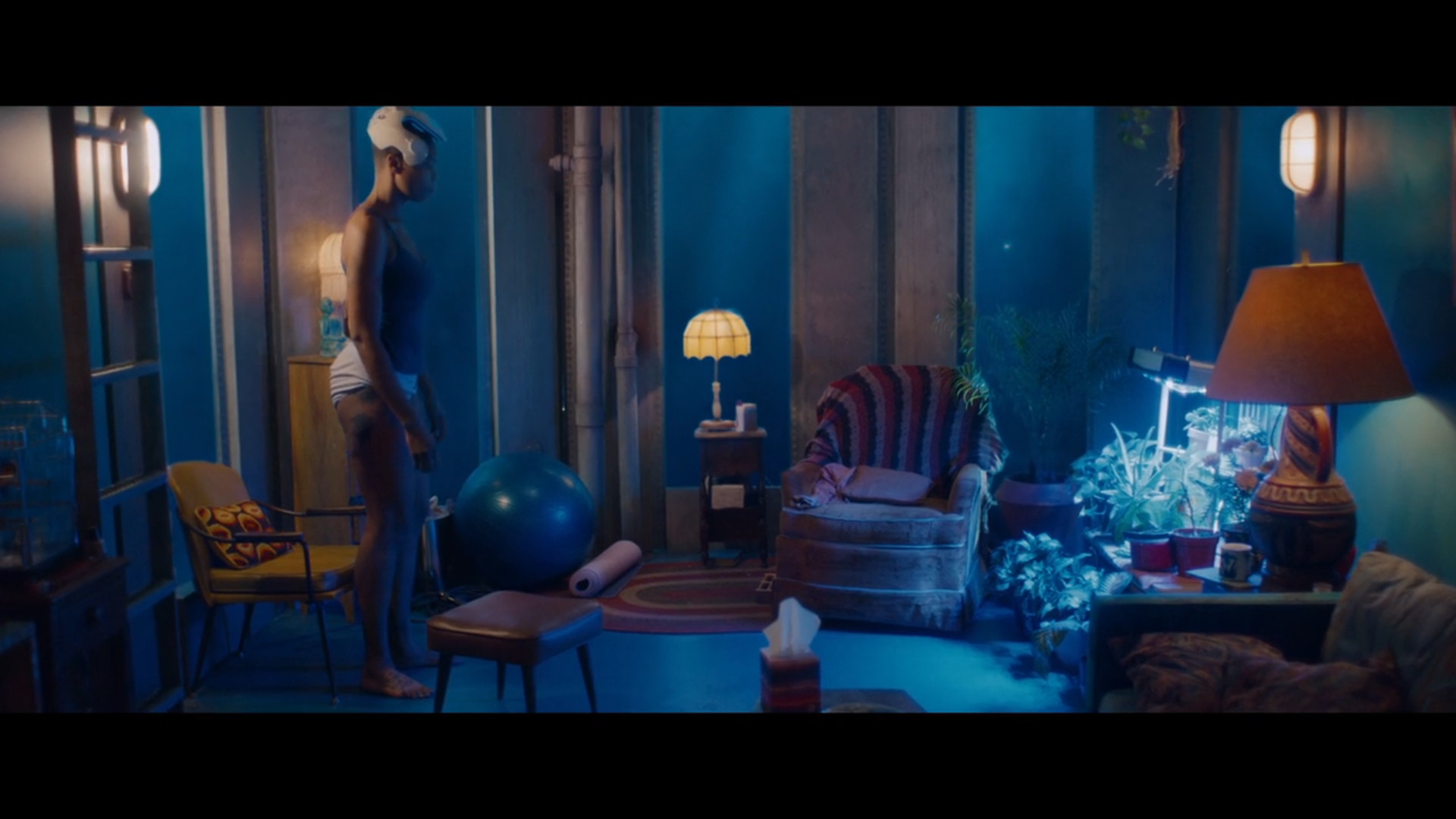
Figure 5: Fabulating worlds. Terrence Nance, Random Acts of Flyness (2018). Series of images.
To listen in detail to the object becomes both the designer’s labor of bringing out the density of life held by objects and spaces, and the labor for the viewer to hear, see, and feel out that density. And it is a labor. Purpose is rarely readily apparent; it has to be sought, it has to be dug into; it has to be researched, studied, excavated, but also it has to be cared for, and even dreamed up to even know how to look for it. As McKenzie said in an interview with Brandon Tonner-Connolly of his work with Terrance Nance on Random Acts of Flyness:
“How can we use creative energy to fill in for the things we don’t have?’ So sometimes we’re signifying those worlds and embracing the fact that they aren’t going to be photorealistic, that they will be stylized, and that we’ll use that as a metaphor too.”
And so, the work becomes a practice of fabulation—of bridging the remembrance with the creative energies necessary to capture and render the soul of the thing. The object’s purpose is never just the thing, or just the one story, but a life, a movement, and a context. It is a filling in the world, a feeling out the world, a gathering with the world [Figure 5].
Gatherings
Cervenak writes of gathering:
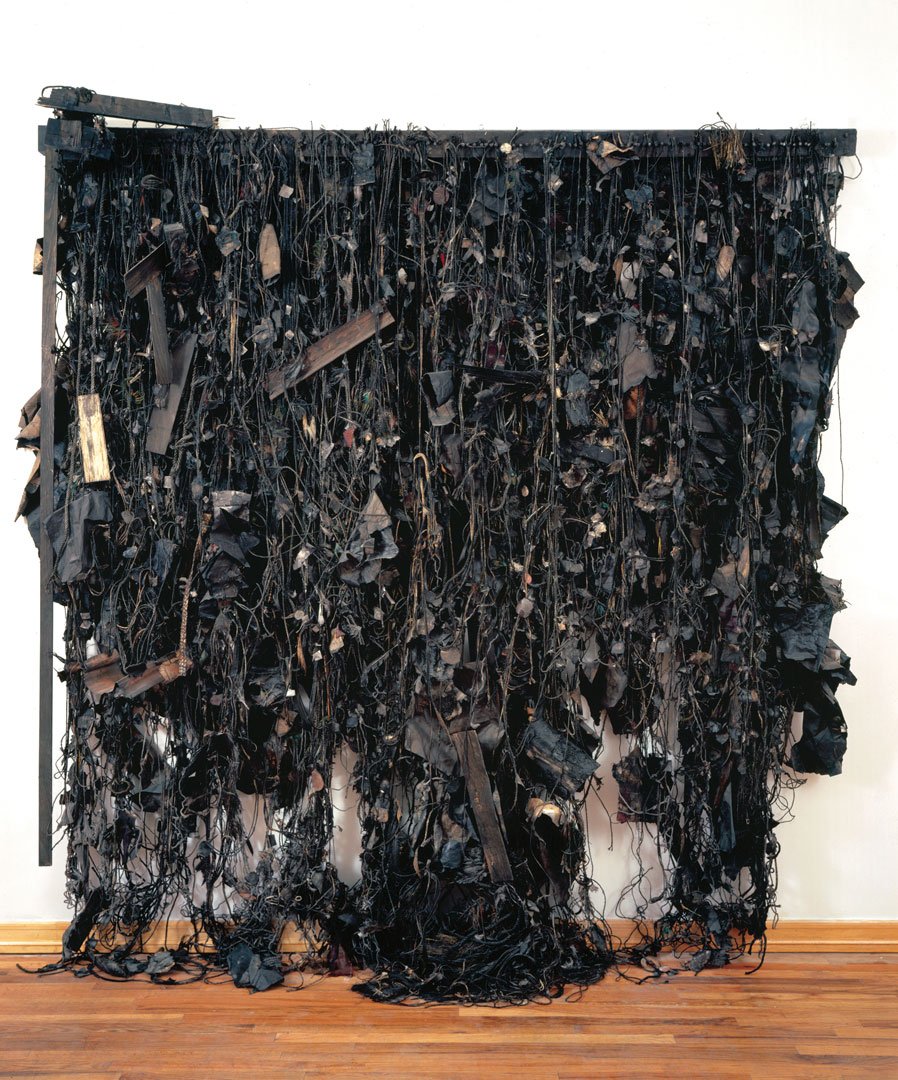
This idea of gathering comes together through Sarah Cervenak’s essay, “Black Gathering: ‘The weight of being’ in Leonardo Drew’s sculpture.” Cervenak is studying the work of sculptor Leonardo Drew, who collects and gathers refuse from the world into large-scale abstract forms [Figure 6]. Drew’s sculptures, in their imposing density of feathers, wood, fabric, cotton, and carcasses, task the viewer with confronting the ensemble that has been made [Figure 7]. In the disposed materials, there is a history, a life, and a vital “weight of being.”
Figure 6: Leonardo Drew, Number 8 (1988). Animal carcasses, animal hides, feathers, paint, paper, rope, and wood. 108 × 120 × 4 inches. Photo by Frank Stewart.
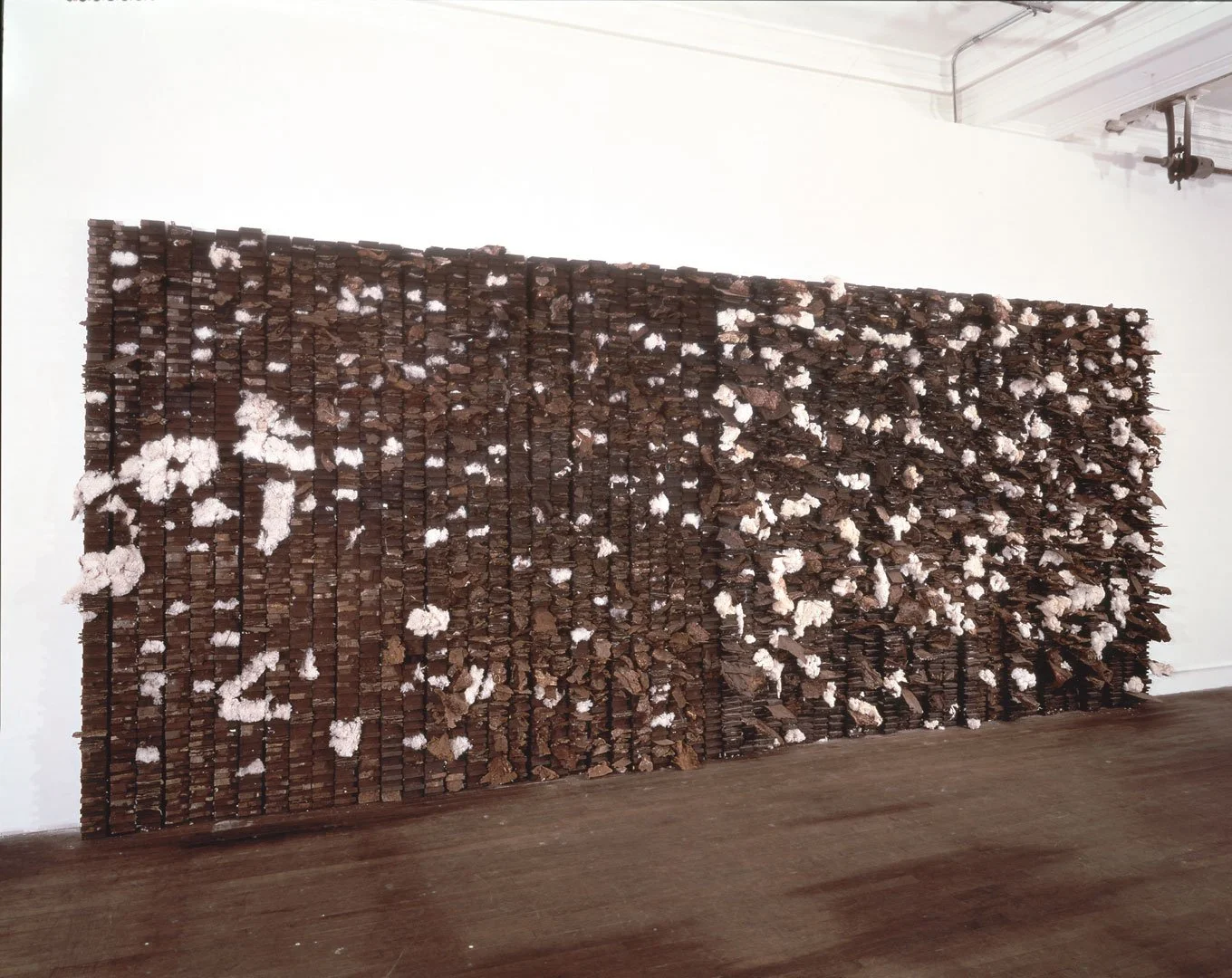
Figure 7: Leonardo Drew, Number 24 (1992). Wood, rusted and patinated iron, and cotton waste. 96 × 240 × 13½ inches. Collection of The Metropolitan Museum of Art, New York, NY. Photo by John Berens.]
“as a verb, gathering signifies the act of collecting or a bringing together. As a noun, gathering refers to a collective of people, a crowd. Beginning with gathering as verb, part of what this act does – in bringing together discrete objects – is create a sense of wholeness that threatens ‘an impulse to name and represent.”
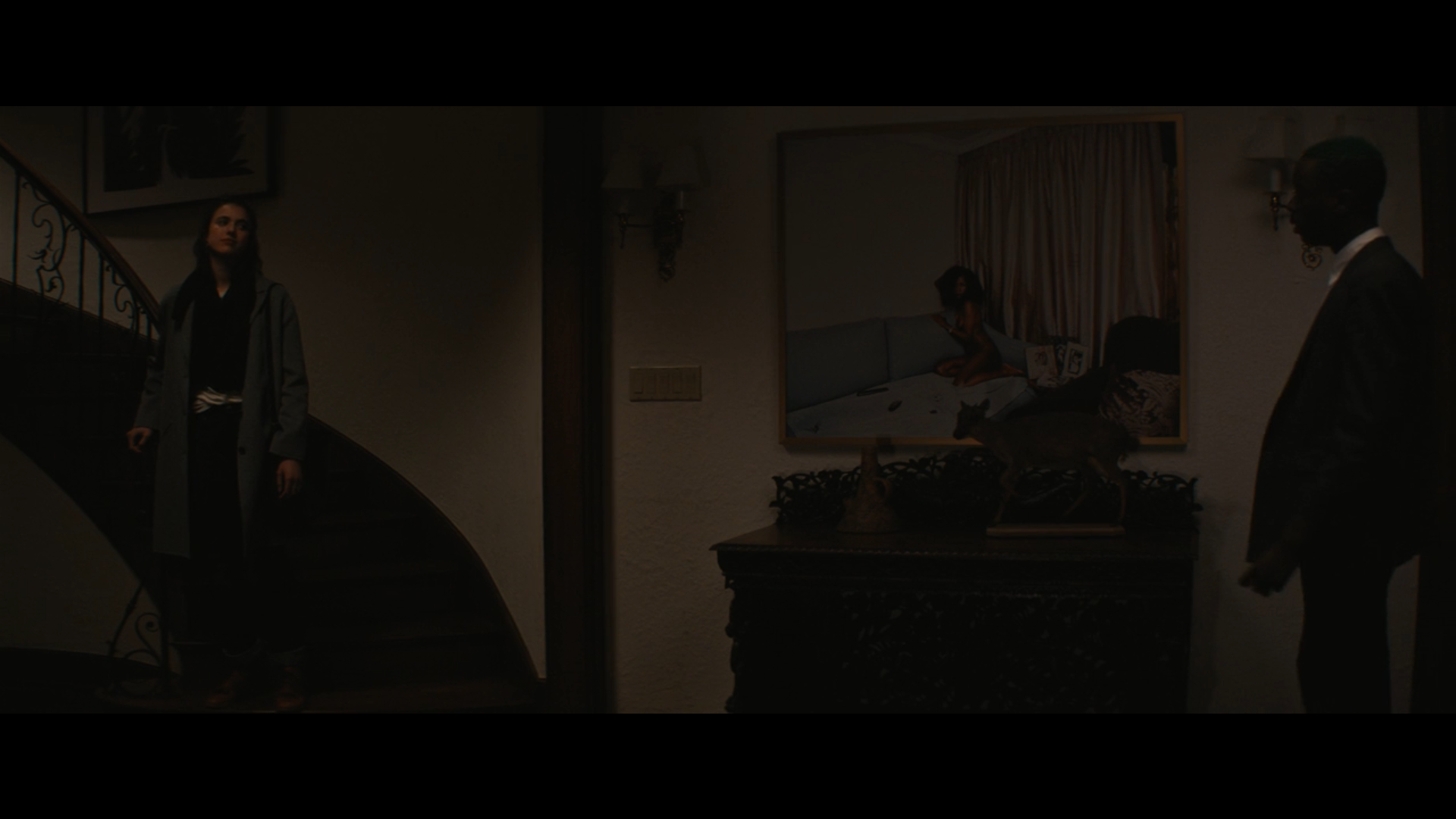
Gathering, like the ensemble, for Cervenak, points to a practice of accumulation unattached to the naming, registering, or (economic) valuing of things, and focused instead on the labor and care of bringing together. “For Fred Moten,” writes Cervenak, “part of what the ensemble, or gathering, does is generate a music that dispenses with the 'illusion of singularity and the illusion of its plurals’ intersections and divergences” (11). The disposed of, the forgotten, the stolen are made anew in this gathering. By bringing them together in a motley ensemble of refuse, Drew’s sculptures take the fractured, crumpled partiality of these objects to form a new whole that nevertheless holds being made of disparate pieces.
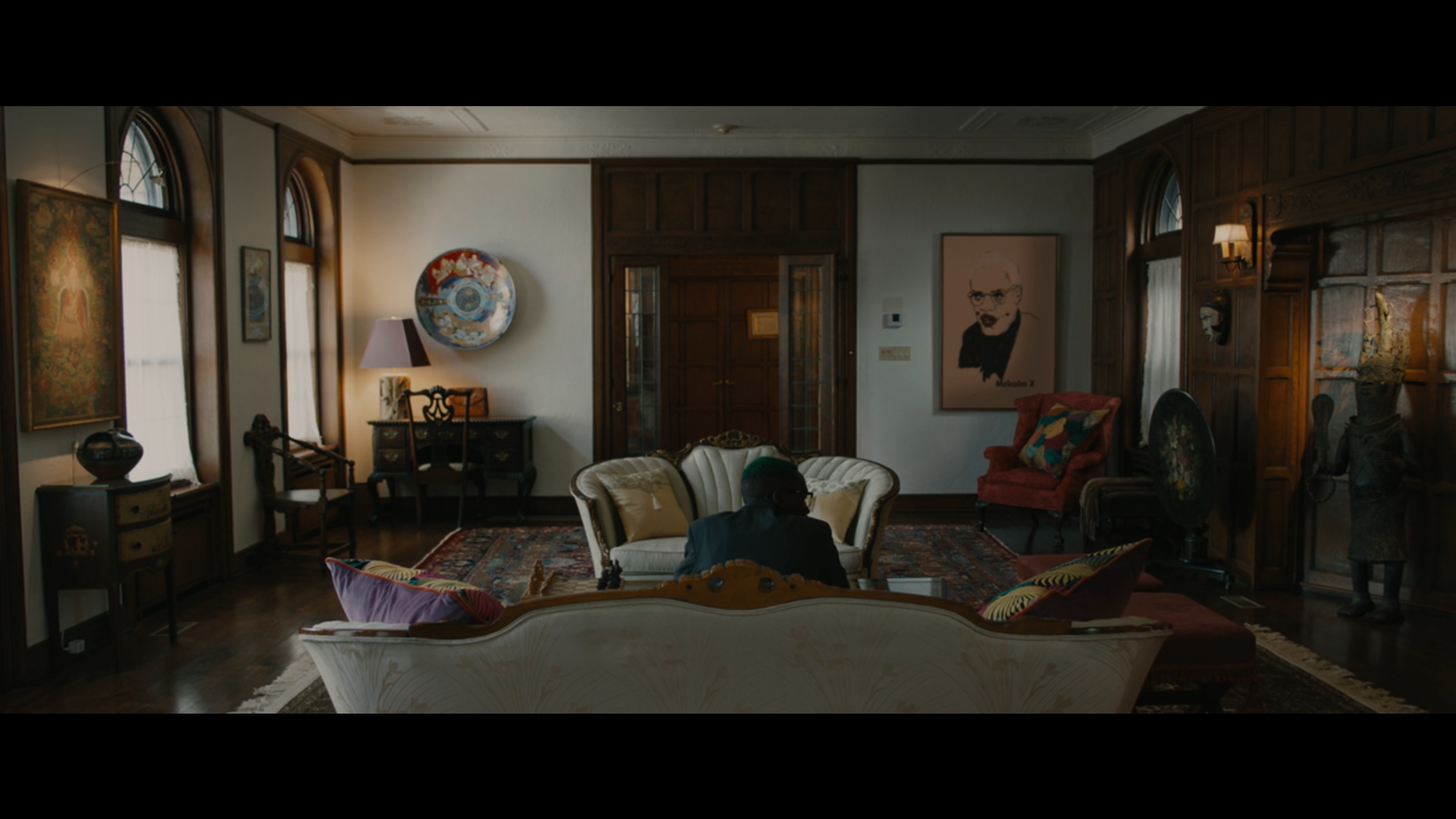
Figure 8: The white asset class collecting, accumulating histories of Black art. Rashid Johnson, Native Son 2019). Paintings include Kara Walker, “Untitled Karavan door panel;” Deanna Lawson, “Soweto Queen,” (2017); Glenn Ligon, “Malcolm X,” (2001).
Returning once more to Moten, the provocation of the gathered objects is made clear when placed in the history of what and who has been made sellable and ownable—what has come to hold use and exchange value [Figure 8].
“But as Fred Moten so brilliantly argues, life reduced by commodification, or life said to be vanquished by objectification is disrupted by the ‘resistance of the object.’ As his engagement with black performances elucidates, contra Marx, there is a history of commodities that not only speak back but that enact an ‘essential impropriety of the (exchange-) value that precedes exchange.”
We are thus tasked, as McKenzie names, to listen for the object, to hear what it holds and says.
“These communities are gatherings of life and love, irreducible artfulness. Life/forces and forms that coalesce as arrangements of texture, color, smell, and sound: forms that resemble nothing but themselves. ”
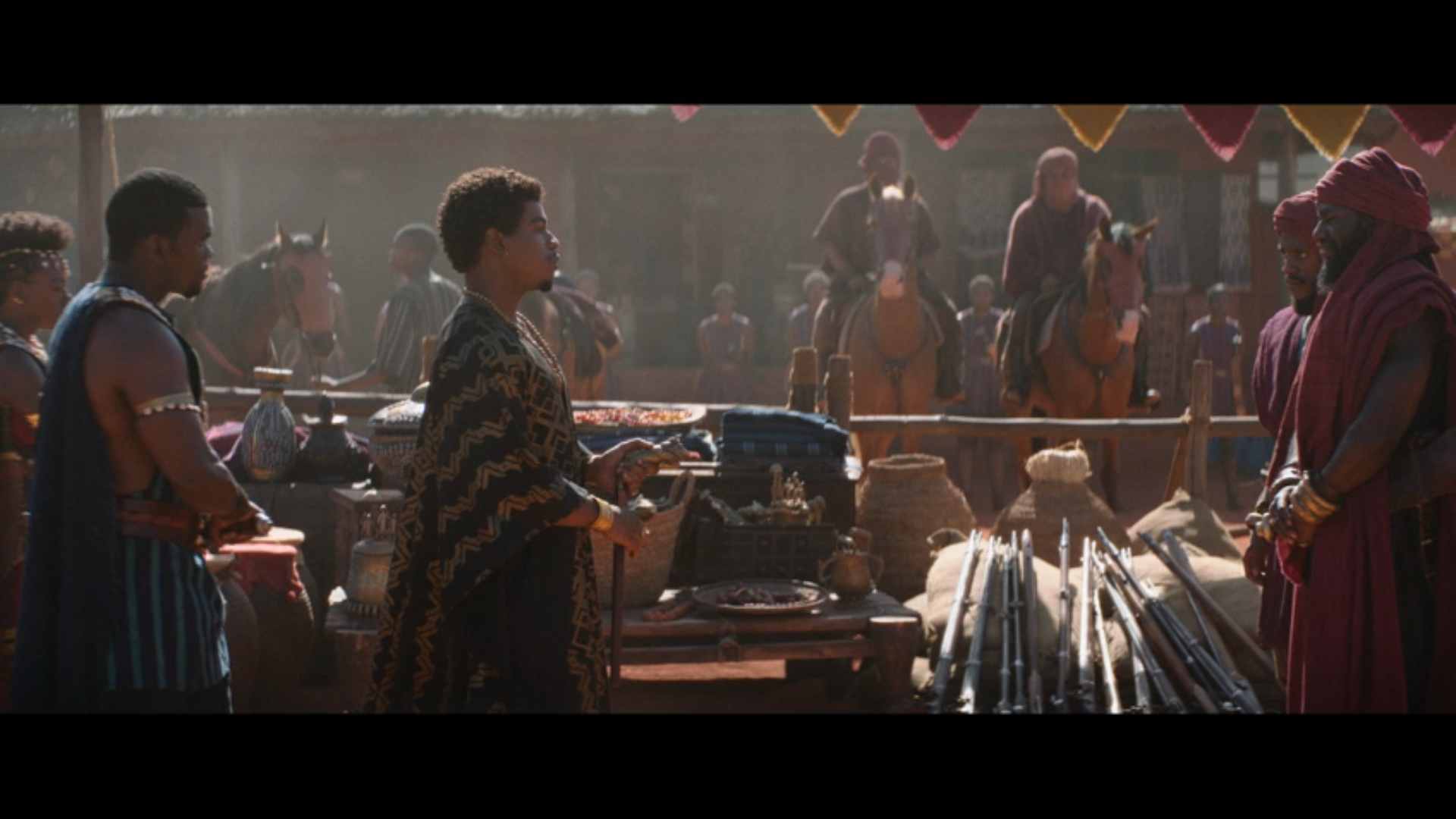
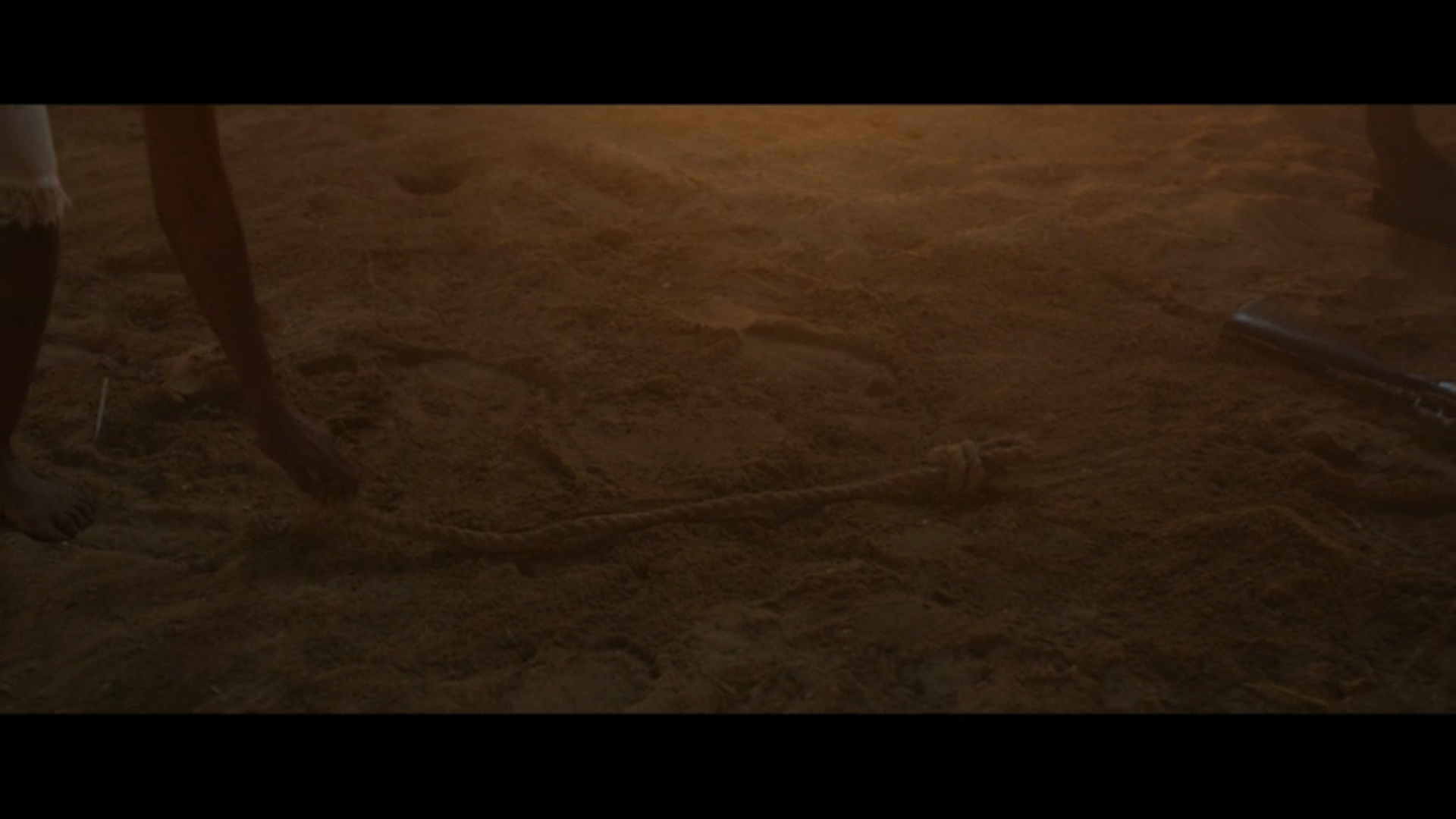
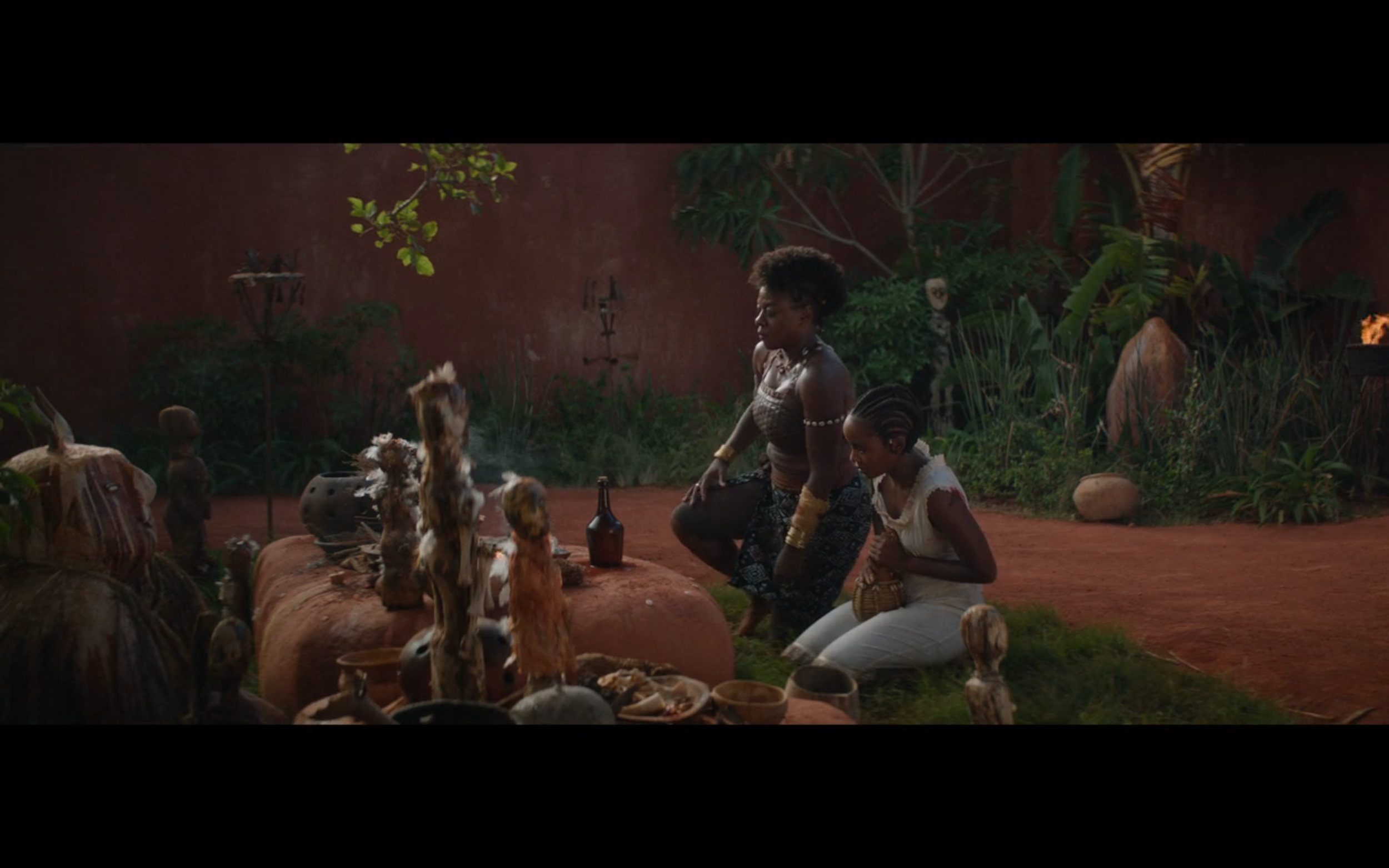
Figure 9: The world of Dahomey. Gina Prince-Bythewood, The Woman King (2022). Series of images.
With The Woman King, McKenzie becomes a collector but also a world-maker. Collecting knowledge and histories, collecting feelings and tensions, but also creating. The objects of the film are new, and yet they are made to call forth the purpose of what they once were for (and can still be for). The red clay pots of water and food, the Chekhovian rope, vibrant clothing, and the ritual staffs. Each holds a reference, a remembrance, a calling back that then brings us into relation with the impossible tension between the facts of the past and the artistic desires of now. What is the life of things? What is their voice? What is their purpose? What did they once do and what can they do now [Figure 9]?
Seeing Through
The material stakes of these questions of purpose drive the cinematographic and political work of Mati Diop’s Dahomey (2024). Diop’s film follows the journey of 26 artifacts of Benin—present-day Dahomey—as they are moved from French museums back to Dahomey. These 26 objects were stolen under colonialism and their remaining in France, along with the other thousands of others still held in French museums, perpetuates the colonial project that got them there to begin with. Nations, museums, and peoples of the “Global South,” the formerly colonized and often still under mutating forms of neocolonial power, are deemed unable or ill-equipped—the patronizing and infantilizing question: “Are Africans ready to manage?” To return these treasures, says Europe, is to threaten their existence.
But Dahomey asks a more abstract but damning question of what colonialism does to the purpose McKenzie seeks: what has this theft done to the objects? What has been ontologically and revocably changed of them? In Dahomey, these objects were tools of rituals, were monuments to gods, kings, and heroes. They guided and shaped the flow of bodies, souls, and power. In their theft and entry into European museums, they became art objects. Displayed for the fetishistic eye of patrons and for the appropriative gaze of the modernist artist. A cultural appropriation that McKenzie names as an emptying out of their purpose. Diop confronts this emptying in two striking ways: giving voice to a statue of King Ghézo and by gathering college students in Benin to debate the artifacts return.’
Figure 10: The “voice” of Number 26, statue of King Ghezo. Mati Diop, Dahomey (2024). Clip.
Following the opening of the film where the camera moves through Paris into the museum’s basement to where the artefacts are held before they are boxed up and shipped, the film cuts to black and a blended voice simultaneously pitched up and down creating an otherworldly echo begins to tell their story. The voice speaks for a statue of King Ghézo, named 26 by the museum (the last of the artefacts being shipped home). 26 tells the story of its theft, of France’s arbitrary selection of it, of its “perfect” victimhood; it speaks, describes Diop, “from a place of oblivion, of negation, and that’s violence” (Docalovich, 86) [Figure 10]. The isolating, suffocating pain of being denied the sun, of being made visible but trapped in the transparency of glass, names the violent transmutation made not to the form of the object but its purpose.
The voice names itself as the statue. It is not speaking for the former king, not a spirit or god, nor is it a sonic representative of a politics. It is the object and all that is projected into its stone. In giving voice to the statue, Diop orients her film not through Benin, a nation and people, but through the objects its people once created, that they once celebrated, worshipped, admired, and adorned. The statue’s understanding of its role and even its desires are shaped as much by this originary purpose as it is by the trauma of colonial consumption. But it is telling that what was once its purpose is hard to hear and find, as the voice keeps returning to how it has been changed. In these voiceovers, Diop confronts the difficulty of returning, not just physically but emotionally and conceptually. This traumatic distance separates the self from itself.
Figure 11: Students of Benin debating the return of the 26. Mati Diop, Dahomey (2024). Clip.
This colonial theft of the objects’ purpose propels the college students’ debate in the second half of the film. Diop gathered students of Benin to interrogate the return of these objects and their new housing in a Beninese museum [Figure 11]. Some celebrate the return as a win for the people and ancestors of Benin that allows the people of Benin to see, study, and know their history and traditions more fully, a hopeful first victory in the fight to return all the stolen artifacts. For others, this act is a minor concession, a placating that does nothing to address the trauma of colonialism. A form of artwashing--a liberalist distraction to soothe a wounded colonial ego.
But more difficult and painful is the question of whether the museum is the right place for these objects. They have been returned to Benin but not to their purpose. No. 26 was shipped in a crate only to be placed within another transparent cage. Can they not, one student asks, be returned to their rightful place in the traditions of their people? But to what end? Placed in a field to be worshipped by who? What is left of the traditions these objects represent and call out towards? And, having been made art objects, can they ever truly become tools of ritual and tradition again?
Dahomey puts pressure on McKenzie’s search by complicating what a return even means, what it can do. Purpose, for McKenzie, is a call for study. Purpose is an opening, a way to be in and with community by learning how they build their worlds. To study purpose is to study how people and communities connect and relate, how they gather. But as the voiceover of 26 and the students debate show, knowing a purpose and living that purpose are difficult to reconnect once separated. While McKenzie acknowledges this, what Diop performs in Dahomey is the difficult, painful, and even impossible struggle to reunite them.
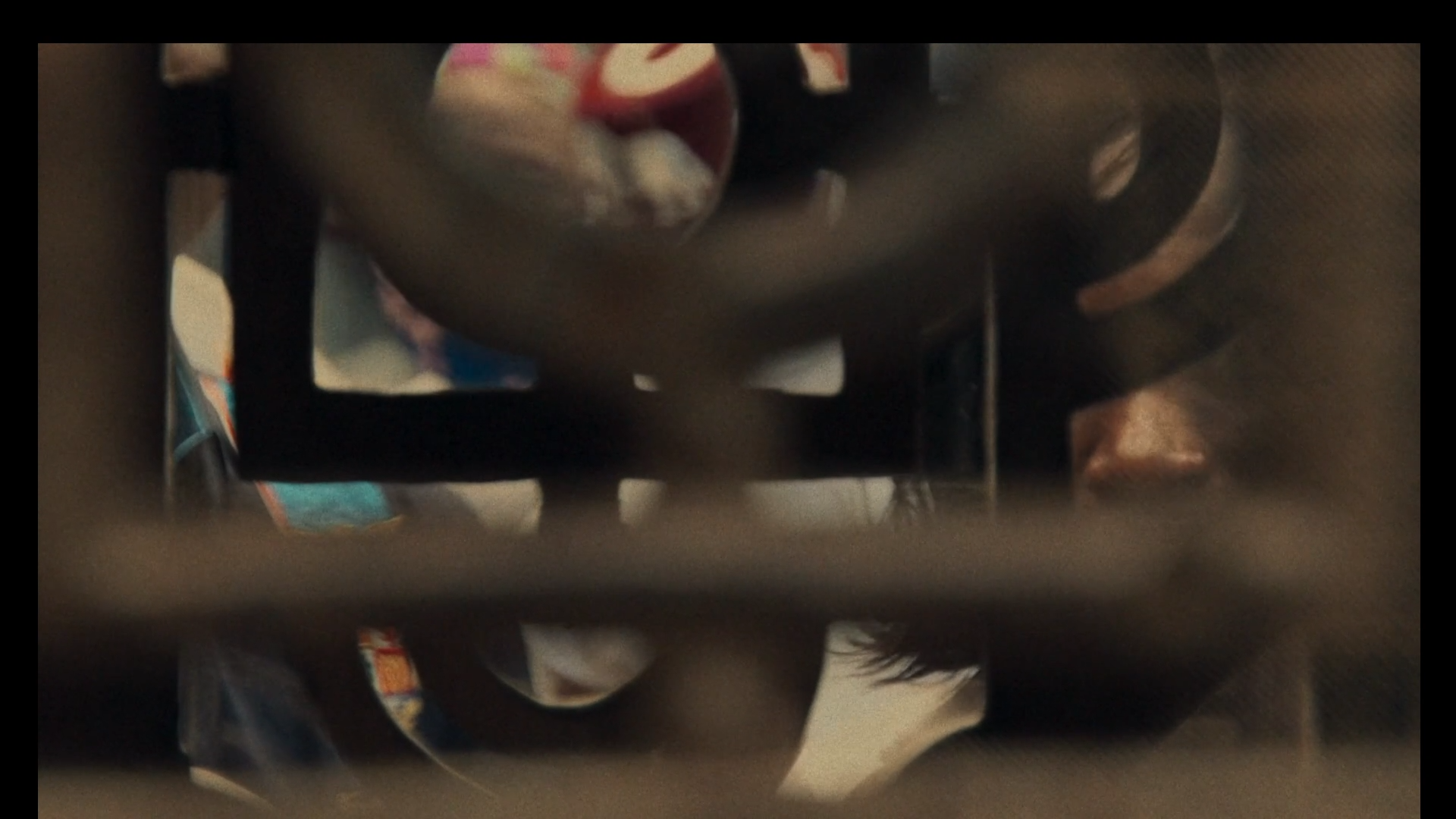
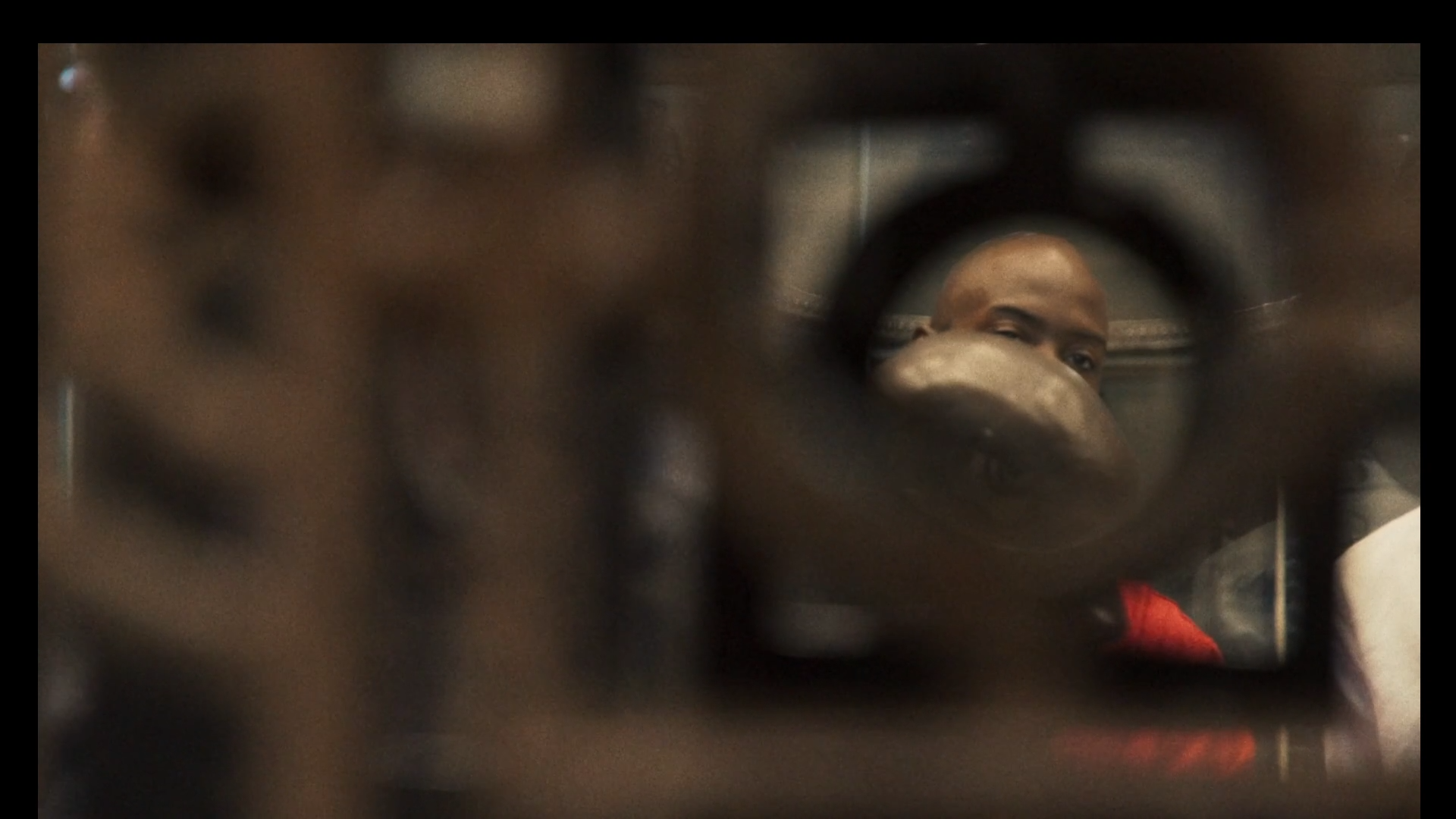
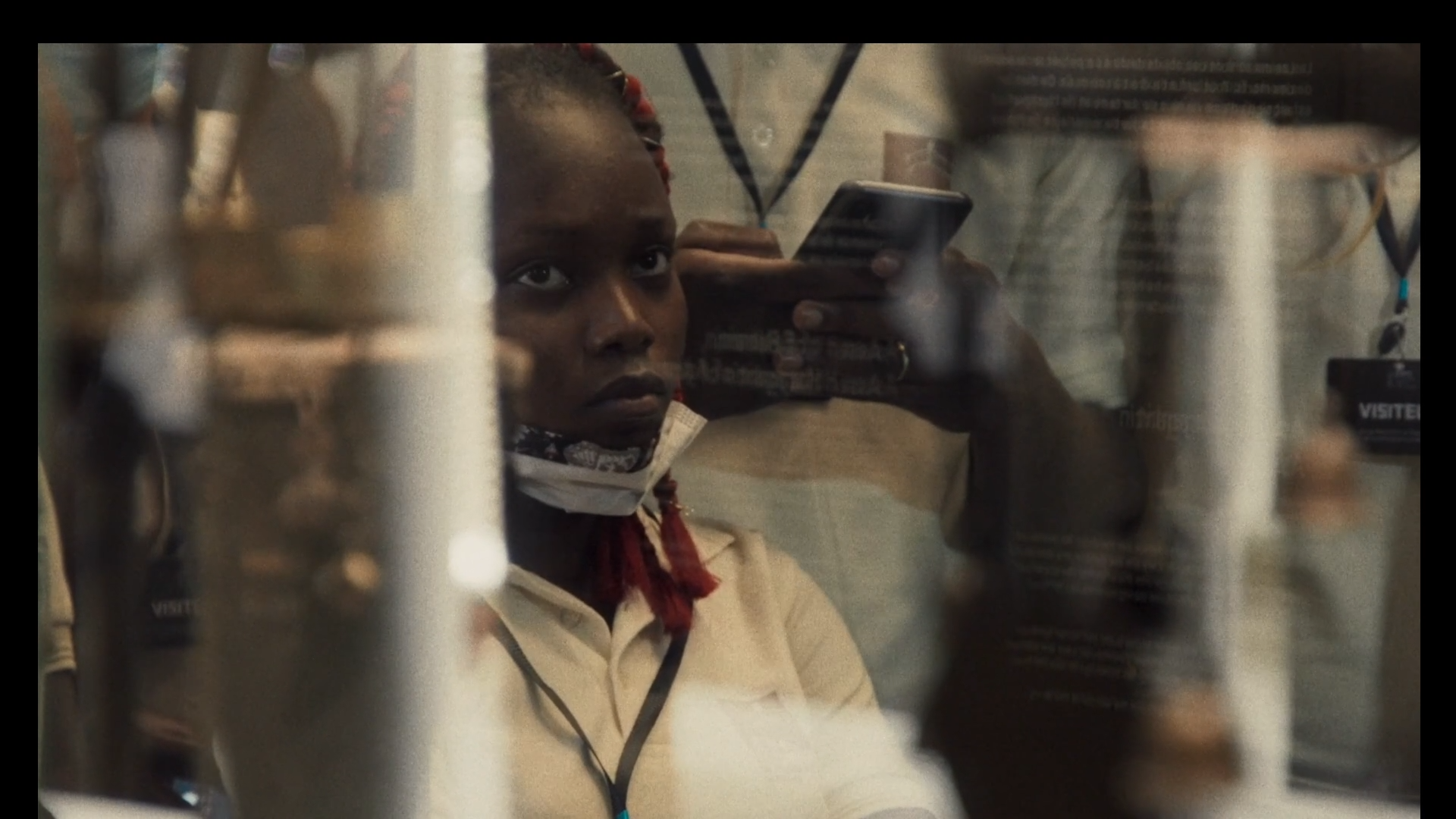
Figure 12: Seeing through objects. Mati Diop, Dahomey (2024). Series of images.
Throughout Dahomey, Diop places the camera with the objects, seeing alongside them. It rarely looks directly or unobstructed at the people of Dahomey as they move through the museum and its returned treasures [Figure 12]. Instead, the camera sees through the objects. As the camera focuses on the faces of people, it is often through the blurred shape of the objects or the refracting translucency of the glass that surrounds them. The objects become the lens through which we come to learn, engage, and hear the people of Dahomey. To contend with the history and presentness of colonialism, Diop stands with/sees through things not people. This is not an act of giving primacy to objects, but one of reorienting the field of vision. To be placed with the artifacts of Dahomey allows their conflicting, precarious, and pained purpose to break down our ways of seeing, to upend the norms of visuality to find flows of life that have been erased, denied, and demeaned. In being with those objects, and their voice and vision, the camera can see otherwise, see elsewhere to imagine new ways of vitalizing that purpose. In both Diop and McKenzie’s aesthetic practices, we come better find that purpose, come to know and feel it, and learn to live and use it again.
Additional Bibliography
Edelbaum, Susannah. “Production Designer Akin McKenzie on Recreating Reality in When They See Us,” The Credits, June 10, 2019. https://www.motionpictures.org/2019/06/production-designer-akin-mckenzie-on-recreating-reality-in-when-they-see-us/
Tonner-Connolly, Brandon. “Reject Departmental Sectarianism: Production Designer Akin McKenzie and Writer-Director Terence Nance.” Filmmaker Magazine, October 19, 2023. https://filmmakermagazine.com/123438-interview-production-designer-akin-mckenzie-terence-nance/
READING THE PORTFOLIO
SCHEDULE
I. THE SENTIENT IMAGE
Sentient Image | Sentient Flesh | Leaving the Body to Be in Flesh | Being With the They
II. COLLECTING | PREPARING | GATHERING
Studying the Prop | Prop Value | Purpose | Gatherings | Seeing Through
III. BLUES ECOLOGY: THE SOUNDS AND POLITICS OF PLACE
Blues Ecology | Juke Joint Intimacies | Abolition Geographies
IV. THE DANCEHALL: SONIC FLOWS, VIBRATIONAL RELATIONS
Rub-A-Dub | The Crew | Sound qua Sound | Vibrational Relations
III. BLUES ECOLOGY: THE SOUNDS AND POLITICS OF PLACE
Artist/Work
● Autumn Durald Arkapaw, cinematographer, Sinners (2025), dir. Ryan Coogler
Readings
● Gilmore, Ruth Wilson. Abolition Geography: Essays Towards Liberation. Verso Books, 2023.
○ “Abolition Geographer and the Problem of Innocence”
● McKittrick, Kathrine and Clyde Woods, eds. Black Geographies and the Politics of Place. South End Press, 2007.
○ McKittrick, Kathrine and Clyde Woods. “No One Knows the Mysteries at the Bottom of the Ocean.”
○ Woods, Clyde. “‘Sittin’ on Top of the World’: The Challenges of Blues and Hip Hop Geography.”
● Ivry, Henry. “How to Listen Otherwise: Black Sounds, Black Ecologies.” English Language Notes 62.1 (2024): 13-29
● Tsing, Ann Lowenhaupt. The Mushroom at the End of the World: On the Possibility of Life in Capitalist Ruins. Princeton University Press, 2021.
○ “Arts of Noticing”
○ “Contamination as Collaboration”
Blues Ecology
Figure 1: Stakes hearing Sammie sing. Ryan Coogler, Sinners (2025). Clip.
Figure 2: Delta Sim’s memory. Ryan Coogler, Sinners (2025). Clip.
With these scenes of travel and geography there is also the sound of the blues—of Sammie singing and Delta Slim remembering. The blues come from this geographic life of the Delta; the blues are a record of a people and the land they feel and move through. As Clyde Woods writes:
“The blues tradition dialectically emerged from the attempt to create sustainable communities and regions within a political economy built upon the non-sustainable pillars of social fragmentation, economic monopoly, and racial, and ethnic, conflict.”
The blues is a musical form, but one that is inextricable from the material and ecological conditions in which it was born. The blues did not just come from the Mississippi Delta; it is the Mississippi Delta. So even though there is no music when picking up Cornbread, the blues nevertheless silently scores the scene and its world. Sinners visually and sonically renders how the blues, as a sonic vibrational history, forms and deforms the relational flows of being on and with the land.
To study the blues, to see the blues, let alone feel it, is to study a geography.
“Blues geography places regional schools of working-class organic intellectuals at the centre of the production of geographical knowledge. Therefore, families, events, venues, work sites, travel, neighbourhoods, households, and prisons become critical sites in the construction and revision of theory, method, and praxis. ”
There are three scenes amidst the cotton fields in Ryan Coogler’s Sinners (2025): Stake’s gleeful and scheming shock at Sammie singing “Travelin” [Figure 1]; Delta Slim’s retelling of a gig gone wrong and a friend being lynched [Figure 2]; and convincing Cornbread to be the bouncer for the night [Figure 3]. This “getting the band together” sequence offers a glimpse of the quotidian geographic vibrancy of the Jim Crow Mississippi Delta. Geographies hold the landscapes and natural flows of a region, but geographies also chart how bodies move and shape their worlds. In trails, we see the common pathways—common because they are the easiest way through, common because there is enough history to make it easy. Communities—human and otherwise—make homes following the natural formations of rivers, valleys, mountains, and plains. This lifefulness is the contextual world of these scenes.
Geographies also hold how bodies have been made to toil—the soil demanding a tending, churning, and struggle—and how that land becomes a tool of violence, a means to limit and harm what bodies can do. It may be hard to see the histories of violence in the land’s topography, but this violence can be seen and felt. The communities’ roads are built through; the land that has been salted in spite; the forever charred walls left in blighted neighborhoods; and the burial plots that tell a story of life and death. In these early moments of Sinners, the geographies of the South are backdrop and record—a flowing vitality of community, struggle, and survival [Figure 4].
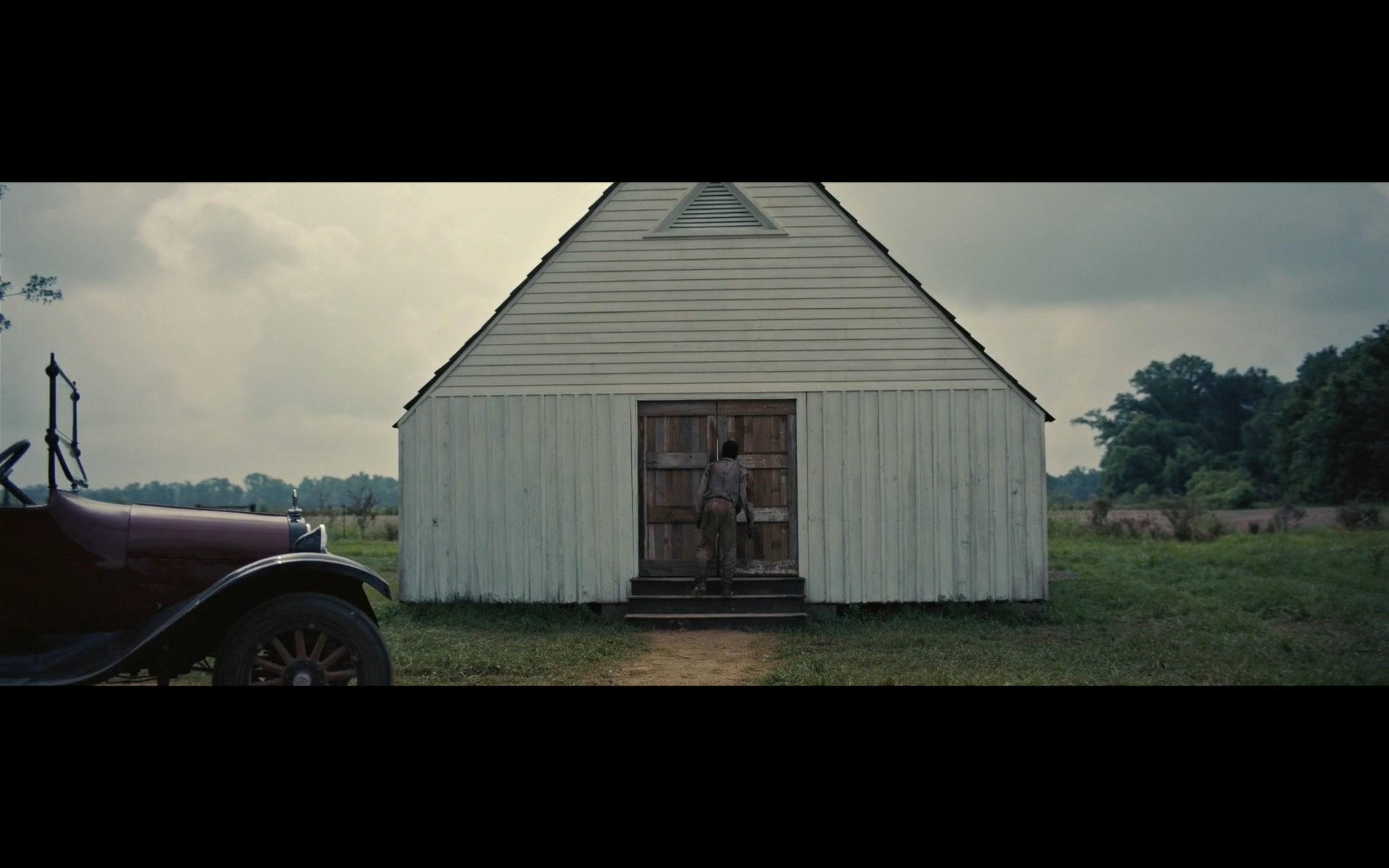
Figure 3: Picking up Cornbread in the cotton fields. Ryan Coogler, Sinners (2025). Clip.
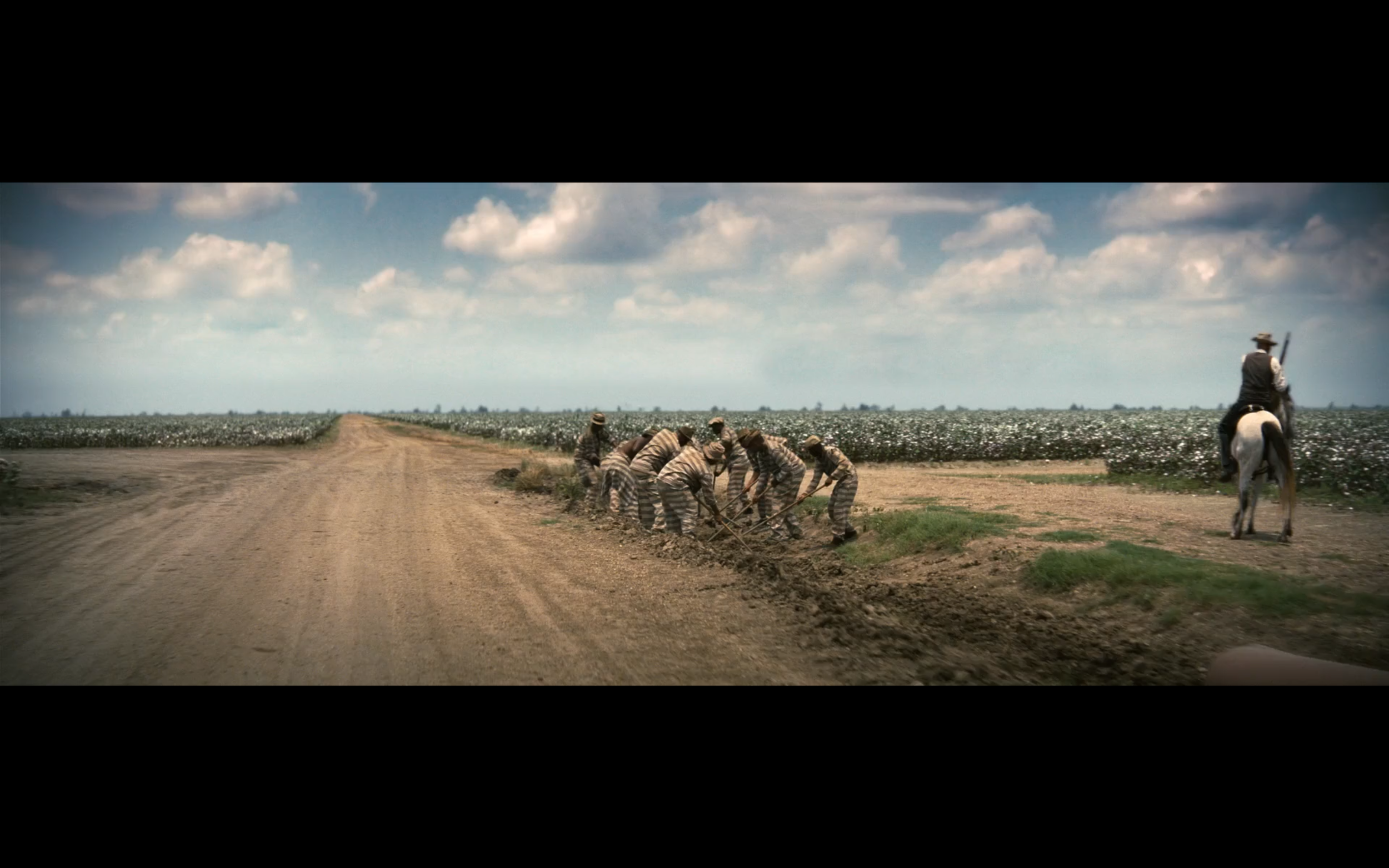
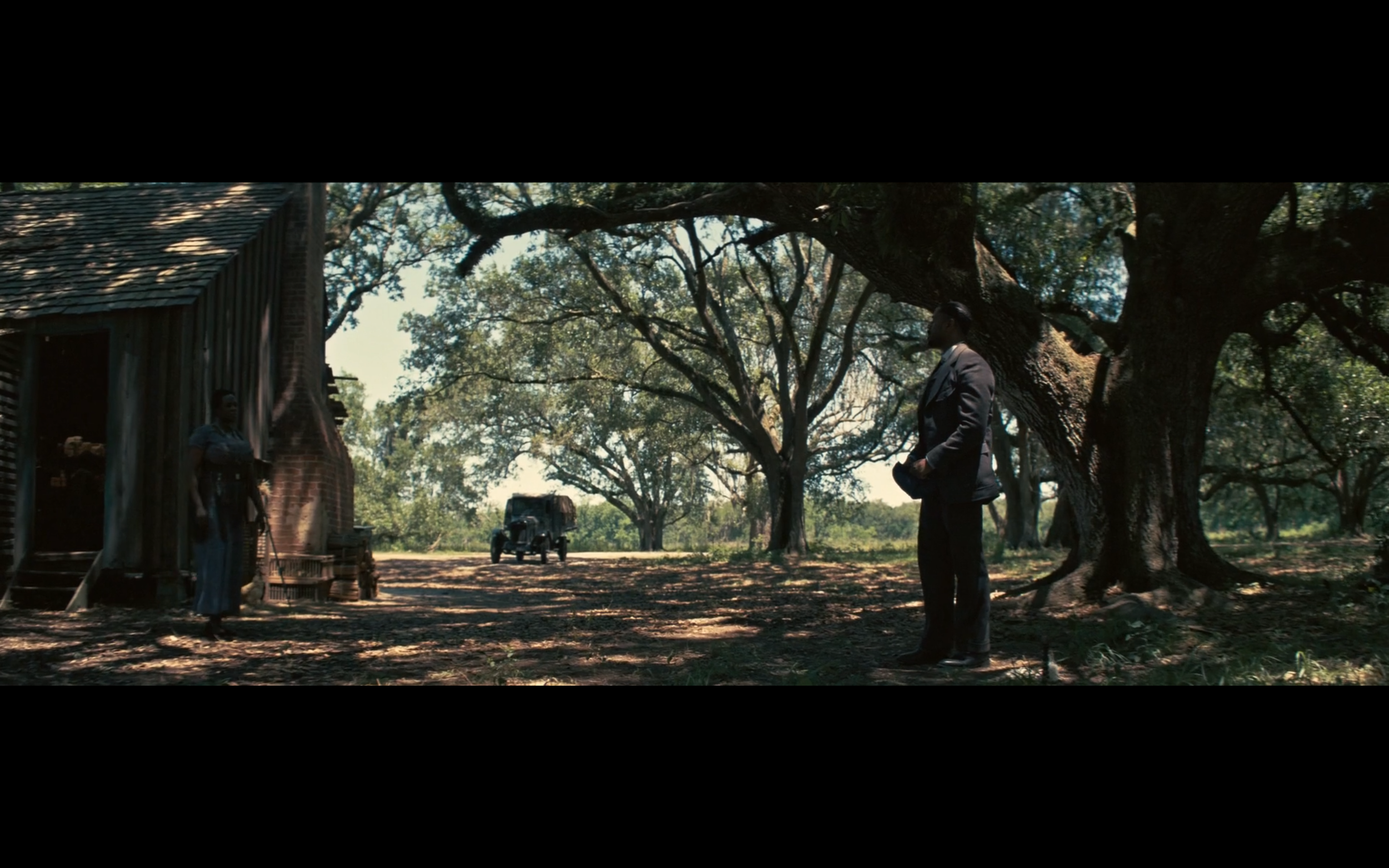
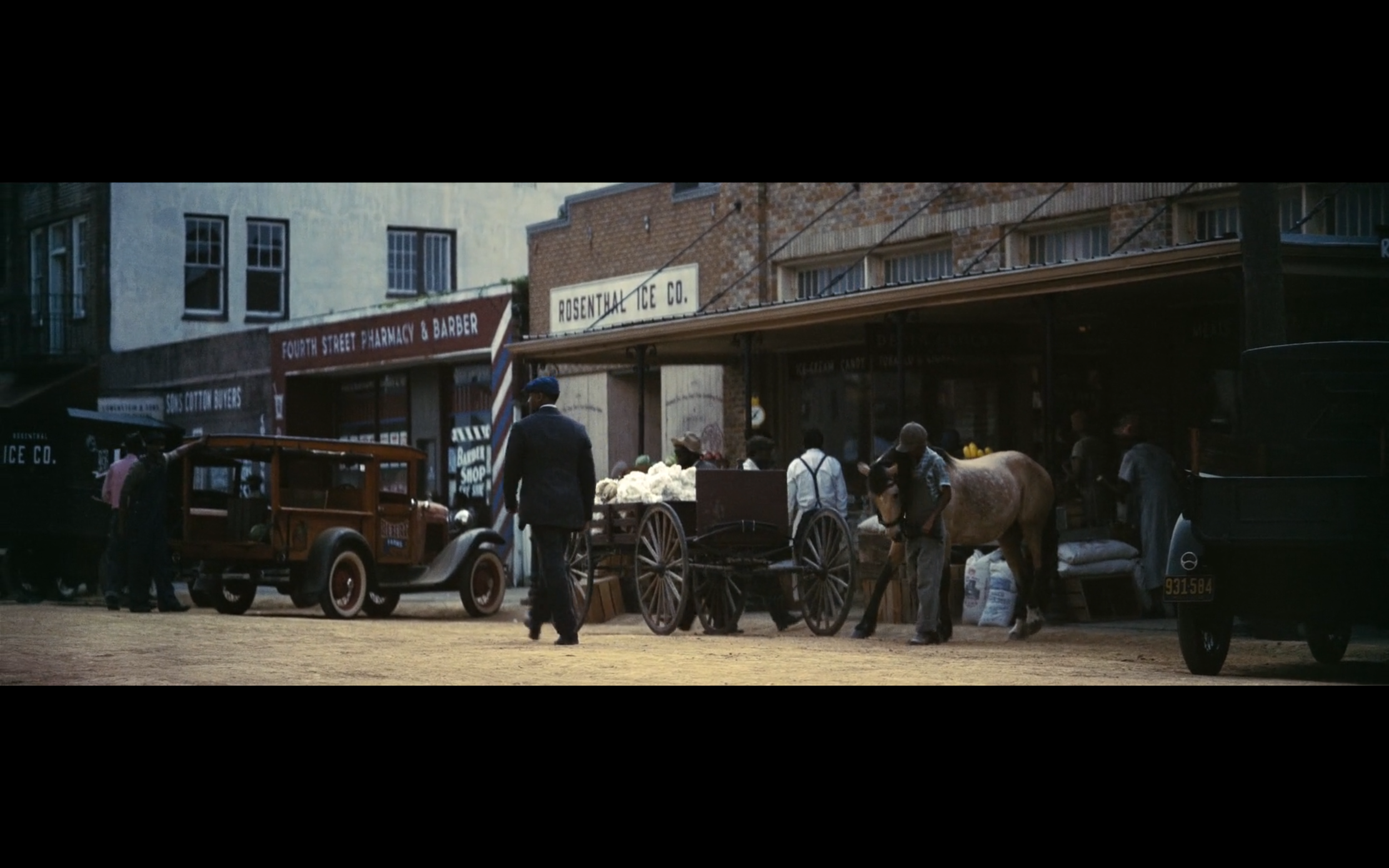
Figure 4: Blues geographies. Ryan Coogler, Sinners (2025). Series of images.
The blues is a pedagogy where “Southern working-class communities attempted to grasp the reality of a world turned inside out” (58); its practitioners are educators and investigators who articulate "how people do and should understand the relationship to environment and nature" (David Harvey, qtd. In Woods, 72). The blues becomes an ecology, an ecosystem of sounds, memories, families, traditions, labors, survivals, and movements. A blues ecology is “both historical archive and futural conjecture” (Ivry, 14) and “an immanent entanglement with the world” (Ivry, 17). Or as Ivry makes even more explicit:
“What a Black ecology of sound names, limns, and builds is the capacity of world building that comes from the ruins of an extractive white modernity that relies on the ongoing continuation of climatic and racialized exploitation and destruction. ”
Juke Joint Intimacies
In Sinners’ ecstatic juke joint sequence, a rapture occurs [Figure 5]. The building, bought by The Twins, though only momentarily (since, even before the vampires descend, the Klan is preparing to enact its own annihilation), is opened up through those blues ecologies that Woods and Ivry describe. As Sammie begins to sing, the world of the Club Juke orients itself and flows around his voice and guitar. The blues, in its transcendent intimacy with the quotidian, burns away the fiction of the juke joint’s walls, time’s linearity, and space’s rootedness to bring together the diverse ecologies of all the life held in the juke joint—the future of breakdancing,
Figure 5: Sammie as griot. Ryan Coogler, Sinners (2025). Clip
rapping, crip-walking, and twerking collide with their ancestral and sibling African traditions of Zaouli dancers and Memphis Jookin while Chinese Sun Wukong performers move with European ballet. Sammie, Remmick tells us, is a griot, a holder of stories, or more viscerally, as Arthur Jafa, in conversation with Akin McKenzie and Shawn Peters, says, an eater of flesh [Figure 6].
Figure 6: Arthur Jafa on the Griot. Film Roundtable. “Arthur Jafa and Akin McKenzie, moderated by Shawn Peters.” Youtube, July 28, 2023. Clip.
The griot’s ability to remember and recount comes from consuming the stories around them. They hold, in their bodies, the history of a people. In their voice—in the vibrational frequencies of their flesh—they call up, reanimate, the flesh of the past. And as Sammie’s voice shows us, making flesh again is also making connected and intimate. It is a bringing out to bring together. To borrow from Anthony Reed, the griot’s blues ecology is “an endeavor . . . to build a new vibration society, radiating from affinities between aesthetic forms to new shared understandings and critical attunements to the everyday” (qtd. In Ivry, 22). Or as Kathrine McKittrick writes:
“To be newly human, one does not simply rebelliously site and make black culture in a world that despises blackness; one also engages cultural inventions and sounds and ideas and texts, deeply and enthusiastically, to affirm humanity: one grooves out of the logics of antiblackness and into black life. ”
In the griot, we come into relation, or even community. Their voice, as will be seen in next week’s material on dub, vibrates through space; it links us through a shared wave. We become, as Anna Lowenhaupt Tsing would say, “contaminated.” To be contaminated is to be changed, to be unmade even, but to also be connected, to be remade into something new and shared. “We are contaminated by our encounters,” Tsing writes, “they change who we are as we
make way for others” (27). In cinematographer Autuman Durald Arkapaw’s steadicam shot through the juke joint, we feel out the ways the griot contaminates the community they’re in, decays those communal forms not into blood thirsty, appropriative, vampiric consumption, but into a mingling consumption where they eat of each other so that they can be with and in each other—“the very stuff of collaborative survival” (Tsing, 20).
Abolition Geographies
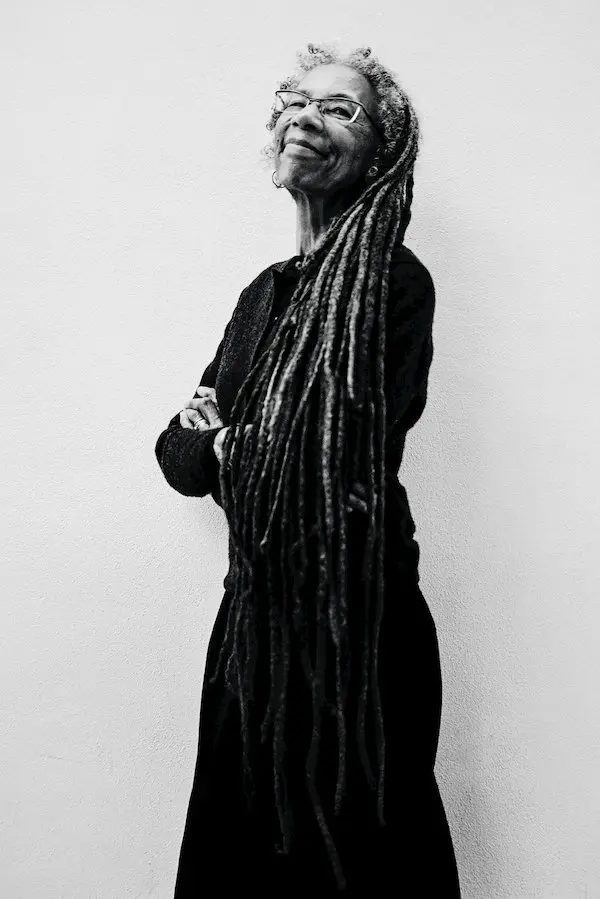
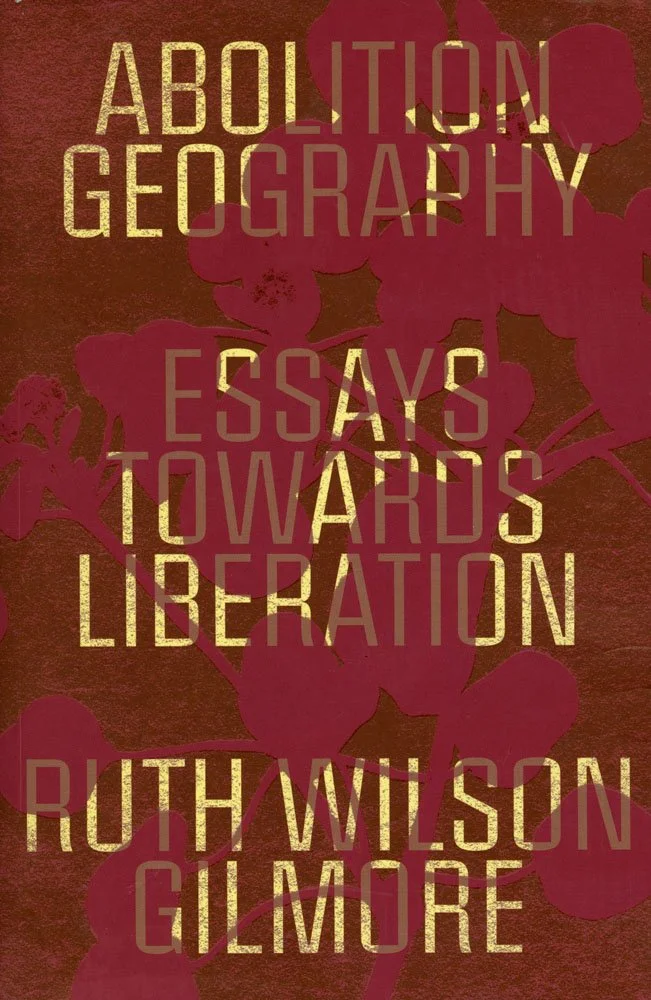
Figure 7: Ruth Wilson Gilmore and Abolition Geography: Essays Towards Liberation.
In studying opticality, we are seeking modes of “seeing in the way of things.” These practices help us step to the side, to step outside how we are trained to see, so that we can get closer, find ways towards more ethical and intimate relations with each other, ourselves, and the worlds and traditions that may provide paths to a liberated or caring future. In Sinners’ blues ecologies, we see how, as Ruth Wilson Gilmore shows us, whiteness turns “the land, a good that can’t be moved, though a deed can be pocketed or sold or borrowed against or seized for a lien, in other words, turned into money” (378) [Figure 7]. The land, the thing that gives life and community, is made property, a commodity that constricts the ability to move. Ownership states who and what can move through the land; who can live on it, in present and future; it dictates what life is allowed and how that life can live; it limits how land can function, how
“starts from the homely premise that freedom is a place. Place-making is normal human activity: we figure out how to combine people, and land, and other resources with our social capacity to organize ourselves in a variety of ways, whether to stay put or to go wandering. ”
it can change and adapt. Families and communities get tied to the land, not out of attachment but out of debt, out of invisible redlined boundaries. To be made commodity is to be made lifeless—land made a line of text on a list of assets. What is open and expansive becomes bordered, small, and violent. These “carceral geographies” enclose people, consume their lives, and salt the earth (385).
Can we, instead, come to see through Gilmore’s “abolition geographies”—an abolition opticality? “Abolition geography,” Gilmore writes:
“The undoing of bondage—abolition—is quite literally to change places: to destroy the geography of slavery by mixing their labor with the external world to change the world and thereby themselves—as it were, habitation as nature—even if geometrically speaking they hadn’t moved far at all. ”
In Sinners’ cotton fields and juke joints, can we see ways towards what Cedric Robinson called “ontological totalities”—“sensibilities, dependencies, talents, indeed a complement of consciousness and capacity…to make where they were into places they wished to be” (Gilmore, 386)? Can we feel out the necessary and vitalizing dependencies and contaminations of an abolitionist geography? Can we build “infrastructures of feeling” that are “sturdy but not static,
that underlie our capacity to recognize viscerally (no less than prudently) immanent possibility as we select and reselect liberatory lineages” (394)?
To make a home, however impermanent, becomes a source of dreaming, planning, and enacting alternative frequencies of life. These geographies expand capacities; they stretch and extend what the land and the life on that land can do and make possible.
READING THE PORTFOLIO
SCHEDULE
I. THE SENTIENT IMAGE
Sentient Image | Sentient Flesh | Leaving the Body to Be in Flesh | Being With the They
II. COLLECTING | PREPARING | GATHERING
Studying the Prop | Prop Value | Purpose | Gatherings | Seeing Through
III. BLUES ECOLOGY: THE SOUNDS AND POLITICS OF PLACE
Blues Ecology | Juke Joint Intimacies | Abolition Geographies
IV. THE DANCEHALL: SONIC FLOWS, VIBRATIONAL RELATIONS
Rub-A-Dub | The Crew | Sound qua Sound | Vibrational Relations
IV. THE DANCEHALL: SONIC FLOWS, VIBRATIONAL RELATIONS
Artist
● Shabier Kirchner, cinematographer, Lovers Rock (2020), dir. Steve McQueen
Readings
● Veal, Michael E. Dub: Soundscapes and Shattered Songs in Jamaican Reggae. Wesleyan University Press, 2007.
○ “‘Every Spoil is a Style’: The Evolution of Dub Music in the 1970s”
● Henriques, Julian. Sonic Bodies: Reggae, Soundsystems, Performance Techniques, and Ways of Knowing. Bloomsbury Publishing, 2011.
○ “Preamble: Thinking Through Sound.”
○ “Introduction: Practising and Theorising Sounding.”
● Semaj-Hall, Isis. “re-membering our Caribbean through a dub aesthetic.” Small Axe (February 2016). https://smallaxe.net/sxsalon/discussions/re-membering-our-caribbean-through-dub-aesthetic
● Eisdsheim, Nina Sun. Sensing Sound: Singing and Listening as Vibrational Practice. Duke University Press, 2015.
○ “Music as a Vibrational Practice: Singing and Listening as Everything and Nothing”
● Boon, Marcus. The Politics of Vibration: Music as a Cosmopolitical Practice. Duke University Press, 2020.
○ “Introduction: Music as a Cosmopolitical Practice”
Rub-A-Dub
Rub-a-dub. “Dub the Pum Pum.” “Dub A Dawta.”
“I man a-dub it on the side
Say little sister you can run but you can’t hide
Slip you got to slide you got to open your crotches wide
Peace and love abide ”
[Figure 1: I-Roy, “Sister Maggie Breast” (1977).
The meaning of dub is open. It can be the “dub plate”—a soft wax printing of a song that was remixed by the producer for each venue, also called a “version,” and fell apart after a few uses (Veal, 52). But it could also be to dub over—to make a copy, to record on top of—a practice seen in DJ vocalization and in dub’s history of covering and remixing. Bob Marley and the Wailers would call out on stage “dub this one,” calling “to emphasize the rhythm groove and to play particularly tight as a band” (Veal, 62). To take from Michael Veal’s Dub: Soundscapes and Shattered Songs in Jamaican Reggae:
“dub serves that moment in the dancehall when excess ornamentation is stripped away to emphasize the elemental power of the rhythm pattern, to provoke more intense and erotically charged dancing, and to give an improviser free rein to excite the crowd with his or her spontaneous virtuosity—in short, the moment(s) when the dancehall ‘peaks.’ ”
Or, as the above lyrics point to, dub is to rub-a-dub, to grind, to dance, to sweat, and to be in it with another. An erotics of sound and bodies.
Whatever its origin and meaning, we emphasize the rub-a-dub to bring out the vitality and vitalization of dub and its dancehalls (be they warehouses, fields, or a home). Dub, as we will study, is about the playful, adaptive, and improvisational erotics of bodies in space. Its politics, its sound, and its history is a rubbing up against one another and with another and for another.
For this week of readings, we turned to dub as a way into how those erotics come to be so alive, felt, and material in Shabier Kirchner’s cinematography for Steve McQueen’s Lovers Rock (2020). In its climactic dance sequence, Lovers Rock (2020) enters a transcendence. Bodies close. Bodies sweating. Bodies grinding. Bodies flowing. The music goes out as the partygoers, melting in devotion to the sonic vibrations, keep the riddim alive—singing and moving and enacting their will towards the dub, the rub-a-dub.
Figure 2: In with the Dancehall. Steve McQueen, Lovers Rock (2020). Clip
Shabier Kirchner’s camera enters the fray [Figure 2], beginning as a potential flowing outsider that, like the partygoers, melds into the sound, becoming part of the party, another body grinding and touching. Kirchner’s camera is buoyant; it floats atop the sound and sweat. Riding its waves of funk. We are after how the film feels like a party. Not a representation, not a documentation, not a rendering, but a feeling. In the readings of the film and scholars that follows, can we imagine ways that the camera no longer is simply recording but participating? Not as an animated, conscious body, but that the music and swaying bodies are too infectious, too erotic, too good to just sit back in a distant 3rd person observing. What new ways of studying and gathering can be imagined when we fabulate the camera of Lovers Rock as grinding and the film as sweating and flowing with and in the party? That is, an opticality as seeing through and with the sonic, vibrational relations of dub.
The Crew
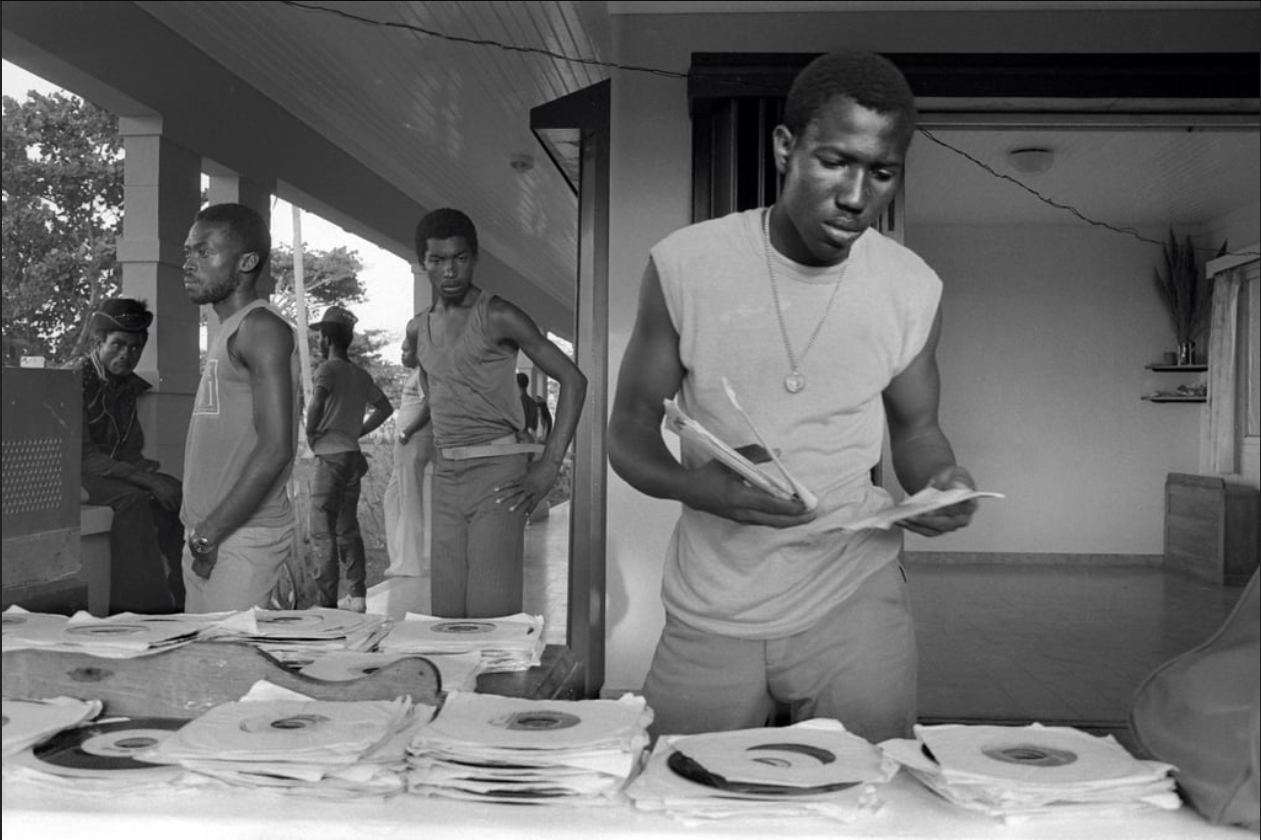
Figure 3: Singer Neville Valentine on the mic at Sugar Minott's Youthman Promotion Sound System. Kingston, Jamaica. 1986. Photo: Wayne Tippetts.
The ensemblic has been the guide for liquid blackness since the rigorous and rapturous study of Larry Clark’s Passing Through (1977). Inspired by the jazz ensemble, the ensemblic is a methodological practice of “being on the brink of formlessness because socialities can dissipate and reconfigure themselves at any point” (liquid blackness, “Ensemblic Practices”) The ensemblic names the adaptive, improvisational playfulness of the group, that messy grind of praxis—a movement in and out of form to create, imagine, care, and survive.
In dub, we are offered a Caribbean iteration of the ensemblic: “the crew” [Figure 3] Unlike the jazz ensemble, the crew is not the band that recorded the music, but the sound crew that works the sound system at the dancehall. It is the DJ and their team and the venue owner crafting the specific sound system; it is the improvisational and response vocalizations of the DJ over the record. As Julian Henriques writes in Sonic Bodies: Reggae Sound Systems, Performance Techniques, and Ways of Knowing:
“Sonic bodies are performative and highly skilled, as the crew members’ techniques to generate and sustain the dancehall’s economies of pleasure. These “scientists of sound” continually monitor, investigate and innovate the sound of the session to maintain their sound system’s advantage in the most intensely competitive and sometimes violent of street cultures. This makes the dancehall session a unique living laboratory – an auditory Galapagos – outside the usual dominance of vision. ”
Henriques argues that the crew are not representing the performance of the recording band, but “re-performing” the music (xxiii). In these re-performances, it is the DJ’s remixing and vocalizations, the specific sound system choices of the venue, whether it is inside or outside, the reactions and actions of the crowd, or how many times the “dub plate” has been used that come to define the sound of dub, or rather the sonic experience of dub. Dub is accumulative and mutative. It builds on itself, its surroundings, and its history. It brings bodies into temporal and spatial relation in sound.
It is here that, like with the ensemblic, we can begin stretching the crew beyond the sound crew at the venue [Figure 4]. The crew stretches back to the band but also to the owner/producers of the recording studio who shapes what kind of sounds are allowed (Veal, 46). It has to consider the other producers who are making the unique dub plates for each venue—slightly different mixes that are fought over and can make a night a financial success or failure (Veal, 51-53). Even more, Henriques and Veal point to how the sound of dub is its own adaptation to the reality that most venues were outdoors—the prominence of the bass a way to keep it present in the mix when there are no walls to bounce off of (Veal, 58; Henriques, 57). The transhistorical, transmaterial, and translocational are baked into the crew as an ensemblic form alongside the informality of the group. At each stage, the sound enters a new improvisational and responsive formation that ever extends the crew.
It is no wonder that McQueen focuses such time and intimate detail on how the sound system comes together in Lovers Rock [Figure 5]. Bodies lugging in heavy speakers and sound tables, hands in close up plugging in cord after cord, and the DJ testing microphone reverb. But this scene is also of the party—making food, singing songs, moving couches outside, and preparing the dancefloor. Dub’s sound is never limited to the sonic, for sound fills space. It enters the body, burns into memory, and propels feeling and moving. Dub is a force, a community, an action in Lovers Rock. Dub’s sonic waves pushing and pulling bodies together, the sound grinding up against the body pushing it towards another body to extend the grind.
That rub-a-dub is not just a double entendre for the sexuality that dub plays in and, at times, helps enact, but the “snuggling up,” to borrow from Fumi Okiji, of a multitude of multiplying and refracting bodies (Okiji, 65).
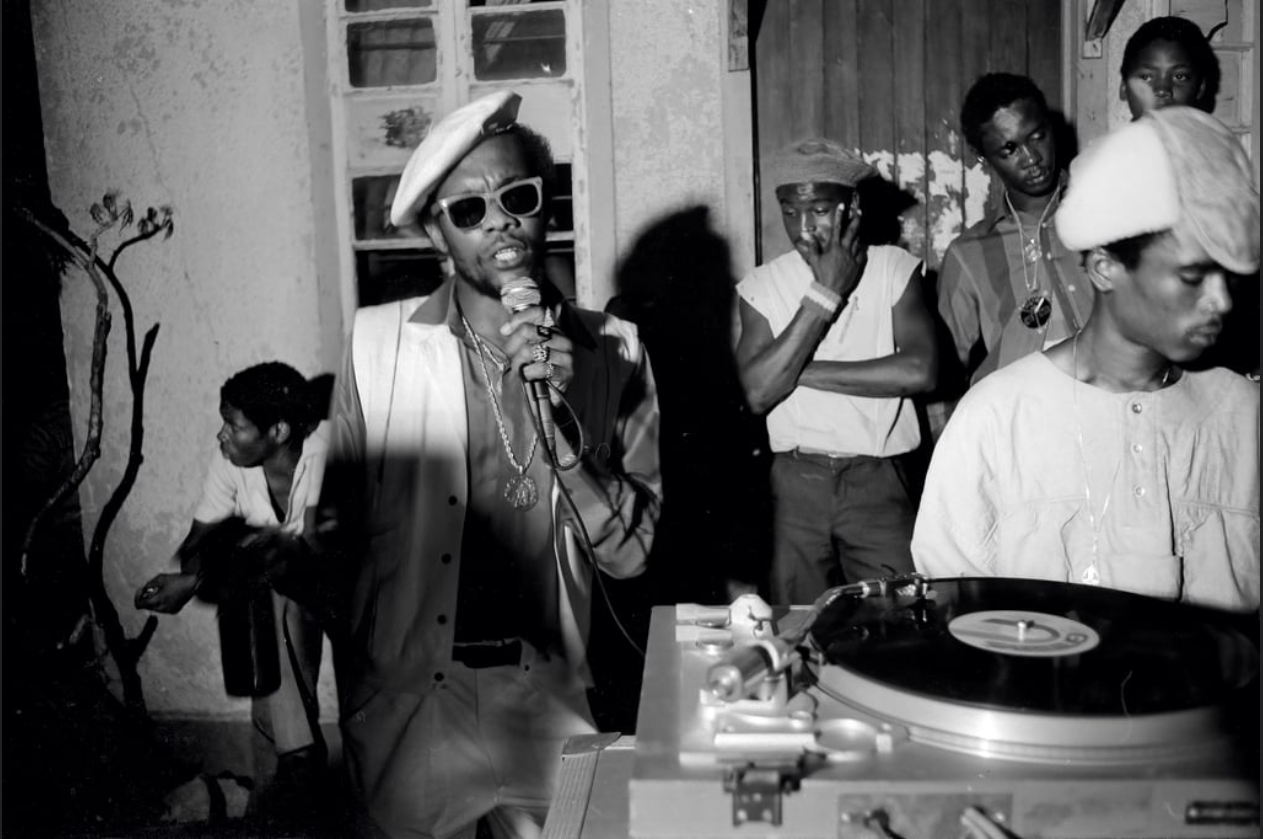
Figure 4: Selector for the Black Ruler Sound System from Spanish Town, goes through a collection of 45s for a beach party session in St Anne, Jamaica. 1988 Photo: Wayne Tippetts.
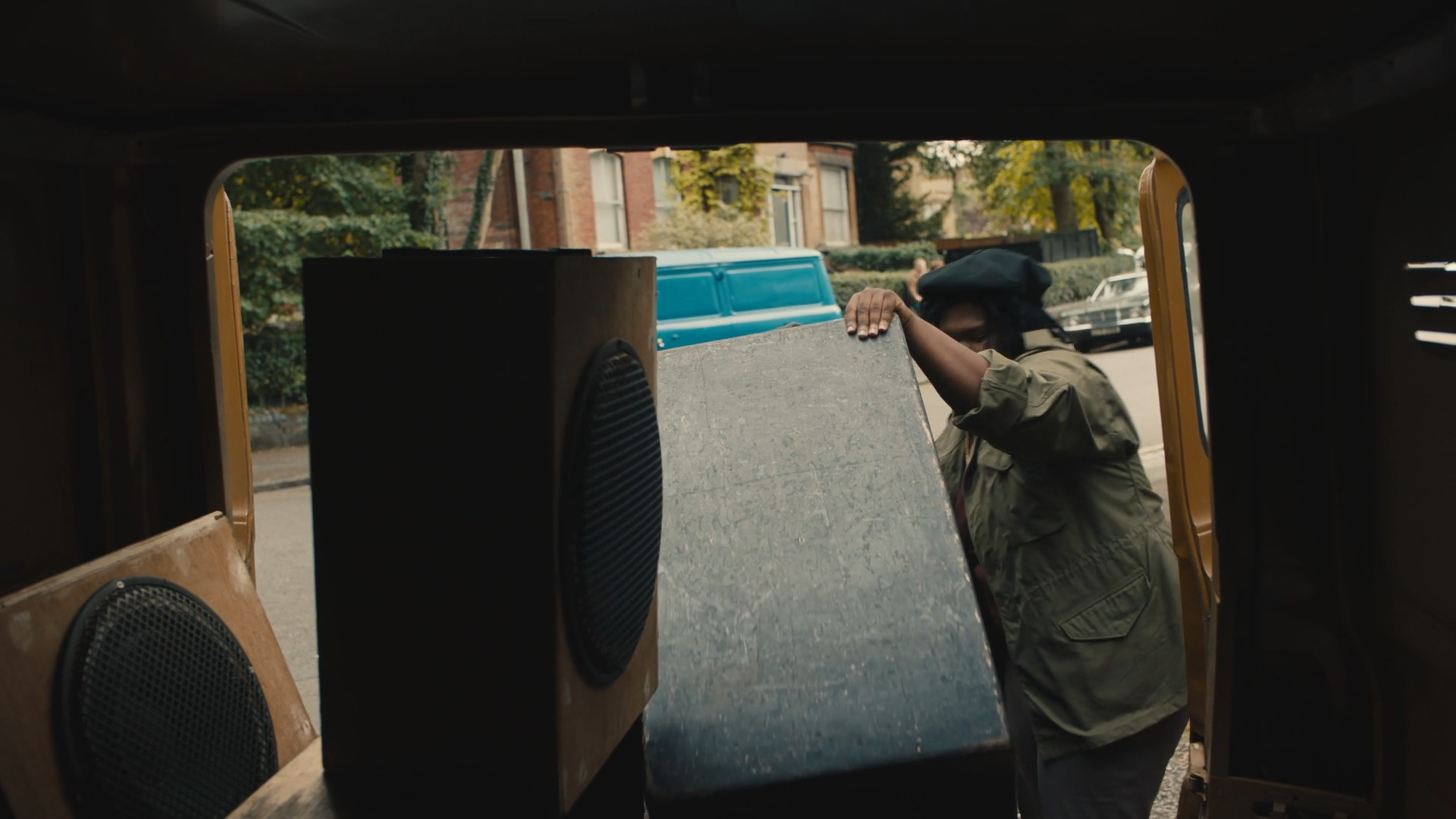
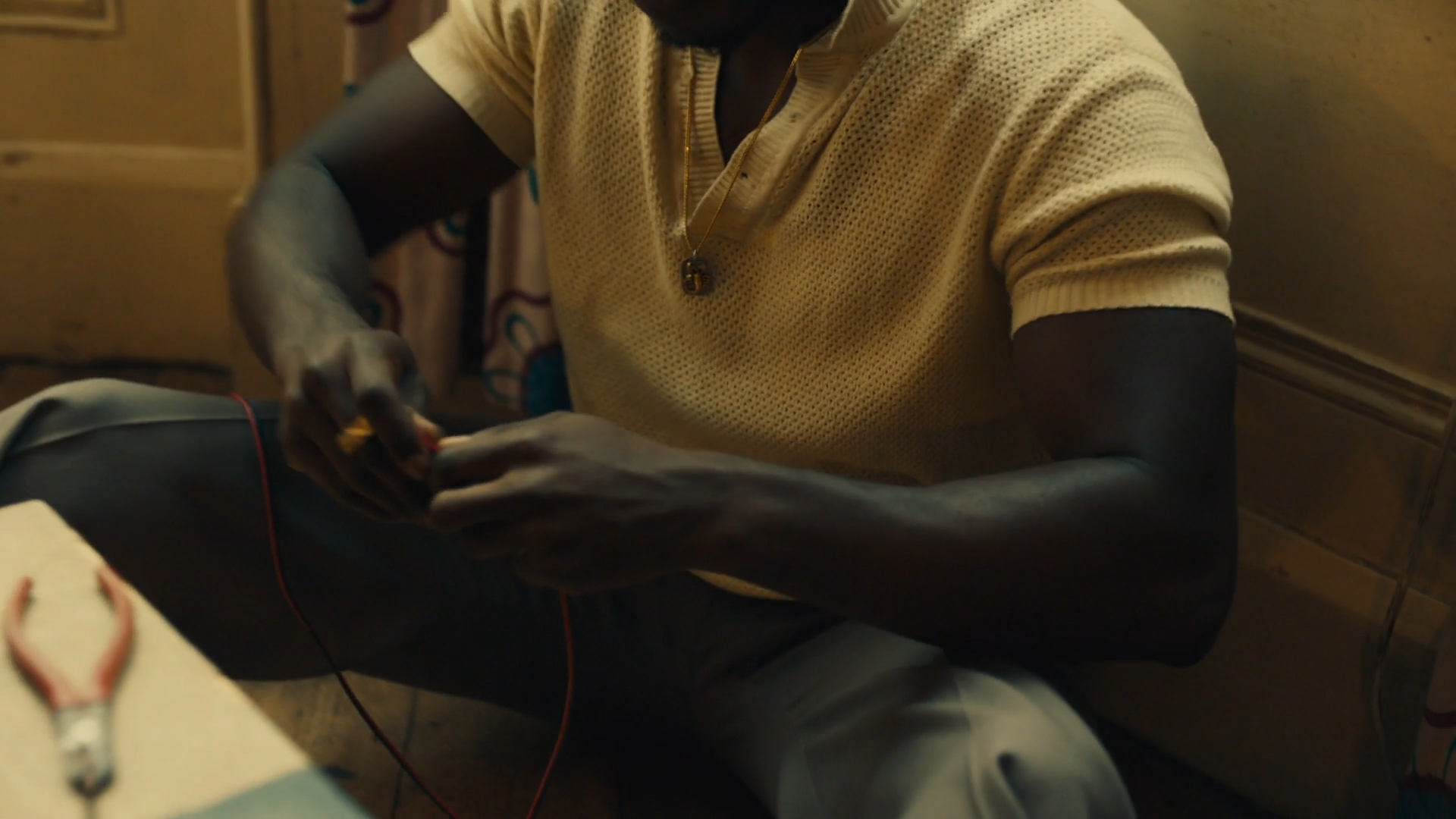
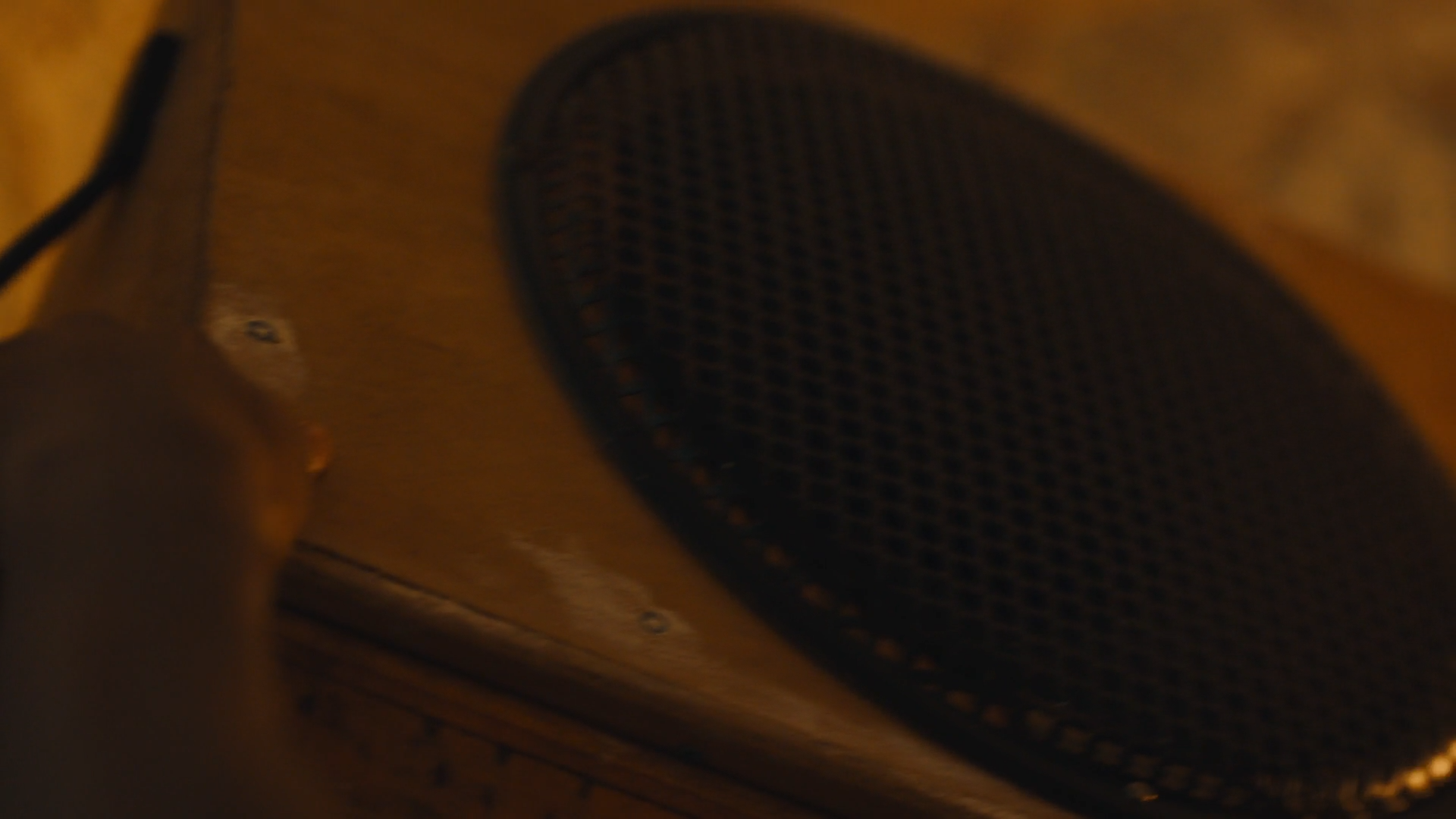
Figure 5: Setting up the sound system. Steve McQueen, Lovers Rock (2020). Series of images.
Sound qua Sound
Henriques tasks us to think through sound—not thinking about sound, or thinking about the sound of objects, but “sound qua sound,” the vibratory intimacies and the corporeal weights of sound systems and house parties (xvii). In avoiding the symbolic signification of music (see Eidsheim, 157-161), sound can be studied on how it moves through space, time, and, most crucially, bodies. Sound, Henriques reminds us, invades and extends the body, as “a way of thinking, a process of knowledge, a gnosis” (xvii). Gnosis that spiritual, experiential knowledge, that is also a kind of techné, Henriques says, a practical and practiced knowledge. Sound—a spiritual labor. “In practice [sound] is not an object at all, but a process or event, not a coded representation but medium, not a thought but a feeling” (xvii) [Figure 6].
“Sonic bodies may be contrasted with light bodies in the way that audition carries a corporeal weight – exemplified by the liminal extremes of the sonic dominance sound system session – that vision has traditionally been used to escape. Sonic bodies have to be heard, felt and given the attention of listening. It is of little use looking for them. Sonic bodies demand being approached in a certain way, one based on a relationship of mutual recognition and respect, as distinct from the positivist scientific paradigm of prediction and control. Sonic bodies produce, experience and make sense of sound. ”
Sound qua sound, thus, turns our opticality away from the image as image and towards how “the periodic movement of vibrations through a medium, [are] a suitable model for sociocultural as well as corporeal and material processes” (Henriques, xvii). That is, sound and its sonic bodies are mediums of relation—a vibrational intimacy across space and time.
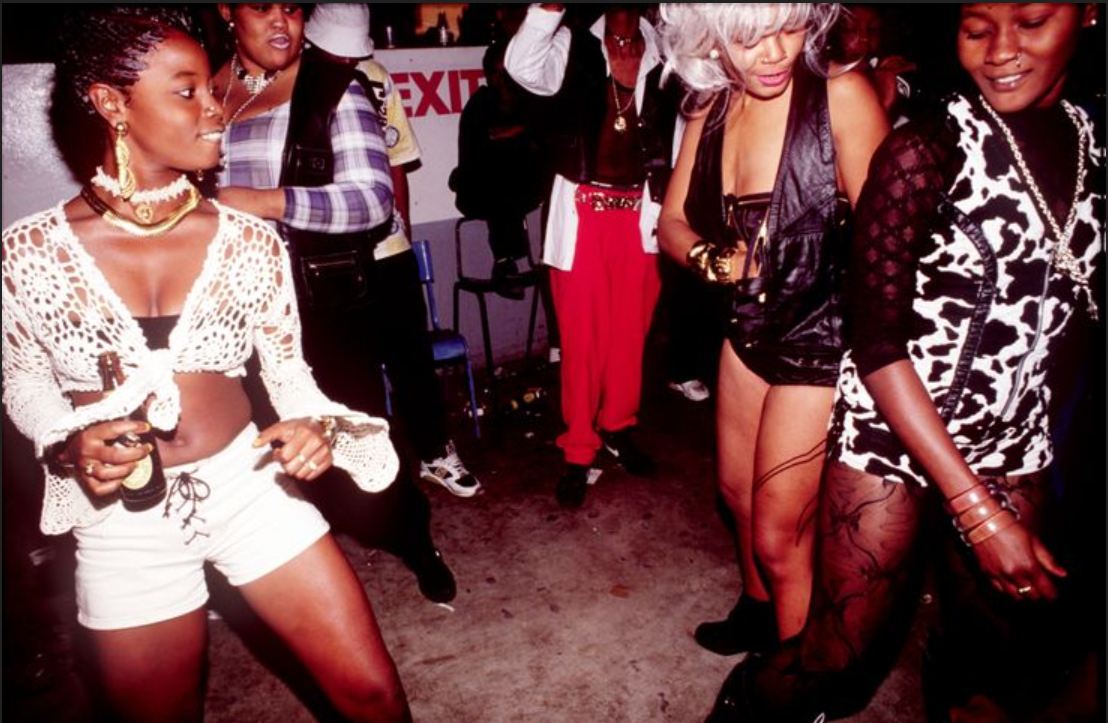
Figure 6: Jamaica Dancehall, House of Leo. Kingston, Jamaica. 1994. Photo: Wayne Tippetts.]
To study dub, to study sound, is to study “sonic bodies”:
Vibrational Relations
In the crew and sound, dub connects. The I does not truly hold. It will pop in, like the soloist, but rarely for long and never without being irrevocably mingled in the we—a “sinking into sound” (Henriques, xxiii). This mingling arrives even in the technology:
Figure 7: Preparing for the house party, singing Janet Kay’s “Silly Games.” Steve McQueen, Lovers Rock (2020). Clip.
“Vibrations happen in a field” (Boon, 7), they “are vectors of movement, radiating outward, vibrating through and around all objects or being dampened by them” (Boon, 19). Sound’s vibrational flows are not stuck to a singular sensation or body; they are not bound to a singular directionality and input, but instead just move and feel. And in that movement, their vibrational waves connect all the bodies and mediums they move through (Eidsheim, 155). And while each experience of those vibrations is unique—shaped by all the bodies the vibrations have already touched and by the specificities of each individual body—what is shared is a “full-bodiedness of sensory experience” (Henriques, xxvii).
Marcus Boon, in The Politics of Vibration: Music as a Cosmopolitical Practice, while not writing specifically to dub, describes this vibrational practice as a “cosmopolitics”: the colliding and melding of “radically different ontologies and ways of constellating the world around particular but disputed objects” (4). Like the dispersing vitalities of the crew, Boon uses the cosmopolitical to push us to see the ways sounds can propel new modes of being through “the various forms of multidisciplinary/in-between/intermedial cultural praxis such as the dance/ritual/music/theater of Balinese gamelan, or voguing practices at the ballrooms in Harlem and elsewhere—such practices are not peripheral to music, not add-ons or ornaments, but the unfolding and flourishing of music’s topological basis” (11). In its “mixing strategy of fragmentation” (Veal, 64) and “an aesthetic of accumulation” (Veal, 67), dub’s cosmopolitical practice allows us to feel out opticality through sonic vibrations and for the camera and the film’s form to, following Henriques, be less a “light body” and instead a “sonic body.”
“As [Adrian] Sherwood describes it, “With dub, you’re actually intercommunicating with the mixing desk—everything becomes one and then suddenly, magic happens. You feel it going around the room and the other people in the room feel it. It’s like a buzz you can’t describe when you’re doing something like that”
Dub, Henriques tells us, is bound to “the Rastafarian conception of singular as plural – as “I n’ I’” (xxii), where the “conceptual force of sounding is to refuse such dichotomies in favour of an intrinsically relational approach” (xxiii). Or as Nina Sun Eidsheim writes in Sensing Sound: Singing and Listening as Vibrational Practice: “There is indeed no separation between “it” and “I”: each configuration forms a unique node and is best understood when investigated as such” (156) [Figure 7].
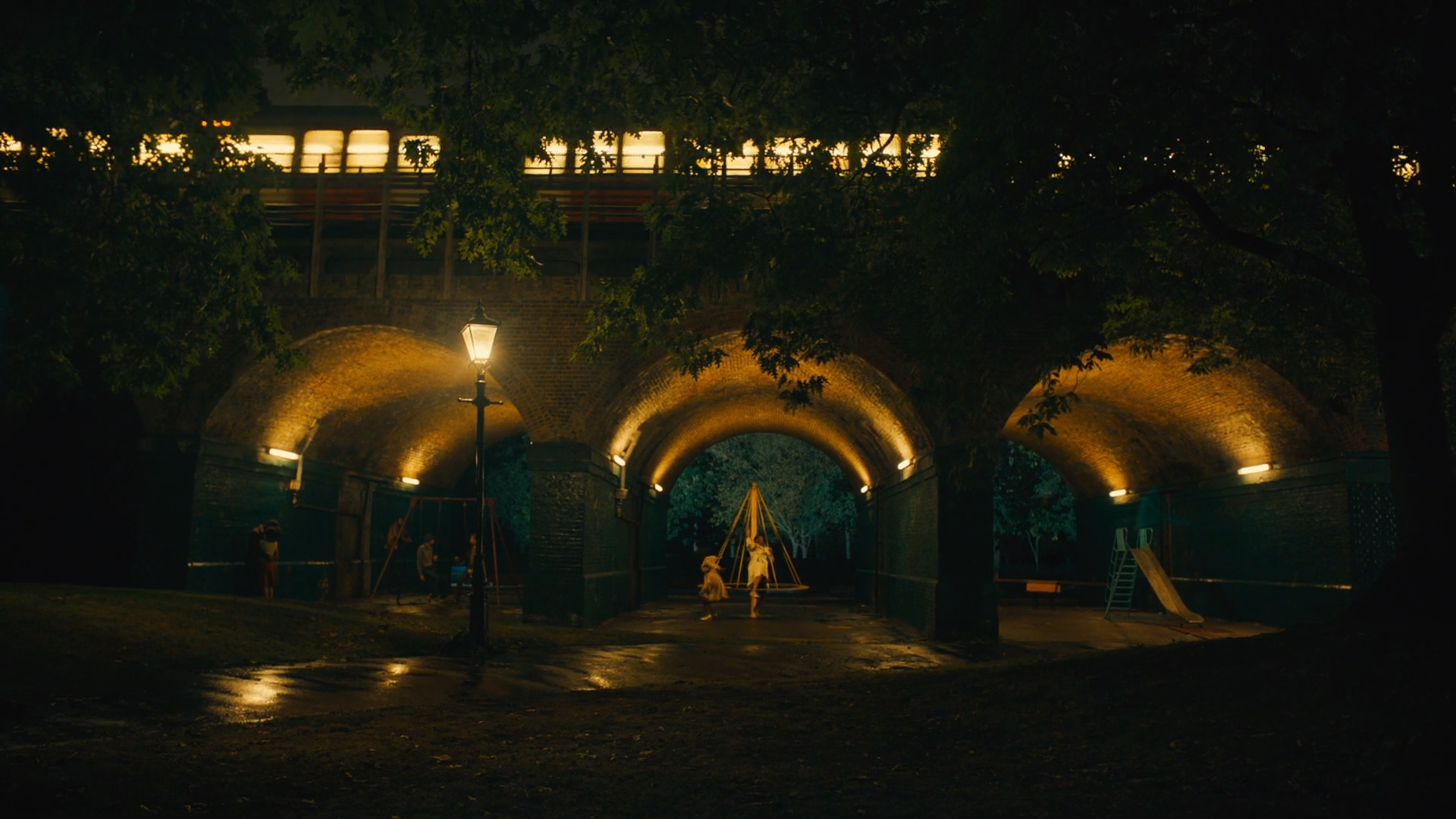
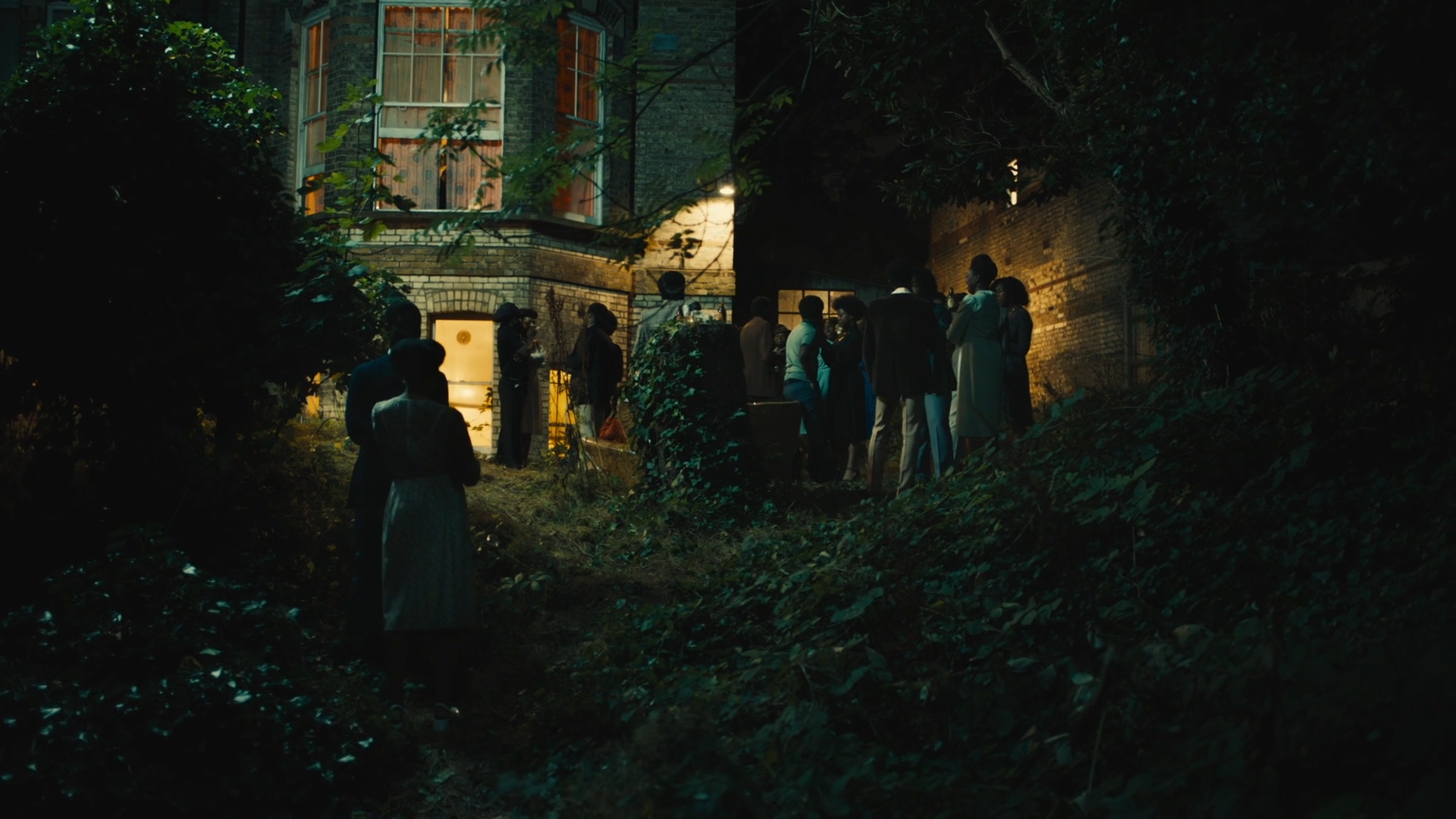
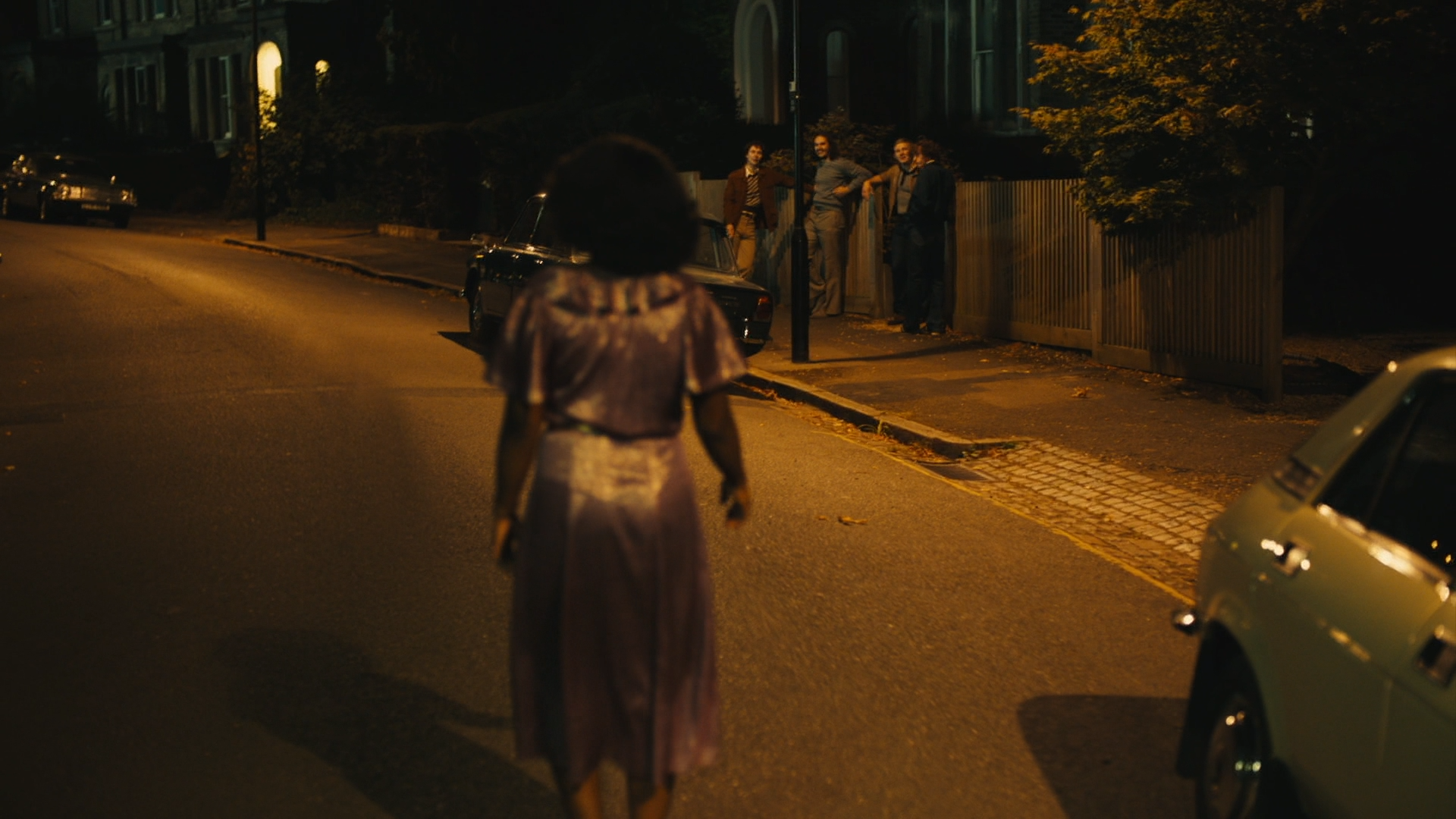
Figure 8: The distant observing gaze of Kirchner’s camera. Steve McQueen, Lovers Rock (2020). Series of images.
This mode of opticality can be felt in Lovers Rock’s cinematography. Kirchner’s camera, like the accumulative waves of dub, begins mutating, becoming something other than a recorder of light, but a recorder of sonic flows and the relations they inevitably form. Throughout Lovers Rock, Kirchner’s camera teeters between an observing and an intimate gaze. His camera holds a distance at times: showing the scene, establishing the context, and seeing the characters within the context of their London and the temporary, precarious respite of the house party [Figure 8]. Other times it continues McQueen’s piercing, arresting long take form of “realism” that captures the complex nuances of bodies in space and time by lingering on characters as they shift and adapt to each new interaction [Figure 9].
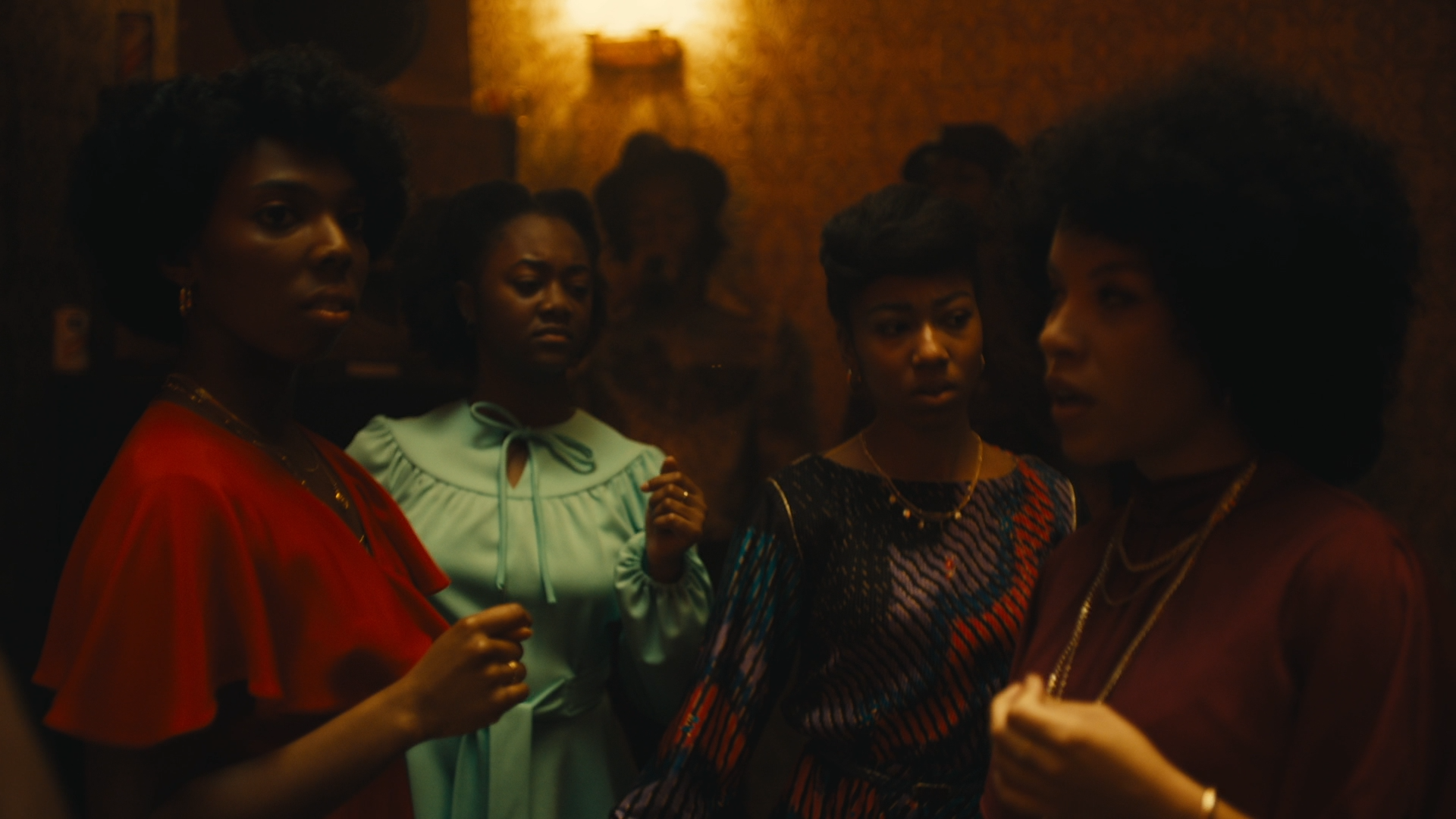
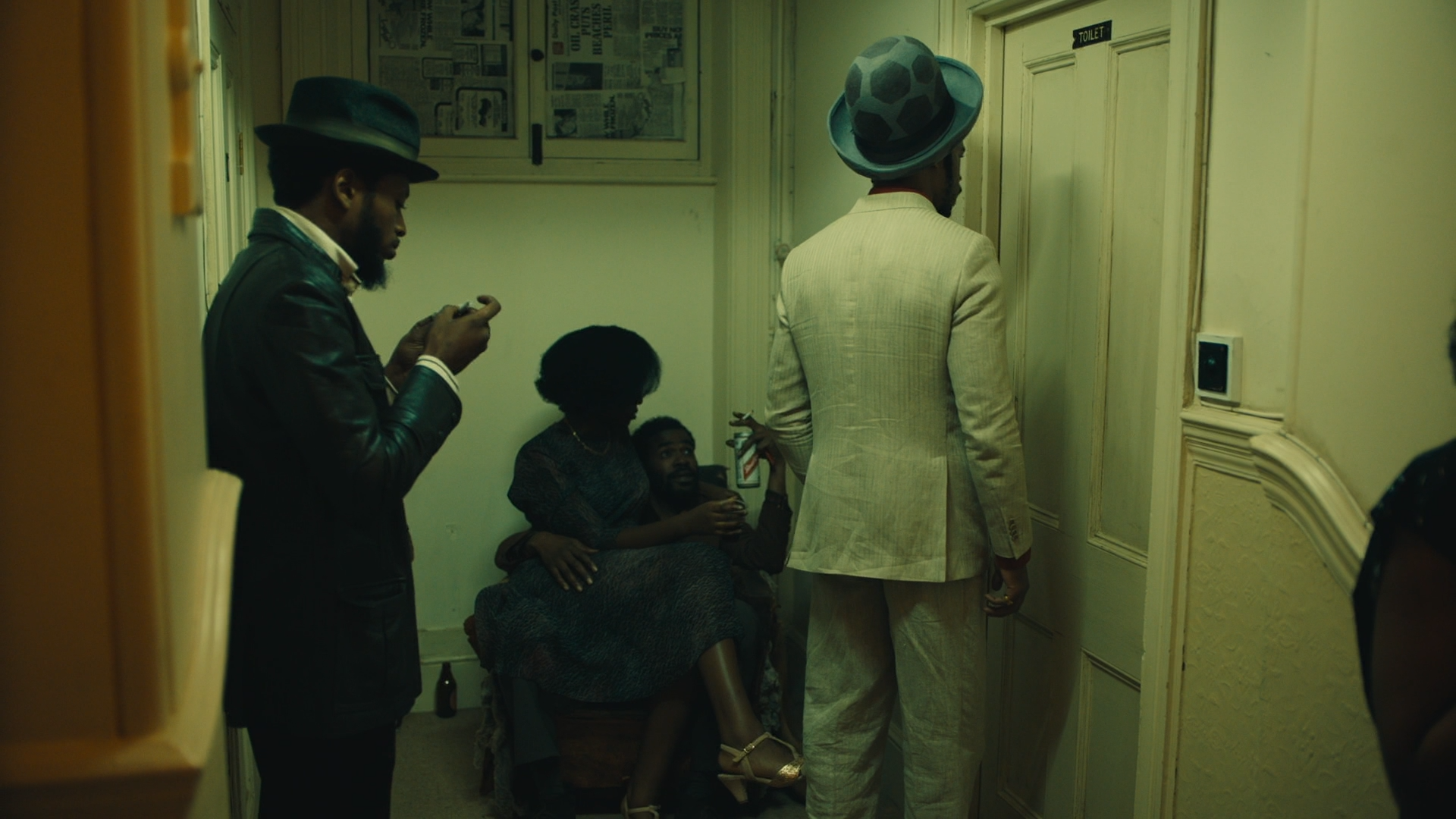
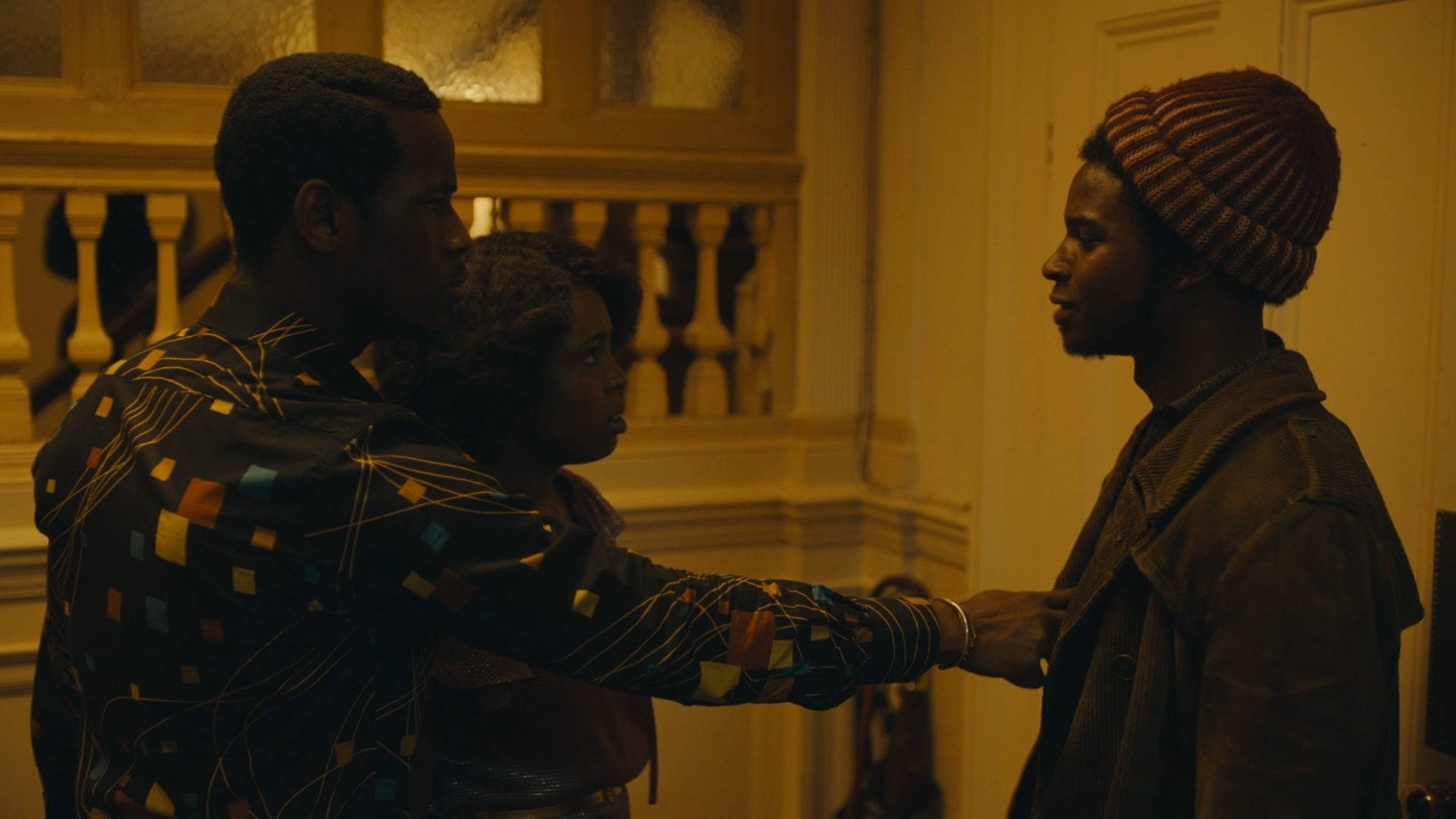
Figure 9: The piercing intimate realism of McQueen’s style. Steve McQueen, Lovers Rock (2020). Series of images.
Figure 10: The buoyant camera becoming part of the dance. Steve McQueen, Lovers Rock (2020). Clip
But there is another kind of gaze when the camera gets too close—not to the body but to the sound. When the sonic waves take hold of the camera and begin breaking down the supposed distance of realism. Take, for example, when the DJ transitions to Janet Kay’s delicate, yearning love song, “Silly Games.” The camera moves between the dancing bodies as they sway back and forth to the rhythm. The camera moves up the bodies, lingering and flowing, giving a sense of the building erotic drive of the party [Figure 10]. The camera is close and intimate, but it retains, however slight, that sense of observational distance until the camera, for a moment, matches the swaying grind of a couple dancing. The camera flows left and glides right, the smallest shifts of the body that, when held close to another, are transcendent and yet grounding. When the film cuts elsewhere, the camera sways once more but also dips with this new couple, it feels the erotic touch of Janet Kay’s voice and the propulsive and yet stretching flow of bass and drum. The camera is more than observing and recording; it has entered the party and dances to the music. Sound so good not even the camera and its operator can avoid getting into the groove. Sound waves penetrating the body, connecting it with the bodies and world around it, pushing it to be with the party and not just in the house. Kirchner’s camera moves like the dancers; it drips like the sweaty funk on the walls; it vibrates like the waves of dub. The camera as dancing body, sweating body, knowing body, sonic body [Figure 11].
Figure 11: Lover’s Rock as erotic, sonic body. Steve McQueen, Lovers Rock (2020). Clip
In Lovers Rock’s buoyant, living camera and its funked mise-en-scene, we are able to feel out an intimacy of sonic bodies. To feel the “kinetic movement” that sound demands of our bodies—grinding, whistling, clapping, singing, shaking, touching. To crib from Boon once more, in Lovers Rock, we feel how:
“Every beat of the heart is its own adventure in difference and repetition, the uncertainty of cyclic processes in living beings. This tension between the periodic and the aperiodic is also part of what music is, even at its most perfectly executed. It is part of the pathos of music, the way it leans into the now, the moment, being. ”